Ladakh is one of India’s most spectacular and extraordinary travel destinations, famous for its vast high-altitude desert landscapes, ancient Buddhist monasteries perched on clifftops, sapphire blue mountain lakes, dramatic snow-capped Himalayan peaks, the legendary Pangong Lake, the remote Nubra Valley, and one of the world’s most legendary road trips on the Manali-Leh and Srinagar-Leh highways. Whether you are planning a motorbike adventure, a trekking expedition, a cultural monastery tour, or a winter Chadar Trek on the frozen Zanskar River, choosing the best time to visit Ladakh is critical to experiencing this extraordinary high-altitude destination safely and fully.
Located at elevations ranging from 2,750 metres in Kargil to over 5,000 metres on the highest passes, Ladakh has one of the most extreme and distinctive climates in India. Roads are closed for nearly half the year, temperatures can plunge to minus 20°C in winter, and altitude sickness is a genuine health consideration for all visitors. Understanding when to visit ensures your Ladakh experience is safe, accessible, and deeply rewarding.
Ladakh Travel Overview
| Factor | Details |
| Best Overall Time | June to September |
| Peak Tourist Season | July and August |
| Cheapest Time to Visit | October to May |
| Best for Road Trips | June to September |
| Best for Chadar Trek | January and February |
| Best for Photography | September to October |
| Best for Honeymoon | June to September |
| Best for Budget Travelers | May and October |
| Best for Festivals | June to September |
| Average Temperature | Minus 20°C to 25°C (varies by season) |
Why Timing Matters When Visiting Ladakh
Ladakh is fundamentally a seasonal destination governed by road accessibility, altitude, and extreme weather. Unlike most Indian destinations, the question here is not merely about comfort — wrong timing can mean roads are physically closed, accommodation is unavailable, and several major attractions are inaccessible.
The Manali-Leh Highway typically opens between May 15 and May 25 each year, while the Srinagar-Leh Highway opens earlier between late March and mid-April. Both close again from November onward due to snowfall. Flights to Leh remain operational year-round, making air access the only reliable option during winter months.
Understanding this access framework before planning is the single most important timing consideration for any Ladakh trip.
Visiting Ladakh During Summer (May to September)
Summer is the best and most accessible time to visit Ladakh, offering the full spectrum of the region’s dramatic landscapes, cultural festivals, adventure activities, and iconic road journeys in genuinely comfortable daytime conditions.
Weather During Summer
Temperatures range between 15°C and 25°C during the day, dropping to 5°C to 10°C at night. The high altitude means UV radiation is extremely intense even on cool days — sunscreen and UV-protective clothing are essential throughout the summer season.
Why Visit Ladakh in Summer?
- Both the Manali-Leh and Srinagar-Leh highways are fully open for road trips and motorbike journeys
- Pangong Lake, Nubra Valley, and Tso Moriri are all accessible
- All major monasteries including Thiksey, Hemis, Diskit, and Alchi are fully operational
- Adventure activities including trekking, river rafting, and mountain biking are at their best
- The Hemis Festival — Ladakh’s most celebrated monastery festival with masked dances — falls in June or July
- The Ladakh Festival in Leh is held from September 21 to 24, 2026, featuring folk performances, polo matches, and cultural processions
Summer is the most popular season and the period when Ladakh shows its most complete and accessible face.
Best Places to Visit
Pangong Lake
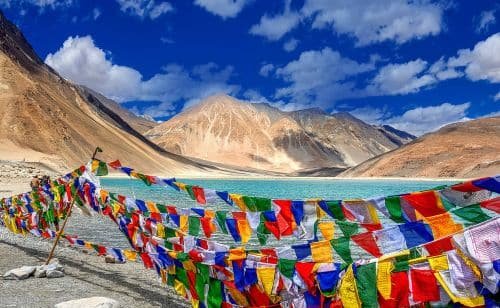
This 134-kilometre-long glacial lake straddling India and China, at an altitude of 4,350 metres, changes colour through shades of blue and turquoise through the day and is most accessible and beautiful from June to September.
Nubra Valley
The triple-humped Bactrian camels of Hunder, the dramatic Diskit Monastery, and the sand dunes at the edge of the Karakoram Range are all reached via the world’s highest motorable road at Khardung La Pass, accessible only in summer.
Tso Moriri Lake
A remote and pristine high-altitude wetland lake at 4,522 metres in the Changthang plateau, home to bar-headed geese and Tibetan wildlife, best visited from June to September.
Zanskar Valley
The spectacular gorge and remote villages of Zanskar are accessible by the unpaved Padum road in summer — a destination for serious adventure travellers and trekkers who want to experience Ladakh’s most isolated landscapes.
Advantages of Summer Travel
- Complete road access via both major highways for road trips and motorbike journeys
- All major lakes, valleys, and attractions fully accessible
- Cultural festivals including Hemis and Ladakh Festival create extraordinary experiences
- Comfortable daytime temperatures for extended outdoor exploration
- All accommodation options from camps to hotels fully operational
Disadvantages
- Peak season brings significant crowds to Pangong Lake and Nubra Valley in July and August
- Hotel prices are at their highest of the year
- Inner Line Permits for border areas fill up and must be arranged in advance
- August can bring flash flood risk on approach highways — flexibility in itinerary is advisable
July and August — Peak Season in Ladakh
July and August represent Ladakh at its most visited and most vibrant. Every guesthouse, camp, and heritage hotel is at full capacity, the Pangong Lake camping area buzzes with activity, and the mountain passes are at their most reliably open.
What Makes July and August Special?
- Warmest and most stable weather of the year
- Pangong Lake at its deepest blue under brilliant summer skies
- Maximum availability of guided tours, motorbike rentals, and adventure operators
- Hemis Monastery Festival — Ladakh’s biggest cultural event — falls in late June or early July
- Star-gazing conditions at high altitude are extraordinary on clear nights
- Nubra Valley camel safari season in full operation
Book accommodations in Leh and Pangong Lake at least 6 to 8 weeks in advance for July and August travel.
Visiting Ladakh During Autumn (September to October)
Autumn is widely considered the finest season by experienced Ladakh travellers — the crowds of peak summer thin dramatically, the landscape transforms with autumn colours, both highways remain open, and the Ladakh Festival brings cultural celebrations to Leh.
Weather During Autumn
September temperatures range from 10°C to 20°C — comfortable but noticeably cooler than peak summer. October brings progressively colder conditions with temperatures starting to drop toward 0°C and the first snowfall appearing on higher passes in late October.
Why Visit Ladakh in Autumn?
- Ladakh Festival in Leh on September 21-24 2026 showcases traditional folk dances, polo, and cultural performances
- Autumn colours turn the valleys gold, orange, and red creating exceptional photography conditions
- Noticeably fewer crowds than July and August at Pangong Lake and Nubra Valley
- Both highways still open — complete road access available through September and into October
- Hotel prices begin easing from peak season highs
- Clear, crisp air delivers outstanding mountain photography conditions
Many experienced Ladakh travellers consider September the single best month to visit.
Popular Autumn Attractions
Ladakh Festival at Leh
Held annually from September 21 to 24, this government-organised festival brings together folk artists, musicians, and polo players from across Ladakh’s remote villages for a concentrated celebration of Ladakhi culture that is genuinely impressive and unscripted.
Autumn Colour Photography
The poplar trees of Leh’s old town and the willow trees lining Ladakh’s river valleys turn brilliant gold in late September and October, creating striking contrasts against the region’s lunar-grey mountain terrain and deep blue skies.
Trekking in Markha Valley
The Markha Valley Trek — one of Ladakh’s finest multi-day wilderness journeys through remote villages, high passes, and dramatic gorges — is at its most beautiful and least crowded in September and early October.
Advantages of Autumn Travel
- Best photography season with autumn colours and clear skies
- Fewer crowds than summer peak with better accommodation availability
- Ladakh Festival offers a concentrated cultural experience
- Both highways still open for road travel
- Prices easing from summer peaks
Disadvantages
- October weather becomes increasingly unpredictable with cold nights
- Manali-Leh Highway closes in late October or early November
- Some remote trails and passes become inaccessible in late October
- Accommodation begins closing for the winter from mid-October
Visiting Ladakh During Winter (November to April)
Winter Ladakh is a completely different world — silent, snow-covered, bitterly cold, and accessible almost exclusively by air. The majority of hotels and guesthouses close, only a handful of Leh’s restaurants remain open, and roads to Pangong Lake and Nubra Valley are firmly closed. Yet winter draws a dedicated community of adventure travellers for one extraordinary reason: the Chadar Trek.
Weather During Winter
Temperatures range from minus 10°C to minus 25°C across most of Ladakh. Leh itself sits at minus 15°C or below on typical January nights. The Zanskar River freezes solid from December onward.
Why Visit Ladakh in Winter?
- The legendary Chadar Trek — a journey across the frozen Zanskar River — runs in January and February
- Hanle Dark Sky Reserve offers world-class stargazing and astrophotography with zero light pollution
- Losar — the Tibetan New Year festival — is celebrated with monastery rituals in December or January
- Absolute solitude and silence in Leh town and the surrounding villages
- Lowest accommodation prices of the year for the handful of open properties
- The surreal beauty of a completely snow-covered high-altitude desert is unlike anything else
Popular Winter Attractions
Chadar Trek
The Chadar — meaning frozen sheet — is a multi-day trek along the completely frozen surface of the Zanskar River through dramatic gorges that are otherwise only accessible by the river itself. January and February are the only months when the ice is sufficiently thick to walk on. This is considered one of India’s most adventurous treks, requiring high cold tolerance, proper gear, and experienced local guides.
Hanle Dark Sky Reserve
The remote Changthangi plateau near the Hanle Observatory, at over 4,500 metres with minimal humidity and zero light pollution, offers some of Asia’s finest astronomical observation conditions. Winter brings the year’s clearest skies and the most spectacular Milky Way visibility.
Frozen Pangong Lake
While the route to Pangong is only accessible with significant preparation in winter, those who reach it encounter the lake frozen solid — a silent, white, other-worldly landscape completely different from its famous summer blue.
Advantages of Winter Travel
- Chadar Trek on frozen Zanskar River — a once-in-a-lifetime adventure experience
- Exceptional stargazing and astrophotography at Hanle
- Complete solitude in one of the world’s most dramatic landscapes
- Very low accommodation prices for open properties
Disadvantages
- Extreme cold requiring serious and expensive gear preparation
- Roads to Pangong Lake, Nubra Valley, and Zanskar closed
- Most hotels, restaurants, and services in Leh closed
- Air access only — no road travel possible on major highways
- Altitude sickness risk is higher in extreme cold conditions
Best Time to Visit Ladakh for Different Travellers
For First-Time Visitors
June to August provides the most complete and accessible Ladakh experience with all major attractions open, both highways operational, and all services available.
For Road Trip and Motorbike Riders
June to September is the essential window. The complete Manali-Leh-Srinagar circuit is only possible when both highways are simultaneously open, typically from June through September.
For Budget Travellers
May and October are the best budget windows — both highways are open or just opening/closing, crowds are thin, and accommodation prices are well below peak season rates.
For Photographers
September to early October delivers the finest conditions — autumn colours, clear skies, thin crowds, and the dramatic Ladakh Festival providing exceptional cultural photography opportunities.
For Adventure Trekkers
The Markha Valley and Stok Kangri treks are best in July to September. The Chadar Trek window is strictly January and February.
Best Time for Pangong Lake in Ladakh
Pangong Lake is Ladakh’s most iconic and visited attraction.
Ideal Months
May through October for the classic deep blue lake experience.
Popular activities around Pangong Lake include:
- Lakeside camping under stars at 4,350 metres altitude
- Photography at sunrise when the changing colours are most vivid
- Boating on the lake surface in the summer months
- Birdwatching for migratory waterfowl along the shoreline
- Witnessing the China Border across the lake’s eastern section
The lake is most dramatically blue from June to September with clear summer skies overhead.
Festivals and Events in Ladakh
Ladakh’s festival calendar adds rich cultural depth to its natural grandeur.
Hemis Festival
Celebrated at Hemis Monastery in June or July, this is Ladakh’s largest monastic festival featuring elaborately costumed masked dances called Cham performed by monks against the backdrop of the dramatic monastery courtyard.
Ladakh Festival
Held in Leh from September 21 to 24, 2026, this government-organised celebration features traditional folk dances, polo matches, archery, and cultural performances representing Ladakh’s diverse village communities.
Losar Festival
The Tibetan New Year celebrated in December or January marks the most sacred festival in Ladakh’s Buddhist calendar, with elaborate monastery ceremonies and community celebrations in Leh.
Travel Tips for Visiting Ladakh
To make your Ladakh trip safe, comfortable, and rewarding, consider these essential tips:
- Allow at least 2 full days in Leh for altitude acclimatisation before attempting high-altitude excursions.
- Carry Inner Line Permits for restricted border areas including Pangong Lake, Nubra Valley, and Tso Moriri — these are arranged in Leh.
- Book accommodation in Leh and Pangong Lake 6 to 8 weeks in advance for July and August travel.
- Carry high-SPF sunscreen, UV-protective sunglasses, and lip balm — UV radiation at altitude causes rapid sunburn.
- Stay hydrated — altitude reduces thirst sensation while increasing dehydration risk.
- Carry warm layers regardless of summer travel — temperatures drop sharply after sunset at altitude.
- Never attempt the Chadar Trek without experienced local guides and proper cold-weather gear.
Conclusion
The best time to visit Ladakh is from June to September, when both major highways are open for legendary road journeys, all iconic destinations including Pangong Lake and Nubra Valley are accessible, cultural festivals bring the region’s Buddhist heritage to vibrant life, and the high-altitude landscape is at its most complete and accessible.
September stands out as the finest individual month — thinner crowds than peak July and August, the Ladakh Festival creating cultural richness, autumn colours transforming the valleys, and both highways still fully operational for the complete Ladakh circuit.
Whether you come for the road trip, the monasteries, the lakes, the festivals, the trekking, or the extraordinary experience of standing at 5,000 metres with the Himalayas in every direction, Ladakh delivers an experience unlike anywhere else on earth. Choose your season wisely, prepare seriously, and this cold desert at the top of the world will reward you beyond all expectation.
Frequently Asked Questions
Q1. What is the best month to visit Ladakh?
A: June and September are the two finest months — June for the complete road circuit opening and Hemis Festival, September for thinner crowds, autumn colours, and the Ladakh Festival in Leh.
Q2. Is Ladakh accessible in winter?
A: By air only. Both major road highways close from November to April-May. The main winter draw is the Chadar Trek on the frozen Zanskar River in January and February.
Q3. What is the peak tourist season in Ladakh?
A: July and August are peak months with maximum visitors, highest hotel prices, and all attractions at full operation. Advance booking 6 to 8 weeks ahead is essential.
Q4. Do I need a permit to visit Pangong Lake?
A: Yes — an Inner Line Permit is required for Pangong Lake, Nubra Valley, and Tso Moriri. These are easily arranged through travel agencies in Leh town.
Q5. How many days are enough for Ladakh?
A: A minimum of 7 to 10 days is recommended to cover Leh, Pangong Lake, Nubra Valley, and Tso Moriri with 2 acclimatisation days built in at the start.