Georgia — the Caucasus country straddling Europe and Asia — is one of the world’s most surprising and rewarding travel destinations, famous for its ancient walled capital Tbilisi, extraordinary natural landscapes from Black Sea beaches to snow-capped Caucasian peaks, one of the world’s oldest wine cultures in the Kakheti region, cave cities carved into living rock, medieval monasteries perched on dramatic mountain ridges, and a warmth of hospitality that consistently astonishes first-time visitors. Whether you are planning a wine tour, a hiking adventure, a cultural city break, or a winter ski holiday, choosing the best time to visit Georgia ensures you experience the right version of this endlessly diverse destination.
Georgia’s geography creates up to twelve distinct climate zones across a relatively compact country, from the subtropical humid warmth of Batumi on the Black Sea coast to the high-altitude alpine conditions of Kazbegi in the Greater Caucasus. Understanding these regional differences and seasonal rhythms is the key to planning the perfect Georgian journey.
Georgia Travel Overview
| Factor | Details |
| Best Overall Time | May to June and September to October |
| Peak Tourist Season | July and August |
| Cheapest Time to Visit | November to March |
| Best for Hiking | May to July and September to October |
| Best for Wine Harvest | September and October |
| Best for Beaches | June to September |
| Best for Skiing | January to March |
| Best for Honeymoon | May to June and September to October |
| Best for Budget Travelers | November to April |
| Average Temperature | Minus 5°C to 35°C (varies by region and season) |
Why Timing Matters When Visiting Georgia
Georgia’s diverse geography creates dramatically different experiences depending on when and where you visit. Mountain passes to Kazbegi and Tusheti open only in summer. Wine harvest festivities define the Kakheti region in autumn. Batumi’s beaches are at their finest in July and August. Tbilisi’s cherry blossoms make spring the most beautiful urban season.
Understanding what each season offers across Georgia’s key regions — Tbilisi, Kakheti, Kazbegi, Batumi, and Mtskheta — allows you to align your trip with the experiences that matter most to you.
Visiting Georgia During Spring (April to May)
Spring is one of the most beautiful and rewarding times to visit Georgia. The landscape awakens dramatically after winter, wildflowers carpet hillsides, and the entire country takes on a fresh, colourful character that makes cities and countryside equally photogenic.
Weather During Spring
Temperatures range between 10°C and 25°C in Tbilisi and the lowlands, progressively cooler at higher elevations. April is a transitional month with some rain, while May is consistently considered one of Georgia’s finest travel months.
Why Visit Georgia in Spring?
- Wildflowers bloom across Georgian hillsides, valleys, and roadsides
- Cherry, plum, and almond blossoms turn Tbilisi’s streets pink and white
- Hiking trails at lower elevations begin opening after winter
- Wine season begins with new vintage tastings in Kakheti
- Georgia’s Independence Day on May 26th brings parades and cultural celebrations
- Comfortable temperatures for city exploration and countryside touring
- Lower prices than peak summer season
Spring is one of the most celebrated seasons among experienced Georgia travellers.
Best Places to Visit
Tbilisi Old Town
Spring is the finest season to walk Tbilisi’s cobbled Old Town streets, explore the sulphur bath district, and enjoy rooftop café culture in the city’s balcony-adorned historic neighbourhoods.
Kakheti Wine Region
The Kakheti vineyards around Telavi and Sighnaghi are beautiful in spring with new growth on ancient vines, operating guesthouses offering wine tastings, and the season’s first agricultural activity.
Mtskheta
Georgia’s ancient capital sits at the confluence of the Mtkvari and Aragvi rivers surrounded by blooming spring landscape, with Svetitskhoveli Cathedral and Jvari Monastery at their most photogenic.
Vardzia Cave City
This spectacular medieval cave monastery carved into a volcanic mountain cliff is accessible and beautiful in spring before summer crowds arrive.
Advantages of Spring Travel
- Most beautiful season for landscapes and city photography
- Comfortable temperatures for extensive outdoor exploration
- Wine season opens with new vintage experiences
- Lower prices than summer peak
- Cultural festivals including Independence Day celebrations
Disadvantages
- April can be unpredictable with rain
- High mountain passes to Kazbegi and Tusheti may still be closed in April
- Some hiking trails at higher elevations remain snow-covered until late May
Summer in Georgia — Peak Season (June to August)
Summer is Georgia’s peak tourist season and the time when the country’s full natural and cultural offering becomes simultaneously accessible. Mountain passes open, beaches reach their warmest, festivals fill the calendar, and the entire country operates at maximum energy.
Weather During Summer
Temperatures in Tbilisi range between 20°C and 35°C, sometimes hotter. Batumi and the Black Sea coast are warm and humid at 25°C to 32°C. Mountain areas like Kazbegi remain pleasantly cool at 10°C to 20°C — a critical advantage that makes them the most popular summer retreat for travellers escaping lowland heat.
Why Visit Georgia in Summer?
- All mountain passes including the Georgian Military Highway to Kazbegi are fully open
- Batumi’s Black Sea beaches are warm and fully operational
- Tbilisi hosts major festivals including the Tbilisi Jazz Festival and Tbilisi International Film Festival
- Tusheti — Georgia’s most remote and spectacular highland region — is accessible by 4×4 only in summer
- Long daylight hours allow extended daily exploration
- Batumi Jazz Festival in July is an internationally celebrated music event
Best Summer Activities
- High-altitude trekking in Kazbegi and around Mount Kazbek
- Black Sea beach holidays in Batumi and Kobuleti
- 4×4 expedition to remote Tusheti region
- Wine estate visits in Kakheti
- Tbilisi summer festival experiences
- Paragliding and rafting in mountain valleys
Benefits of Summer Travel
- Full accessibility of all regions including remote mountain areas
- Beach conditions on the Black Sea are at their best
- Rich festival and events calendar
- Long daylight hours maximise daily activity
- Kazbegi mountain scenery is at its clearest and most accessible
Drawbacks
- Peak season hotel rates throughout the country
- Tbilisi can be very hot and humid in July and August
- Popular sites like Kazbegi and Batumi become crowded
- Advance booking essential for mountain guesthouses
Visiting Georgia During Autumn (September to October)
Autumn is widely considered the finest overall season to visit Georgia, combining the harvest energy of the wine country, the vivid colour of turning forests, comfortable temperatures, and excellent hiking conditions into an experience that consistently earns the highest praise from travellers.
Weather During Autumn
Temperatures in Tbilisi and lowlands range between 15°C and 25°C — comfortably warm in September, pleasantly cool in October. Mountain areas see temperatures of 5°C to 15°C with clear, stable skies. The Black Sea coast remains warm into October.
Why Visit Georgia in Autumn?
- Rtveli — the ancient Georgian grape harvest festival — fills the Kakheti wine region with celebration and colour in September and October
- Forests across the Caucasus foothills turn brilliant red, orange, and gold
- Hiking conditions in the mountains are excellent with clear skies and stable weather
- Fewer summer crowds than July and August with prices beginning to ease
- Tbilisi’s outdoor café culture continues in the warm autumn air
- The wine harvest is the definitive Georgia cultural experience for food and drink lovers
Autumn is the season that most often converts first-time visitors into devoted Georgia enthusiasts who return year after year.
Popular Autumn Attractions
Kakheti During Rtveli Harvest Festival
The ancient art of Georgian winemaking — using traditional clay qvevri vessels buried underground — comes alive during September and October as families and communities gather for harvest, pressing, and fermentation of the new vintage.
Kazbegi and Greater Caucasus Trekking
Autumn’s stable, clear skies provide exceptional mountain visibility, the hillside vegetation turns golden and red, and the reduction in summer crowds makes highland trails notably more peaceful.
Tbilisi in Autumn
Cherry and plane trees along Rustaveli Avenue and in Vake Park turn golden, open-air theatre and music performances fill the city’s courtyards, and the cooler air makes extended Old Town exploration genuinely pleasurable.
Advantages of Autumn Travel
- Wine harvest is Georgia’s most distinctive and celebrated cultural experience
- Outstanding autumn foliage across forests and mountain slopes
- Comfortable temperatures across all regions
- Lower prices than peak summer with full accessibility
- Best hiking visibility and trail conditions of the year
Disadvantages
- October sees mountain passes beginning to close for winter
- Some higher-altitude guesthouses begin closing after mid-October
- Increasing rainfall in November marks the end of comfortable travel conditions
Visiting Georgia During Winter (November to March)
Winter transforms Georgia into a completely different destination — cold, atmospheric, snow-covered in the mountains, festive in the cities, and remarkably affordable throughout.
Weather During Winter
Tbilisi temperatures average 0°C to 8°C with occasional snow. Mountain areas including Gudauri ski resort experience heavy snowfall perfect for skiing. Batumi on the coast is milder at 5°C to 12°C but rainy.
Why Visit Georgia in Winter?
- Gudauri and Bakuriani ski resorts offer excellent skiing at very affordable prices
- Tbilisi’s cosy wine bars, sulphur baths, and traditional polyphonic music performances are most appreciated in cold weather
- Hotel rates are the lowest of the year across the country
- Georgian Orthodox Christmas on January 7th brings Alilo processions through city streets
- Tbilisi’s winter illuminations and festive atmosphere are genuinely charming
Popular Winter Attractions
Gudauri Ski Resort
Located 120 kilometres from Tbilisi at 2,196 metres elevation, Gudauri offers excellent runs, reliable snowfall, affordable lift passes, and spectacular Caucasus mountain scenery.
Tbilisi Sulphur Baths
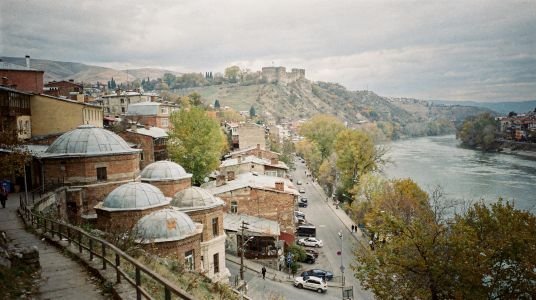
The historic Abanotubani sulphur bath district — named for its distinctive brick domed bathhouses — is at its most inviting during winter when emerging from warm sulphurous water into cold mountain air is one of Georgia’s most memorable experiences.
Sighnaghi in Winter Snow
This walled hilltop town in the Kakheti wine region is particularly beautiful under snow, with its famous 24-hour marriage registry, wine cellar restaurants, and panoramic Alazani Valley views.
Advantages of Winter Travel
- Lowest hotel rates and best budget travel conditions of the year
- Excellent skiing at Gudauri and Bakuriani
- Intimate, atmospheric experience of Tbilisi’s cultural life
- Georgian Orthodox Christmas celebrations in January are warmly atmospheric
Disadvantages
- Mountain passes to Kazbegi and Tusheti are closed
- Hiking is not possible in most highland regions
- Cold and rain in lowland areas can be uncomfortable
- Some rural guesthouses and tourist facilities are closed for the season
Best Time to Visit Georgia for Different Travellers
For Honeymooners
May to June and September to October offer the most romantic combination of beautiful landscapes, comfortable temperatures, wine country experiences, and the atmospheric Old Town setting of Tbilisi that makes Georgia one of Europe’s most distinctive honeymoon destinations.
For Families
June to August provides full accessibility of all regions, warm beach conditions on the Black Sea coast, and engaging outdoor activities for children including mountain excursions from Kazbegi.
For Budget Travellers
November to April offers the lowest accommodation costs across the country, with Tbilisi’s cultural life, sulphur baths, and wine bar scene fully active even in the coldest months.
For Wine Lovers
September and October are the non-negotiable months for the definitive Georgian wine experience — Rtveli harvest festival, qvevri winemaking demonstrations, and fresh vintage tastings directly from the source in the Kakheti region.
For Hikers and Trekkers
May to July and September to October are the two prime windows. Kazbegi’s trails are accessible from May and at their most spectacular in autumn colours. Tusheti is accessible only from June to October by 4×4.
Best Time for Wine Experiences in Georgia
Georgia is home to one of the world’s oldest wine cultures with over 500 indigenous grape varieties.
Ideal Months
September and October represent the pinnacle of Georgia’s wine calendar.
Wine experiences include:
- Rtveli grape harvest participation on family estates
- Qvevri winemaking — traditional clay vessel fermentation — demonstrations
- Amber wine tasting unique to Georgia’s skin-contact winemaking tradition
- Winery estate stays in Kakheti’s Alazani Valley
- Chacha — Georgia’s grape spirit — distillation in harvest season
- Wine-paired feasts called Supras with traditional polyphonic singing
Festivals and Events in Georgia
Georgia’s festival calendar rewards visitors across all seasons.
Tbilisi Jazz Festival
Held in July, this internationally celebrated music festival draws artists from across the world to perform in Tbilisi’s open-air venues and historic courtyards.
Rtveli Harvest Festival
The ancient grape harvest celebration in September and October in Kakheti is Georgia’s most important annual cultural event — a multi-week community celebration of the country’s defining agricultural and cultural tradition.
Alilo Christmas Procession
Georgia’s Orthodox Christmas on January 7th is marked by the Alilo procession in which thousands of Georgians dress in traditional white robes and carry crosses through the streets of Tbilisi in a deeply moving winter ceremony.
Travel Tips for Visiting Georgia
To make your Georgia travel experience most rewarding, consider these practical tips:
- Book Kazbegi mountain guesthouses in advance for July and August — availability fills weeks ahead.
- Carry cash as rural areas and smaller towns have limited card payment infrastructure.
- Learn a few Georgian phrases — Georgians are genuinely moved when foreign visitors make any effort with their unique and ancient language.
- Accept every Supra feast invitation you receive — these traditional Georgian banquets with toasts, food, and wine are the country’s deepest cultural experience.
- Road conditions to Tusheti require experienced 4×4 drivers — go with a specialist local operator.
- Tbilisi’s sulphur baths are essential regardless of season — budget at least two hours.
- Book Gudauri ski accommodation well in advance for January and February peak ski weeks.
Conclusion
The best time to visit Georgia is from May to June and September to October — the two shoulder seasons that combine comfortable temperatures, accessible mountain landscapes, vibrant cultural experiences, and the country’s most celebrated seasonal events including the spring blossom and the autumn wine harvest. These months offer the finest balance of weather, value, and experience across all of Georgia’s diverse regions.
However, every Georgian season has its devoted advocates. Summer’s mountain accessibility and beach energy, winter’s skiing and cosy city atmosphere, and spring’s extraordinary blooming landscapes each represent a genuinely excellent reason to visit this endlessly rewarding Caucasus destination.
Whether you come for ancient wine, Caucasian mountain peaks, medieval cave cities, the warmth of Georgian hospitality, or simply the singular pleasure of discovering a country that most of the world has not yet fully found, Georgia will exceed every expectation in every season.
Frequently Asked Questions
Q1. What is the best month to visit Georgia?
A: May and October are the two finest individual months — May for spring blooms, wine season opening, and comfortable temperatures; October for the Rtveli wine harvest, autumn foliage, and ideal hiking conditions.
Q2. Is Georgia good to visit in winter?
A: Yes — for skiing at Gudauri, sulphur bath culture in Tbilisi, Orthodox Christmas celebrations, and significantly lower prices throughout the country. Mountain hiking is not possible but city and wine region experiences are fully active.
Q3. What is the peak tourist season in Georgia?
A: July and August are the peak months, with maximum visitors to Tbilisi, Batumi beaches, and Kazbegi mountain areas. Hotel prices and crowds are at their highest during this period.
Q4. When is the best time for wine tourism in Georgia?
A: September and October during the Rtveli grape harvest — the most culturally rich and experientially authentic time to visit the Kakheti wine region and participate in Georgia’s ancient winemaking traditions.
Q5. How many days are enough for Georgia?
A: A 7 to 10-day trip comfortably covers Tbilisi, the Kakheti wine region, Kazbegi mountains, and Mtskheta ancient capital with meaningful time in each destination.