Someone follows a bread recipe to the letter, waits the stated “1 hour” for the dough to rise, and pulls out something dense and gummy anyway. The recipe wasn’t wrong — the kitchen just wasn’t 75°F like whatever test kitchen wrote it. That’s the entire secret most beginner bakers miss: proofing time is never really about the clock. It’s about temperature, and the clock is just a rough guess for one specific condition.
Why the Same Recipe Gives Different Rise Times in Every Kitchen
- Temperature is genuinely the single biggest factor affecting proof time — every roughly 17°F drop in dough temperature approximately doubles how long the rise takes
- A warm kitchen produces a fully proofed loaf in about two hours, while the same exact dough in a cold room can take the entire day
- The sweet spot most yeast doughs actually want sits between 74°F and 82°F — check your kitchen or dough temperature before assuming your recipe’s stated time applies to your situation
- This is exactly why two people following the identical recipe in different homes can get genuinely different results despite doing everything else correctly
Bulk Fermentation: The First, Most Important Rise
- This is the whole undivided mass of dough fermenting after mixing and kneading — where most of the bread’s actual flavor and structural development happens
- Most standard yeasted bread recipes call for roughly 1 to 2 hours at room temperature (72-75°F) for this first rise
- Enriched doughs — brioche, challah, anything with butter and eggs mixed in — genuinely take longer, since the added fat slows yeast activity down considerably
- Doughs with heavy mix-ins like cheese, nuts, or dried fruit also take longer, simply because the added weight works against the dough’s natural rise
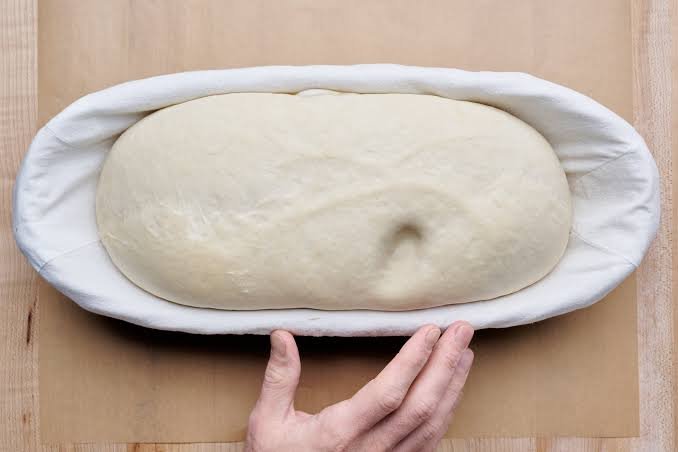
- The dough should roughly double in size during this stage — that’s the actual signal to watch for, not a specific number of minutes
The Second Rise (Final Proof) Is Shorter, and That’s Intentional
- This rise is genuinely shorter than the first because the yeast has already done much of its work during bulk fermentation
- Most standard loaves need 30 minutes to 1 hour for this final proof, depending on temperature and dough type
- Unlike the first rise, the second rise should only increase the dough’s volume by about 50%, not fully double again — over-waiting here is one of the most common causes of a collapsed loaf
- Use this window productively by preheating your oven, since the final proof and oven preheating naturally overlap in most standard recipes
How to Actually Tell When Dough Is Ready, Rather Than Guessing by Time
- The poke test remains the most reliable check — press a finger gently into the dough; if the indentation slowly springs back partway, it’s ready; if it springs back instantly, it needs more time; if it doesn’t spring back at all, it’s likely over-proofed
- Clock-watching is genuinely the most common mistake bakers make — treat any stated time range as a rough guideline, then confirm readiness visually and by touch
- If your bowl is too large or oddly shaped to judge the actual volume increase, transfer the dough to a narrower, straight-sided container so the rise becomes genuinely easier to see
Why Sourdough and Commercial Yeast Follow Completely Different Timelines
- Sourdough bulk ferments for 4 to 6 hours or considerably more, since the wild yeast in a sourdough starter simply works more slowly than commercial instant or active dry yeast
- Commercial yeast dough at standard room temperature typically completes its first rise in 1 to 2 hours — genuinely much faster by comparison
- Using less yeast than a recipe calls for stretches the rise time out considerably but develops noticeably better, more complex flavor — a trade-off worth understanding rather than assuming more yeast is always better
- Overnight cold-retard recipes deliberately use very little yeast specifically to stretch fermentation across 12-18 hours in the refrigerator, trading speed for depth of flavor
Common Fixes When Your Dough Isn’t Rising as Expected
- Check dough temperature first — if it’s below roughly 72°F, move it to a genuinely warmer spot rather than assuming something’s fundamentally wrong
- Consider your yeast’s age — old or expired yeast is one of the most common reasons a dough simply refuses to rise despite everything else being correct
- Check your salt ratio — dough containing around 1.5% salt proofs considerably faster than dough with 3% salt, since salt genuinely slows yeast activity
- Refrigerator proofing (8-24 hours) is a legitimate, deliberate alternative to room-temperature proofing, not just a fallback — it develops deeper flavor precisely because the slower, colder fermentation gives the yeast more time to work
Frequently Asked Questions
Q1. Why did my dough only take 30 minutes to double when the recipe said 1 hour?
Your kitchen or dough was likely warmer than the recipe’s assumed baseline — since every roughly 17°F increase in temperature can cut proofing time in half, a genuinely warm room or a dough that was slightly warm from mixing can rise considerably faster than a standard recipe’s stated timeframe.
Q2. Can I leave bread dough in the fridge longer than the recipe suggests if I run out of time?
Yes, generally — dough can be left in the refrigerator for up to 48 hours in many cases, though the final loaf will taste somewhat sourer and rise slightly less than if baked within the recipe’s intended window, which is often still a perfectly good result.
Q3. How do I know if my dough is over-proofed rather than just fully risen?
An over-proofed dough won’t spring back at all when gently poked, and it often looks slightly deflated or overly airy rather than smoothly domed — this dough typically collapses or bakes with a dense, gummy texture despite having risen a lot beforehand.
Q4. Does using more yeast genuinely make my bread taste worse, or just rise faster?
Doubling your yeast genuinely speeds up the rise significantly, but it can also produce a noticeably more “yeasty” taste in the finished bread, which is exactly why many experienced bakers deliberately use less yeast and accept a longer rise time in exchange for more developed, complex flavor.