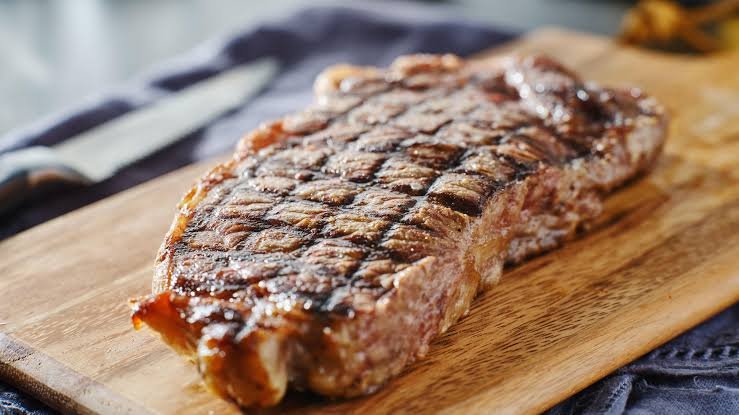
Cut into a steak the second it comes off the pan, and you’ll watch a pool of reddish-brown liquid flood the cutting board within seconds. Most people assume that liquid is escaping because they cut too soon — that waiting would have kept it locked inside. Here’s the genuinely more interesting truth: some of the most rigorous kitchen testing ever done on this question found that resting doesn’t actually stop juice loss the way the popular explanation claims. The real reason to rest is something else entirely, and understanding it will change how you actually approach cooking the steak in the first place.
The Popular Explanation, and Why It’s Genuinely Incomplete
- The standard story goes: heat pushes juices toward the centre of the meat as it cooks, and cutting immediately releases that trapped liquid, while resting lets muscle fibres relax and reabsorb the moisture evenly
- Several food science sources back this with real numbers — some studies show non-rested steaks losing up to 15% of their weight in juice runoff, compared to just 5-7% for rested steaks
- But detailed side-by-side testing, including well-documented experiments cutting steaks at intervals with no carryover cooking involved, found the juice-retention theory doesn’t fully hold up under controlled conditions
- Once you actually cut into meat, you create new pathways for liquid to escape regardless of whether it rested beforehand — the cutting itself is what releases juice, not primarily the timing
The Real Reason Resting Genuinely Matters: Carryover Cooking
- While the steak sits off the heat, its exterior is still considerably hotter than its interior, and that heat continues moving inward for several minutes after you remove it from the pan or grill
- This carryover effect can raise the internal temperature by 2-5°F for a standard steak, and considerably more for thicker cuts or larger roasts
- This is exactly why serious cooking guides consistently recommend pulling meat 5-10°F below your actual target doneness — the carryover finishes the job during the rest
- Skip accounting for this, and you’ll consistently overcook your steak without realising why — pulling a steak at what looks like medium, only to have it land at medium-well by the time you actually cut into it
Why the Cooking Method Genuinely Changes How Much Rest You Need
- High-heat searing produces considerably more carryover than low-heat cooking methods, since the exterior gets so much hotter than the interior during an aggressive sear
- Open-fire grilled steaks specifically benefit more from resting, since the carryover effect is stronger and muscle fibre contraction is more intense due to higher surface heat
- Sous vide cooking largely eliminates this concern for the interior, since the meat is already at a uniform temperature throughout — but a quick sear afterward still creates a new heat gradient at the surface worth a brief rest to settle
- If you’re already slicing and eating a steak gradually, one bite at a time rather than cutting it all at once, the practical juice-loss concern becomes even less relevant regardless of resting time
How Long to Actually Rest, Based on Thickness
- Rest steaks and chops roughly 1 minute per 100 grams of meat — a 250g steak needs at least 2-3 minutes
- Thin cuts like skirt or flank steak genuinely benefit from even a short 3-5 minute rest, despite their size suggesting otherwise
- A thick tomahawk or similarly substantial cut genuinely warrants a full 10-15 minutes, given how much more carryover cooking a larger mass of meat retains
- Large roasts and whole birds need considerably longer — 20-45 minutes — since their sheer size means far more residual heat continuing to work through the meat
A Genuine Exception Worth Knowing
- For very thin cuts cooked at high heat, some experienced cooks argue it’s actually better to skip resting and slice immediately, since cutting releases heat faster and can help prevent the thin cut from carrying over into overcooked territory
- This is genuinely the opposite advice from what applies to a thick steak, which is exactly why blanket “always rest for 10 minutes” advice doesn’t serve every cut equally well
- Tenting larger cuts loosely with foil during rest helps slow heat loss without trapping steam that would soften a crispy crust — wrapping too tightly is a common mistake that undoes the sear you worked for
Frequently Asked Questions
Q1. If resting doesn’t actually prevent juice loss the way I thought, is it still worth doing?
Yes, genuinely — the real benefit is controlling carryover cooking so your steak finishes at the exact doneness you’re aiming for, rather than continuing to cook past it. This matters just as much as juice retention, arguably more, since overshooting your target doneness is a genuinely common and avoidable mistake.
Q2. Should I pull my steak off the heat at my exact target temperature, or earlier?
Pull it 5-10°F below your actual target doneness, then let carryover cooking finish the job during the rest — using a meat thermometer here removes the guesswork that leads to consistently overcooked steak.
Q3. Does resting matter less if I’m eating the steak slice by slice rather than cutting it all at once?
Yes, to some extent — since juice escapes primarily at the moment of cutting rather than through prolonged exposure afterward, eating gradually one bite at a time naturally limits how much total juice loss you’ll notice compared to slicing the entire steak immediately.
Q4. Is it ever better to skip resting entirely and slice a steak right away?
For very thin cuts cooked at high heat, yes — slicing immediately can actually help release surface heat faster and reduce the risk of continued carryover pushing a thin steak past your intended doneness, which is the opposite of what a thick cut genuinely needs.