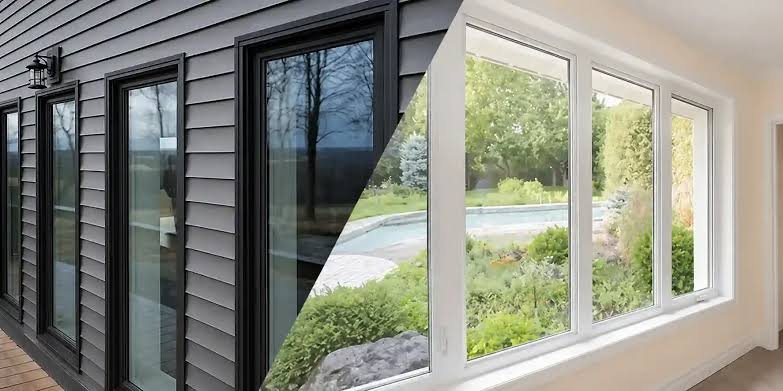
Odds are you’ve used a sliding window or door already today and never gave it a second thought. You nudged a panel sideways, it glided open, you stepped through or let some air in, done. No swinging, no floor space lost, no drama. That quiet ease is why sliding systems have become the default in so many Indian homes, and it’s worth a moment to see what’s happening behind that smooth glide.
So let’s run through how these systems work, and why they’ve become the automatic pick for windows and doors alike.
What Is a Sliding Window?
Ever wondered what is a sliding window? The answer is pleasingly simple. A sliding window has one or more panels, called sashes, that move sideways along a track instead of swinging open on a hinge. Slide the sash across and part of the window opens up for air and light. Slide it back, and the window shuts.
That’s genuinely all there is to the idea. So what are sliding windows actually good for? Space, mostly, and ease. Since the sash never swings into the room, nothing gets in the way. No clearance is needed for a panel to open inward, and there’s no chance of it catching a gust and slamming. That makes aluminium sliding windows a natural fit for spots where an outward- or inward-swinging window would be a nuisance, which in a typical Indian home covers rather a lot of them.
What Is a Slider Window, Exactly?
People sometimes ask what is a slider window as though it’s a different animal, but it’s just another name for the same thing. “Slider window” and “sliding window” are used interchangeably. Both mean a window whose sashes glide along a track.
Where they do differ in configuration, a two-track window runs two sashes on separate tracks, so both can slide past each other. Three-track systems open the door to more panels and wider spans. Some throw in a mesh panel on its own track to keep insects out while you air the room. The core mechanism never changes: panels on tracks, sliding sideways, but the number of tracks and sashes lets you scale from a modest bedroom window right up to a wide living-room opening.
How Sliding Door Works?
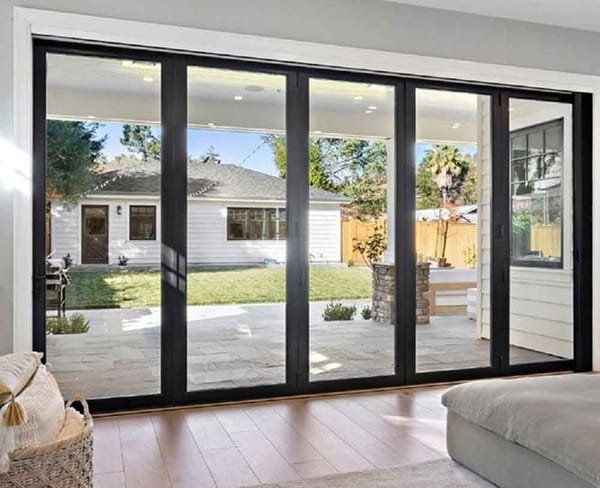
The thinking behind how a sliding door works is the same as the window, just blown up in size and built to carry more weight. A sliding glass door has big glass panels that roll along a track at the bottom, steadied by a channel up top. Rollers sit under each panel and let it move smoothly in spite of all that glass.
Give the panel a push, and it glides to one side, stacking behind or beside a fixed panel, throwing open a wide slice of wall to a garden, terrace, or balcony. Because it slides rather than swings, it opens a large space without needing any room for a swing arc, which is a real win in homes where floor space is at a premium. This is exactly why aluminium sliding doors have become the standard. They open a home to the outdoors without demanding any room to do it.
Lift and Slide Doors: The Next Level Up
For the really big openings, the ones that turn a whole living-room wall into glass, lift and slide doors take the basic sliding idea and sharpen it. The name tells you how they work. Turn the handle and the mechanism lifts the panel slightly off its seals, freeing it to glide along the track with barely any effort. Turn it back, and the panel settles onto its seals again, locking in a tight, weatherproof close.
That little lifting action is what lets these systems shift very large, heavy panels that a standard slider couldn’t budge easily. Eternia’s lift and slide doors take on sizeable panels while keeping the frames slim, and they’re WiWA certified for wind resistance up to 2.75kPa, water tightness up to 750Pa, and air sealing up to 600Pa. The seal a lift and slide gets when closed is genuinely excellent, which counts for a lot when a wall-sized glass door has to keep a monsoon out. It’s the sliding principle, engineered for scale and performance.
Why Sliding Systems Are So Popular?
So what’s pushed sliding windows and doors to the top of the pile in Indian homes? A handful of things, and together they stack up.
First is space. Sliding systems don’t swing, so they claim no floor area to open. In a compact flat, that’s genuinely worth something, because every square foot is doing a job. Second is the sightline. Since a sliding glass door or window keeps its glass in place even when shut, the view stays open, and the room feels tied to the outdoors. Third is how easy they are to use. A well-made sliding system opens with a light push and glides smoothly, day after day.
Then there’s the sheer range. From a small aluminium sliding window in a bedroom to a wide multi-panel door opening onto a terrace, the same basic mechanism scales to suit almost any opening. That flexibility, paired with the clean, contemporary look of slim-framed glass, is why premium aluminium windows and doors so often land on a sliding design.
Why Aluminium Suits Sliding Systems Best?
A sliding window or door is only as good as the frame and hardware carrying it, and this is where aluminium earns its keep. A sliding system has moving parts, rollers, tracks, and sashes that pass one another, and it has to keep running smoothly through years of daily use. That calls for a frame that stays true and hardware that goes the distance.
Aluminium is strong for its weight, so aluminium sliding windows and doors carry large glass panels on slim frames without sagging or sticking. It doesn’t warp, swell, or rot the way timber does, so the track alignment that lets a panel glide smoothly stays true over time. Eternia builds its systems on Duranium, a special aluminium alloy Hindalco developed that’s 40% stronger than regular aluminium, giving the frames the muscle to hold big panels and keep sliding easily for years. Cycle-tested rollers keep the movement smooth well into a system’s life. Put plainly, aluminium is what makes a sliding system that still glides beautifully a decade on.
The Quiet Appeal of a Good Slide
Sliding windows and doors don’t set out to impress you. Their appeal is in how little they ask of you. You push, they open, you get light and air and a view, and you get on with your day. That effortlessness, repeated a thousand times over, is exactly what makes them so easy to live with.
If you’re building or renovating, sliding systems are a safe, sensible, and stylish call right across the board, from bedroom windows to living-room doors. Choose them in a quality aluminium system that keeps them slim, smooth, and weather-tight, and they’ll go on gliding open, framing your view and letting in the outdoors, for years to come. Not bad for something you’ll hardly think about, which is exactly the point.