Wedding jewellery, property papers, passports and emergency cash are kept at home by most Indian families, and the first decision when buying a home safe is whether to choose a digital safe or a mechanical safe. A digital safe opens with a PIN code or fingerprint and uses motorised bolts powered by batteries. A mechanical safe opens with a key or a combination dial and needs no electricity at all. Both can protect valuables well. The right choice depends on who in the family needs access, how quickly you need to open it, and how comfortable you are managing either a key or a set of batteries.
How Each Safe Locks
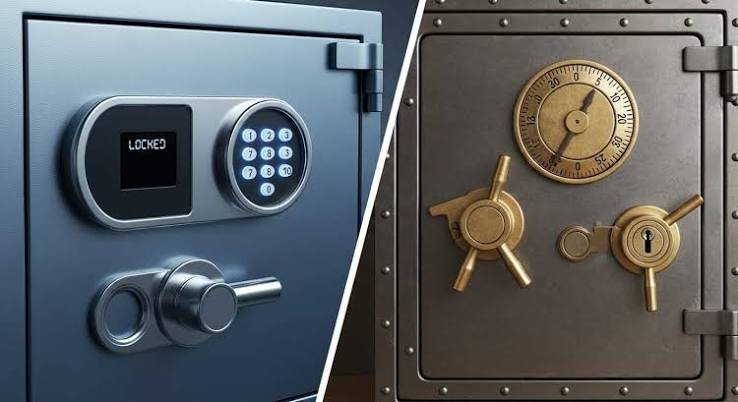
Mechanical home safes in India mostly use lever key locks, often 6-lever designs that are difficult to pick. Some models use a mechanical combination dial or push-button code, and higher-security safes combine two locks, so both a key and a code are needed to open the door. Turning the key or handle moves solid steel bolts into the safe body.
Digital safes use an electronic keypad, and premium models add biometric fingerprint access. Entering the correct code powers a small motor that withdraws the bolts. Most good digital safes also include:
- A mechanical override key for emergencies
- A master password in case the user code is forgotten
- An automatic freeze that locks the keypad after several wrong attempts
- A low-battery indicator
- Non-volatile memory, so the code stays saved even when batteries run out
Everyday Use in an Indian Household
Speed of Access
A digital safe opens in a few seconds with a PIN or a fingerprint, which is handy when you need jewellery before a function or documents for a bank visit. Mechanical key safes are just as quick if the key is at hand. Combination dials take a little longer and need careful turning.
The Key Problem
With mechanical safes, the safe is only as secure as the place where the key is kept. In many homes, the key ends up under a mattress, inside a drawer or in a saree fold, places experienced thieves often check first. Digital safes remove this problem, since the code lives only in your memory. Their override key should still be kept somewhere separate and secure, such as with a trusted relative or in a bank locker.
Sharing Access With Family
Digital safes make sharing easy. You can give a code to your spouse or parents and change it anytime, for example after household staff changes or a renovation. Biometric safes can store fingerprints for several family members. With mechanical safes, sharing access means handing over or duplicating the key.
Elders and Fingerprints
Fingerprint scanners sometimes struggle with older family members whose fingerprints have become faint, or with people whose hands are often dry or have small cuts. If elders will use the safe, choose a model that offers both PIN and fingerprint entry.
Batteries, Power and Long-Term Reliability
Digital safes typically run on AA batteries that last around a year with normal use. When the low-battery warning appears, simply replace them. Many models also have an emergency power port for an external battery if the batteries run flat.
A few habits keep digital safes reliable:
- Replace batteries once a year, even before the warning appears.
- Avoid placing the safe in bathrooms or damp corners, especially in coastal cities, since humidity affects electronics.
- Change your PIN occasionally, as frequently pressed keys can show wear.
Mechanical safes have a clear advantage in simplicity. With no electronics, they can work reliably for decades, needing only occasional lubrication of the lock by a locksmith.
What Really Stops a Thief
The lock type matters less than many buyers assume. A thief’s simplest option is to carry the safe away and open it later.
A 40-litre home safe often weighs under 20 kg, light enough for one person to lift. That’s why anchoring matters most. Bolt the safe to the floor or a concrete wall using the fasteners supplied, ideally inside a wardrobe or a concealed niche.
Other features that make a difference:
- Thick steel doors and solid shooting bolts
- Concealed hinges and pry-resistant door edges
- Auto-freeze on digital safes to stop code guessing
- Discreet placement, away from the main bedroom almirah where thieves often look first
Price and Ten-Year Running Cost
Approximate 2026 market prices help compare the two. A compact 15-litre mechanical key safe from a leading Indian brand sells for around ₹7,000, while the digital version of a similar size sells for around ₹9,000. Small 4 to 5-litre digital safes start at roughly ₹4,000. Large home lockers of 90 litres and above can cost from ₹50,000 to over ₹1 lakh.
So at the same size, a digital safe usually costs about ₹2,000 to ₹4,000 more. Batteries add roughly ₹150 to ₹200 a year, or about ₹2,000 over ten years. Altogether, the convenience of a digital safe costs around ₹4,000 to ₹6,000 extra across a decade.
Home Safe or Bank Locker?
Many Indian families use both. Since RBI’s revised locker rules took effect in January 2023, banks are liable for up to 100 times the annual locker rent if valuables are lost due to the bank’s negligence, fire or theft at the branch. Heirloom jewellery and rarely used valuables often go to a bank locker, while a home safe holds documents, everyday jewellery and emergency cash for quick access.
Choosing the Right Safe
Pick a digital safe if:
- Several family members need access
- You want to change codes easily
- You’d rather not manage a physical key
- You open the safe frequently
Pick a mechanical safe if:
- You want zero dependence on batteries
- Elderly family members prefer a familiar key
- The safe will be opened only occasionally
- You want the simplest long-term maintenance
A dual-lock safe, combining a digital keypad with a mechanical key, offers the strongest protection for high-value storage.
FAQs
Q1. Which is safer, a digital safe or a mechanical safe?
A: Both are secure when well built and anchored; dual-lock safes combining both offer the highest protection.
Q2. What happens if a digital safe’s battery dies?
A: Most digital safes keep the code saved and can be opened using an emergency power port or the override key.
Q3. How long do digital safe batteries last?
A: Batteries usually last about a year with normal use, depending on the model.
Q4. Are biometric safes reliable?
A: Yes, though elders with faint fingerprints may find PIN entry easier, so dual-access models are best.
Q5. Should a home safe be bolted down?
A: Yes, anchoring the safe to the floor or a concrete wall greatly reduces the risk of it being carried away.
Q6. What size safe is best for home use?
A: A 15 to 40-litre safe suits most homes for jewellery, documents and cash.