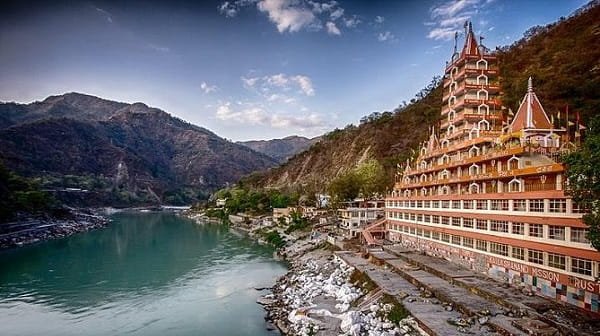
Rishikesh is one of India’s most spiritually significant and adventurously exciting destinations — a small city on the banks of the sacred Ganges at the point where the river emerges from the Himalayan foothills into the plains, simultaneously the Yoga Capital of the World recognised by the United Nations, the Adventure Capital of India known for white-water rafting, bungee jumping, and cliff jumping, and one of Hinduism’s most sacred pilgrimage destinations anchored by the evening Ganga Aarti ceremony at Triveni Ghat and the ancient ashrams that line the river. Whether you are planning a yoga and wellness retreat, a white-water rafting and adventure sports expedition, a Himalayan trekking base camp journey, a spiritual pilgrimage, or simply a peaceful escape to the banks of the Ganges, choosing the best time to visit Rishikesh ensures you align your visit with the version of this extraordinary destination that serves your purpose most completely.
Located in the Tehri Garhwal district of Uttarakhand where the Ganges descends from the Himalayan ranges, Rishikesh sits at approximately 372 metres elevation and experiences a climate significantly shaped by its proximity to the mountains — with cool, clear winters, pleasant springs, hot summers, and dramatic monsoon rainfall between July and September.
Rishikesh Travel Overview
| Factor | Details |
| Best Overall Time | September to April |
| Peak Tourist Season | October to March |
| Cheapest Time to Visit | July to August |
| Best for River Rafting | September to June |
| Best for Yoga Retreats | Year-round |
| Best for Trekking | March to June and September to November |
| Best for Honeymoon | October to February |
| Best for Budget Travelers | July to September |
| Best for Festivals | March and October to November |
| Average Temperature | 5°C to 40°C (varies by season) |
Why Timing Matters When Visiting Rishikesh
Rishikesh experiences four distinct seasons — winter, spring, summer, and monsoon — each creating a different experience of the city, its Ganges-front ghats, its adventure activities, and its spiritual atmosphere. The single most important activity-specific timing consideration is white-water rafting — the Ganges rafting season runs from late September to June, with the monsoon months of July to mid-September seeing suspension of all rafting operations due to dangerously high river levels. Planning your Rishikesh visit around this activity calendar is the most common and most important timing decision most travellers make.
Visiting Rishikesh During Winter (October to February)
Winter is the most popular and most recommended time to visit Rishikesh for the broadest range of visitors. The cool, clear air along the Ganges, the dramatic backdrop of the lower Himalayan ridges, and the full operational status of every adventure activity and ashram create the complete Rishikesh experience in ideal conditions.
Weather During Winter
Temperatures range between 5°C and 22°C with December and January being the coldest months. Early mornings along the Ganges are cool and misty — particularly atmospheric for sunrise yoga and the pre-dawn Ganga Aarti ceremony. Days are clear, bright, and pleasant for extended outdoor activity.
Why Visit Rishikesh in Winter?
- All adventure activities including rafting, bungee jumping, cliff jumping, and kayaking are fully operational
- Clear, cold mornings create the most atmospheric conditions for ghat yoga and meditation
- The Ganges runs clear and turquoise-green after the monsoon sediment has settled — the most photogenic version of the river throughout the year
- Wildlife in Rajaji National Park adjacent to Rishikesh is most visible in winter when animals seek sunlight near water
- International Yoga Festival is held in March but long-stay yoga retreats fill quickly from October — book early
- The Beatles Ashram — where the Fab Four famously studied Transcendental Meditation in 1968 — is peaceful and uncrowded in winter
- The Laxman Jhula and Ram Jhula suspension bridges over the Ganges are most photogenic in the clear winter air with Himalayan ridges visible in the background
Winter is the most fully activated and most comfortable version of Rishikesh across all traveller types.
Best Places to Visit
Triveni Ghat — Ganga Aarti
The evening Ganga Aarti ceremony on the riverbank where priests perform fire rituals to the flowing Ganges is most powerfully atmospheric in winter when cool air, clear skies, and smaller crowds create an intimate spiritual experience. Pre-dawn aartis in winter mist are among the most memorable experiences in Rishikesh.
Laxman Jhula and Ram Jhula
These iconic suspension bridges crossing the Ganges are most pleasantly explored in winter when the cool river air and clear Himalayan backdrop create the destination’s most photographed views. The market lanes and café-lined alleys around both bridges are at their most active in tourist season.
Beatles Ashram (Chaurasi Kutia)
The former Maharishi Mahesh Yogi ashram where the Beatles studied in 1968 is now a ruined but accessible forest site covered in inspired graffiti from decades of pilgrim-visitors. Winter’s quiet creates the most contemplative atmosphere for exploring this uniquely evocative cultural heritage site.
Neelkanth Mahadev Temple
Located 32 kilometres from Rishikesh at 1,330 metres elevation in dense jungle, this significant Shiva temple is most comfortably reached in winter when the forest road journey is cool and the temple atmosphere is peaceful.
Advantages of Winter Travel
- All adventure activities fully operational
- Most comfortable temperatures for outdoor exploration and yoga practice
- Clear, turquoise Ganges at its most photogenic
- Wildlife viewing in Rajaji National Park is most rewarding
- Rich festival and cultural activity calendar
Disadvantages
- October to February is peak season with the highest hotel and ashram rates
- Popular rafting stretches book out in advance during December and January
- International Yoga Festival in March requires accommodation booking 2 to 3 months ahead
- December and January mornings can be genuinely cold requiring warm layers
October — Rishikesh’s Adventure Season Opening
October marks the definitive start of Rishikesh’s adventure season when the river rafting season formally opens after the monsoon closure and all outdoor activities resume simultaneously.
What Makes October Special?
- White-water rafting reopens on the Ganges after monsoon suspension — the river levels are perfect at the start of the season
- Post-monsoon freshness ensures the Himalayan foothills surrounding Rishikesh are intensely green
- The Diwali festival fills Rishikesh’s ghats with diyas and celebrations in late October
- Adventure camping in Shivpuri and the Ganges canyon begins its season
- Wildlife activity in Rajaji National Park increases as the monsoon retreats
Book October accommodation at least 3 to 4 weeks in advance — the adventure season opening creates rapid demand.
Visiting Rishikesh During Spring (March to May)
Spring is Rishikesh’s most versatile season, combining active river rafting and trekking conditions with comfortable temperatures and the International Yoga Festival that makes March the most culturally and spiritually concentrated single month in the Rishikesh calendar.
Weather During Spring
Temperatures range between 15°C and 35°C — March and April are most pleasant while May builds toward summer warmth. Days are bright, clear, and long with the Himalayan ridges most visibly snow-capped against clear blue skies through April.
Why Visit Rishikesh in Spring?
- International Yoga Festival held annually in March at Parmarth Niketan ashram gathers hundreds of yoga teachers and practitioners from across the world for a week of classes, workshops, and evening Ganga Aarti
- White-water rafting is in full operational swing with the river at excellent levels for all grades of rapids
- Trekking trails toward Himalayan destinations including Kedarnath, Badrinath, Hemkund Sahib, and Chopta open from April
- The Char Dham Yatra pilgrimage season — covering Yamunotri, Gangotri, Kedarnath, and Badrinath — opens in April or May, making Rishikesh the natural base for pilgrims
- Raft camping multi-day expeditions on the Ganges are most popular in March to May
- The riverfront café culture is most vibrant in the pleasant spring temperatures
Best Spring Activities
- International Yoga Festival attendance in March
- Multi-day Ganges rafting expeditions from Devprayag or Kaudiyala to Rishikesh
- Bungee jumping and cliff jumping at Jumpin Heights — India’s highest bungee at 83 metres
- Trekking to Rajaji National Park for elephant and tiger sightings
- Char Dham base camp planning from Rishikesh
Benefits of Spring Travel
- International Yoga Festival in March creates the year’s most spiritually concentrated experience
- All adventure activities at peak operational capacity
- Himalayan trekking season opens in April
- Pleasant temperatures for all-day outdoor activity through April
- The river and surrounding forest are still post-monsoon green through March
Drawbacks
- March International Yoga Festival week requires 2 to 3 months advance booking
- May begins warming significantly toward summer heat
- Easter and school holiday periods in April increase accommodation demand
Visiting Rishikesh During Summer (May to June)
Summer brings the highest temperatures to Rishikesh but also the most vigorous rafting conditions and the most active Char Dham pilgrimage energy as millions of devotees pass through on their way to the Himalayan shrines.
Weather During Summer
Temperatures range between 20°C and 40°C — May and June are the hottest months, with afternoon heat making outdoor activity uncomfortable between 11 AM and 4 PM. Early mornings and evenings remain pleasant and the Ganges river temperature is comfortably warm for water activities.
Why Visit Rishikesh in Summer?
- River rafting on the Ganges is at its most powerful and exciting with pre-monsoon water levels at their most energetic
- Char Dham pilgrimage season is at peak activity with the Himalayan shrines fully open
- The Ganga Dussehra festival in June celebrates the Ganges’ descent to earth with massive pilgrim gatherings
- Sunrise yoga on the ghats in the cool pre-dawn hours before heat builds is particularly peaceful
- Hotel rates are lower than peak winter season
Advantages of Summer Travel
- Active and powerful rafting conditions before the monsoon closes the season
- Char Dham pilgrimage season at its most vibrant
- Lower hotel rates than winter peak
- Cool early mornings for yoga and riverside meditation before daily heat builds
Disadvantages
- Afternoon temperatures reaching 38 to 40°C make outdoor sightseeing uncomfortable
- Pre-monsoon humidity builds through June
- Not ideal for extended outdoor trekking or camping in the heat
Visiting Rishikesh During Monsoon (July to Mid-September)
Monsoon transforms Rishikesh into a dramatically green, spiritually vibrant but adventure-restricted version of itself. The Ganges swells to dangerous levels, rafting ceases entirely, and the surrounding Himalayan foothills turn an extraordinary luminous green.
Weather During Monsoon
Temperatures range between 20°C to 32°C with regular and sometimes heavy rainfall. Humidity is high. The Ganges rises dramatically — sometimes flooding the lower ghats — and the river’s colour changes from winter turquoise to a powerful monsoon brown.
Why Visit Rishikesh During Monsoon?
- The Shravan month is Hinduism’s most sacred period dedicated to Lord Shiva — Rishikesh and Haridwar fill with lakhs of Kanwariyas (Shiva devotees carrying sacred Ganges water) creating one of India’s most extraordinary human movement spectacles
- The surrounding forest is at its most intensely green and alive
- Waterfalls in the Himalayan foothills near Rishikesh reach maximum drama
- Hotel rates are at their lowest — significant savings on all accommodation categories
- Yoga and meditation retreats continue year-round regardless of weather
Popular Monsoon Experiences
Kanwar Yatra
The monsoon pilgrimage season in Shravan month sees millions of Shiva devotees — dressed in saffron and carrying decorated kanwars filled with Ganges water — walking from Haridwar and Rishikesh to their home Shiva temples. This creates one of the world’s most extraordinary human rivers along the National Highway — a spiritual spectacle unlike anything else in India.
Riverside Yoga in Rain
The experience of practicing yoga at a riverside ashram while monsoon rain patters on the Ganges surface and mist rises from the surrounding jungle is uniquely atmospheric and deeply sought by meditators and yoga practitioners who visit Rishikesh specifically in this season.
Advantages of Monsoon Travel
- Year’s lowest hotel and ashram rates
- Kanwar Yatra creates an extraordinary, unrepeatable spiritual spectacle
- The surrounding forest is at its most beautiful green
- Yoga and spiritual retreats operate year-round
Disadvantages
- All white-water rafting, bungee jumping, and most outdoor adventure activities suspended
- Flash flood risk on Himalayan roads — trekking to higher altitudes is not advisable
- High humidity is uncomfortable during extended outdoor exposure
- Road closures from landslides can restrict access to higher Himalayan destinations
Best Time to Visit Rishikesh for Different Travellers
For Adventure Seekers
September to June is the essential window for white-water rafting, bungee jumping, cliff jumping, and multi-day Ganges expedition camping. October to March offers the finest combination of active adventure season and comfortable conditions.
For Yoga and Wellness Seekers
Rishikesh is a year-round yoga destination — retreats, teacher training programmes, and ashram stays operate in every season. March for the International Yoga Festival and October to February for the most comfortable conditions make these the peak yoga travel months.
For Spiritual Pilgrims
July and August for the Kanwar Yatra spectacle; March for the Yoga Festival’s spiritual concentration; October and November for the Diwali celebrations and peaceful post-monsoon ashram atmosphere.
For Budget Travellers
July to September offers the lowest rates — the Kanwar Yatra spectacle compensates for adventure activity restrictions. October is the best budget-adventure balance month — season just opened, rates not yet at winter peak.
For Families
October to March provides the most comfortable conditions for all ages, safe rafting grades for older children, and the peaceful evening Ganga Aarti ceremony that creates genuinely moving family memories.
Best Time for White-Water Rafting in Rishikesh
White-water rafting on the Ganges is Rishikesh’s most celebrated adventure activity.
Ideal Months
September to June with the finest conditions from October to May.
Rafting stretches include:
- Brahmpuri to Rishikesh — 9 km, Grade I-II beginner stretch
- Shivpuri to Rishikesh — 16 km, Grade II-III intermediate with major rapids
- Marine Drive to Rishikesh — 24 km, Grade III full-day with camping options
- Kaudiyala to Rishikesh — 36 km, Grade IV advanced multi-day expedition
- Devprayag to Rishikesh — 70+ km, multi-day expedition through the Himalayan canyon
All operators are required to use safety helmets, life jackets, and certified guides. Book with operators registered with the Uttarakhand Tourism Development Board.
Festivals and Events in Rishikesh
Rishikesh’s festival calendar is among India’s most spiritually concentrated.
International Yoga Festival
Held annually in March at Parmarth Niketan ashram on the Ganges bank, this week-long celebration of yoga traditions draws teachers and practitioners from across the world for daily sunrise yoga on the Ganges ghats, afternoon workshops, and evening Ganga Aarti.
Kanwar Yatra
The monsoon Shiva pilgrimage in July and August creates one of the world’s largest annual human movements as millions of saffron-clad devotees walk through Rishikesh and Haridwar carrying Ganges water to their home Shiva temples.
Ganga Dussehra
Celebrated in June, this festival marking the Ganges’ mythological descent to earth fills the Rishikesh and Haridwar ghats with pilgrim bathing, lamp-floating ceremonies, and devotional music.
Travel Tips for Visiting Rishikesh
To make your Rishikesh visit most rewarding, consider these practical guidelines:
- Book white-water rafting at least 2 to 3 days in advance in October to February — reputable operators fill quickly in peak season.
- International Yoga Festival accommodations at Parmarth Niketan fill 2 to 3 months in advance — apply early for residential participation.
- Alcohol and non-vegetarian food are officially prohibited in the religious zones of Rishikesh — respect this cultural requirement throughout your stay.
- The area beyond Laxman Jhula has more genuine ashram culture and fewer tourist crowds than the Ram Jhula commercial area — explore both to understand the difference.
- Register for Char Dham trekking or pilgrimage through the Uttarakhand Tourism portal — biometric registration is now mandatory for all Char Dham visitors.
- Early morning (5 to 7 AM) is the finest time for Ganges photography — the light is extraordinary, the ghats are peaceful, and the spiritual atmosphere is at its most authentic.
- Mosquito repellent is essential in all seasons but particularly in monsoon when water bodies and vegetation create breeding conditions.
Conclusion
The best time to visit Rishikesh is from October to April, when the white-water rafting season is fully operational, the Ganges flows clear and photogenic, temperatures are comfortable for all outdoor activities, and the spiritual and cultural life of the city is at its most vibrant and accessible.
October stands out as perhaps the single finest month — the adventure season reopens with perfectly conditioned river levels, the surrounding Himalayan forest retains its monsoon green freshness, Diwali creates a festive atmosphere on the ghats, and accommodation rates are below the December-January winter peak.
Whether you come for the rapids, the yoga, the Ganga Aarti, the bungee jump, the International Yoga Festival, the Kanwar Yatra spectacle, or simply the profound experience of sitting on the banks of the Ganges as it emerges from the Himalayan foothills into the Indian plains, Rishikesh rewards every kind of visitor with an experience that is simultaneously thrilling and deeply calming — a combination almost impossible to find anywhere else in the world.
Frequently Asked Questions
Q1. What is the best month to visit Rishikesh?
A: October and March are the two finest months — October for the adventure season opening with perfect river conditions and post-monsoon green landscape; March for the International Yoga Festival and ideal rafting conditions.
Q2. Is white-water rafting available year-round in Rishikesh?
A: No — the rafting season runs from late September to June. During the monsoon months of July to mid-September, high river levels make rafting unsafe and operations are suspended.
Q3. What is the peak tourist season in Rishikesh?
A: October to March is peak season, with the International Yoga Festival in March creating the most concentrated demand. December and January weekends are busiest for adventure activity bookings.
Q4. Is Rishikesh worth visiting during monsoon?
A: Yes, for specific experiences — the extraordinary Kanwar Yatra pilgrimage, year-round yoga retreats, the dramatically green Himalayan forest, and the lowest hotel rates of the year make monsoon rewarding for the right type of visitor despite adventure activity restrictions.
Q5. How many days are enough for Rishikesh?
A: A 3 to 4-day visit covers the Ganga Aarti, white-water rafting, the Beatles Ashram, Laxman Jhula, Neelkanth Mahadev Temple, and a yoga class or ashram visit comfortably. Extend to 7 days for an immersive yoga retreat or multi-day rafting expedition.