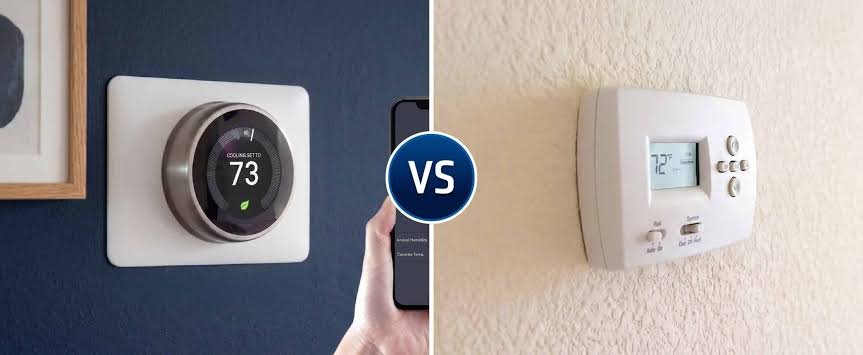
Many Indian families now switch on lights, fans and geysers from a phone or with a voice command, while millions of others still rely on the dependable click of a modular switchboard, and the choice between smart home automation and conventional home controls has become a real question for anyone building, renovating or simply upgrading a flat. Smart systems add schedules, remote access and energy tracking. Conventional switches offer simplicity, low cost and near-perfect reliability. The good news is that you don’t have to choose one completely. Knowing where each works best helps you spend wisely and avoid gadgets that end up unused.
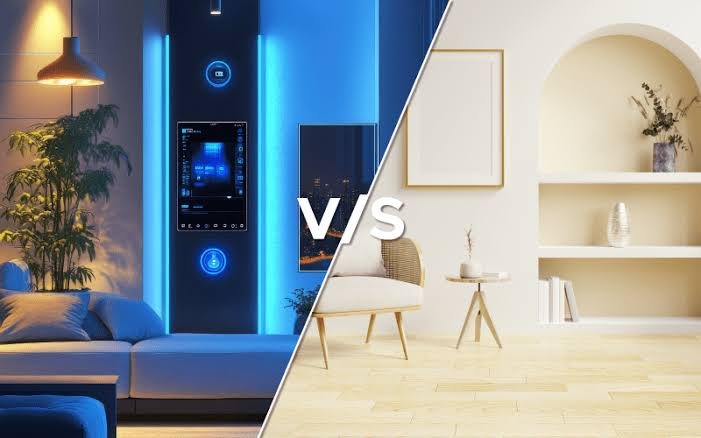
What Each Setup Looks Like in an Indian Home
Conventional controls are the familiar modular switches, sockets, fan regulators and the occasional timer for a geyser or water pump. Your local electrician installs and repairs them, and they work the same way for everyone in the house.
Smart home automation ranges widely:
- Plug-in devices: smart plugs, smart bulbs and IR blasters that control ACs and TVs through their remote signals
- Retrofit modules: small units fitted behind existing switchboards, turning ordinary switches into smart ones
- Smart switch panels: touch or button panels that replace the whole switchboard
- Wired automation systems: professionally designed setups for villas and large homes, controlling lighting scenes, curtains, security and climate together
Most homes control these through a mobile app and voice assistants such as Alexa or Google Assistant. Newer devices also support Matter, an industry standard that lets products from different brands work together in one app.
Day-to-Day Living
Convenience
Smart controls shine in small moments. Switching off the bedroom fan without getting up, turning on the porch light from the car, checking whether the geyser was left on after you’ve reached the office, or setting the AC to start cooling 15 minutes before you get home. Scenes like “Movie Night” or “Good Morning” control several lights at once.
Conventional switches need you to be there, but they’re instant and need no app.
Reliability When Internet or Power Fails
This is where planning matters. Basic smart devices depend on Wi-Fi and sometimes the internet. During an outage, app and voice control may pause. Good retrofit modules keep the physical switch working, so lights and fans still operate normally from the wall. Choose devices that offer local control or manual fallback.
Conventional switches simply keep working whenever there’s electricity.
Ease for Elders and Domestic Help
Grandparents, guests and household staff understand regular switches immediately. Smart homes work best when the wall switches remain usable, with automation added as a bonus rather than a requirement. Voice control can genuinely help elders with limited mobility once it’s set up for them.
Repairs
Any electrician in India can replace a faulty modular switch within minutes. Smart devices are usually replaced as a unit and may need the brand’s service team or a reset through the app.
The Geyser Test: Where Automation Pays for Itself
Water heaters show the clearest savings. A 2 kW geyser left on for one extra hour a day uses 2 units of electricity. Over a month, that’s 60 units. At around ₹7 per unit, it adds up to roughly ₹420 a month.
A schedule that switches the geyser off automatically after 20 to 30 minutes stops that waste. A suitable smart switch often pays for itself within a few months.
One safety point: geysers, ACs and water pumps draw heavy current. Use only smart switches or plugs rated for 16 amps or higher for these appliances, never a standard 6 A smart plug.
Air conditioners offer savings too. Bureau of Energy Efficiency guidance recommends 24°C as the default AC temperature, and smart controls make it easy to hold that setting and switch the AC off when rooms are empty.
Costs From One Room to Whole Home
Prices vary widely by brand and features, but approximate ranges help with planning:
- Smart plugs and smart bulbs: a few hundred to about ₹1,500 each
- IR blasters for AC and TV: around ₹1,000 to ₹2,500
- Retrofit switch modules: commonly ₹1,500 to ₹3,000 per switchboard
- Full touch panel upgrade for a 2BHK: often ₹50,000 to ₹1.5 lakh
- Wired automation for villas: several lakh rupees, depending on scope
Conventional modular switches for an entire 2BHK typically cost a fraction of smart upgrades, which is why many families start with a few smart points rather than converting the whole home.
Before Going Smart: A Wiring Check
A short checklist prevents frustration later.
- Neutral wire: Many smart switches need a neutral wire inside the switchboard. Ask your electrician to check before buying.
- Load rating: Match each module’s rating to the appliance it controls, especially for geysers, ACs and pumps.
- Wi-Fi coverage: RCC walls weaken signals, so a mesh router may be needed for devices in far rooms.
- Surge protection: Voltage fluctuations are common in many cities, so protect smart panels and the router.
- Compatibility: Pick devices that work with your preferred voice assistant, ideally with Matter support.
- Security: Use strong passwords, enable two-factor login and keep firmware updated.
A Sensible Mix
For most Indian homes, a blended approach works best:
- Smart controls for the geyser, AC, porch and balcony lights, and the main living room
- Retrofit modules in rented homes, since they can be removed when you move
- Conventional switches in bathrooms, store rooms, kitchen exhaust and utility areas
- Physical switches kept working everywhere, so no one is ever locked out of basic controls
If you’re building a new home, ask your electrician to run neutral wires to every switchboard and leave deeper switch boxes. That small step keeps every room ready for automation later, even if you start with conventional switches today.
FAQs
Q1. Is smart home automation worth it in India?
A: Yes, especially for geysers, ACs and lighting, where schedules and remote control save energy and add convenience.
Q2. Do smart switches work without internet?
A: Many smart switches keep working manually, and some offer local control without internet; check this before buying.
Q3. Can I make my existing switches smart?
A: Yes, retrofit modules fitted behind existing switchboards make ordinary switches smart without replacing them.
Q4. Do smart switches need a neutral wire?
A: Most smart switches need a neutral wire in the switchboard, so get the wiring checked first.
Q5. Is home automation safe for geysers and ACs?
A: Yes, as long as the smart switch is rated for heavy loads, typically 16 amps or more.
Q6. Which is cheaper, smart or conventional controls?
A: Conventional switches cost much less upfront, while smart controls can recover part of their cost through energy savings.