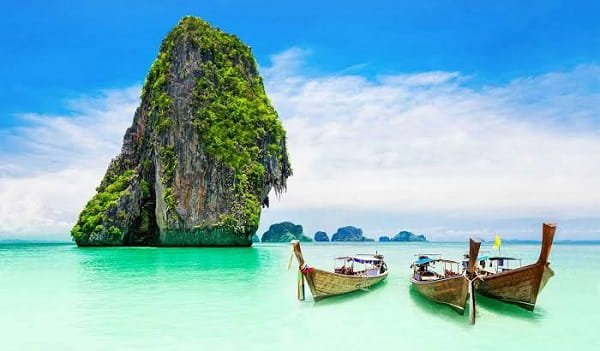
Phuket is one of Southeast Asia’s most iconic and most visited island destinations — Thailand’s largest island, situated in the Andaman Sea off the west coast of peninsular Thailand, famous for its powder-white beaches at Patong, Kata, Karon, Nai Harn, and Surin, its world-class diving sites at the Similan Islands and Richelieu Rock, its dramatic limestone karsts at Phang Nga Bay where James Bond Island rises from emerald water, the atmospheric Sino-Portuguese shophouse architecture of Phuket Old Town, the Vegetarian Festival’s extraordinary fire-walking and body piercing ceremonies, the elephant sanctuaries of the interior, and a hospitality and resort infrastructure that has made it one of the world’s most visited beach destinations. Whether you are planning a beach holiday, a diving expedition to the Similans, a Phang Nga Bay sea kayaking trip, a cultural Old Town exploration, a Songkran water festival experience, or a wellness and yoga retreat, choosing the best time to visit Phuket determines beach conditions, diving visibility, sea state, hotel prices, and crowd levels in ways that significantly shape your experience.
Phuket Travel Overview
| Factor | Details |
| Best Overall Time | November to April |
| Peak Tourist Season | December to January |
| Cheapest Time to Visit | June to October |
| Best for Beaches | December to March |
| Best for Diving | December to May |
| Best for Similan Islands | November to May |
| Best for Surfing | May to September |
| Best for Honeymoon | November to February |
| Best for Budget Travelers | June to October |
| Average Temperature | 27°C to 34°C year-round |
Why Timing Matters When Visiting Phuket
Phuket’s position on the Andaman Sea coast of the Thai-Malay peninsula means it is directly affected by the southwest monsoon from May to October — a weather system that creates rough seas, grey skies, and sometimes very heavy rainfall that closes beaches and affects boat tours and diving expeditions. The northeast monsoon from November to April brings calm, clear conditions that make Phuket’s beaches and surrounding marine national parks most accessible and most rewarding.
Understanding this single fundamental seasonal pattern — dry and clear from November to April, wet and rough from May to October — is the core of all Phuket timing decisions.
Visiting Phuket During Dry Season (November to April)
The dry season is universally the best time to visit Phuket. Clear skies, calm Andaman Sea, and the full range of beach, diving, and island-hopping activities create the complete Phuket experience at its most reliable and most rewarding.
Weather During Dry Season
Temperatures range between 24°C and 32°C — warm and tropical with the humidity notably lower than the wet season, particularly from November to February. The breeze off the Andaman keeps beach conditions fresh without the oppressive humidity of the summer months. Sea surface temperature remains a constant 28°C to 29°C — perfect for swimming and diving throughout the season.
Why Visit Phuket in Dry Season?
- All west coast beaches — Patong, Kata, Karon, Surin, Kamala, Nai Harn — are at their finest with calm, clear water lapping gently onto clean sand
- The Similan Islands — a marine national park rated among the world’s finest diving destinations — is open from November to May; diving visibility reaches 30 to 40 metres in peak conditions
- Phang Nga Bay sea kayaking through mangrove tunnels and limestone sea caves is most pleasant in calm dry season conditions
- Boat trips to James Bond Island and the Phi Phi Islands operate on reliable schedules without rough-sea cancellation risk
- Sunset boat cruises, parasailing, jet skiing, and all water sports activities are fully operational
- Phuket’s Vegetarian Festival in October is the last major event before peak season officially begins — early November visitors catch the festival aftermath atmosphere
- December and January hotel rates peak — the finest rooms and beach villas are most expensive but the conditions they showcase are genuinely at their best
Dry season is the most popular and most rewarding period for the complete Phuket experience.
Best Beaches by Month
December to February — The Golden Window
The finest three months in Phuket’s weather calendar. Temperatures range between 24°C and 30°C with the lowest humidity of the year. Patong Beach buzzes with activity under blue skies. Nai Harn’s sheltered southern bay is perfectly calm. Kata Noi — consistently rated among Asia’s most beautiful small beaches — is at its most striking under clear December skies. Bang Tao Beach in the north offers the widest stretch with the fewest crowds.
March to April
Temperatures rise toward 34°C with humidity building, but sea conditions remain excellent and beaches are uncrowded compared to the Christmas-New Year peak. March and April represent the finest value window of the dry season — nearly equivalent conditions to December at meaningfully lower prices and with noticeably fewer tourists.
Advantages of Dry Season Travel
- All beaches at their finest with calm, clear Andaman Sea conditions
- Similan Islands diving at peak visibility — world-class marine environment accessible
- Zero rough-sea cancellation risk for island boat trips
- All water sports and boat-based activities fully operational
- The most photogenic version of Phuket’s beaches and Phang Nga Bay
Disadvantages
- December and January carry the year’s highest hotel rates — peak Christmas and New Year pricing
- Popular beaches at Patong and Kata are at their most crowded
- Advance booking essential for December and January — 2 to 3 months ahead for popular properties
- Songkran (Thai New Year) in April sees massive domestic traveller surge and water-throwing festival
December and January — Phuket at Peak
December and January represent Phuket’s absolute peak period — the finest beach conditions, the largest international visitor numbers, and the year’s highest hotel prices, combined into the most complete version of the island’s world-famous beach experience.
What Makes December and January Special?
- The Andaman Sea is at its calmest and clearest — boat trips to the Phi Phi Islands, Phang Nga Bay, and the Similan Islands all operate with maximum reliability
- International visitor arrivals are at their annual peak — creating the most cosmopolitan and vibrant resort atmosphere on the island’s beaches
- New Year’s Eve on Patong Beach is one of Asia’s most spectacular outdoor celebrations — fireworks over the Andaman Sea with thousands of lanterns rising simultaneously
- The Similan Islands diving season is well-established — visibility at its annual best
- Sunset boat cruises with champagne are most beautifully experienced in the December golden-hour light
Book December and January accommodation at least 2 to 3 months in advance — the most popular beachfront properties and boutique villas in Kata, Surin, and Nai Harn fill completely.
April — Songkran and the Festival Season
April is one of the most energetic and culturally distinctive months to visit Phuket — the Thai New Year festival of Songkran transforms the entire island into one vast water fight that must be experienced to be fully appreciated.
What Makes April Special?
- Songkran Festival from April 13 to 15 — the traditional Thai New Year water festival where the entire population participates in water-throwing celebrations ranging from gentle traditional bowl pouring to full-scale street water battles
- Phuket’s Songkran on Patong’s Bangla Road is among the most energetic in Thailand
- April temperatures are the warmest of the dry season at 32 to 34°C — making the water celebrations particularly refreshing
- Beach conditions are still excellent in early April before the transition toward wet season begins
Visiting Phuket During Wet Season (May to October)
Phuket’s wet season is one of Southeast Asia’s most misunderstood travel periods. The reality is significantly more nuanced than a simple “avoid monsoon” recommendation — rainfall typically comes in intense afternoon bursts of one to two hours rather than all-day downpours, and Phuket’s luxury resort infrastructure ensures there is always something rewarding to do regardless of the weather.
Weather During Wet Season
Temperatures remain tropical at 27°C to 33°C throughout the wet season. May, June, and July see the most dramatic transition with building humidity and increasingly frequent afternoon showers. September and October are the wettest months with the most consistent rainfall and the roughest sea conditions. The humidity drops noticeably from June to August when showers are frequent but mornings are typically sunny.
Why Some Travellers Visit Phuket in Wet Season?
- Hotel rates drop dramatically — 40 to 60 percent below December-January peak, making luxury properties and beachfront villas accessible at genuinely affordable rates
- Phuket Vegetarian Festival in October — one of Thailand’s most dramatic and visually intense cultural events where devotees walk on fire and pierce their bodies with skewers in extraordinary acts of spiritual devotion
- The beaches are quieter and more peaceful — June and July offer Phuket’s famous beaches without the December crowds
- Surfing season opens from May to September — the southwest monsoon swell creates surfable waves at Kalim Beach and Kata Beach
- The island’s interior — elephant sanctuaries, waterfalls, and rainforest — is most beautifully lush in the wet months
- Morning hours are typically clear — many wet season days offer full mornings of outdoor activity before afternoon rain arrives
Popular Wet Season Activities
Phuket Vegetarian Festival
Held every October according to the Chinese lunar calendar, the Vegetarian Festival — locally called the Nine Emperor Gods Festival — is one of Asia’s most extraordinary cultural events. Devotees dressed in white practise extreme physical acts of devotion including walking on fire, climbing knife-blade ladders, and piercing cheeks and tongues with large skewers — believing their faith protects them from harm. The street processions through Phuket Old Town are among the most visually dramatic cultural spectacles in Southeast Asia.
Surfing at Kalim and Kata
The monsoon swell from May to September produces the Andaman coast’s only reliable surf conditions — Kalim Beach (at the northern end of Patong) and the southern end of Kata Beach produce surfable waves that attract a small but committed surf community during the wet months.
Phuket Old Town Exploration
The Sino-Portuguese shophouse architecture, the weekend Indy Market, the Dibuk Road restaurants, and the Saturday Walking Street are all most peacefully explored during the wet season when tourist numbers are lowest and the town’s authentic local character is most visible.
Advantages of Wet Season Travel
- Dramatic price reductions — luxury properties at 40 to 60 percent below peak
- Phuket Vegetarian Festival in October is extraordinary and cannot be experienced at any other time
- Quieter beaches and more authentic town atmosphere
- Surfing season active at Kalim and Kata
- Lush green island interior most beautiful
Disadvantages
- Rough sea conditions from June to October make Similan Islands diving inaccessible — the marine park closes
- Island boat trips to Phi Phi Islands and Phang Nga Bay are occasionally suspended during rough weather
- September and October carry the highest rainfall and most sustained rough sea conditions
- Some beach clubs and water sports operators reduce or close operations during peak wet months
- The swim flag system (red flag) prohibits swimming at some beaches during rough swell — rip currents are dangerous in monsoon conditions
Best Time to Visit Phuket for Different Travellers
For Honeymooners
November to February offers the finest honeymoon conditions — the pristine beaches, calm turquoise Andaman Sea, luxury pool villa experiences, and romantic sunset boat cruises create the classic Phuket honeymoon in its most beautiful setting.
For Divers
November to May for the full diving season including Similan Islands access. December to March for peak visibility and the most reliable diving conditions. The Similans are only accessible November to May when the marine park is open.
For Budget Travellers
June to August offers the finest budget window — meaningful rainfall reductions from September-October peak, hotel rates at their most competitive, and still reasonable beach mornings before afternoon showers build.
For Surfers
May to September — the southwest monsoon swell creates the Andaman coast’s only reliable surfable conditions at Kalim and Kata Beaches.
For Cultural Experiences
October for the extraordinary Phuket Vegetarian Festival. April for Songkran. These two months offer cultural experiences unavailable at any other time of year.
Best Time for Similan Islands Diving
The Similan Islands — one of the world’s top ten diving destinations — are the crown jewel of Phuket diving.
Ideal Months
November to May when the marine park is open.
Similan Islands diving includes:
- Visibility up to 40 metres at peak conditions in January and February
- Whale sharks, manta rays, leopard sharks, and huge schools of barracuda
- Both hard and soft coral gardens in pristine condition
- Deep pinnacle dives and dramatic underwater boulder formations
- Richelieu Rock — rated Asia’s finest dive site — accessible on Similan liveaboard trips
The Similan Islands National Park closes completely from May to October to allow the marine environment to regenerate during the rough monsoon season.
Festivals and Events in Phuket
Songkran Festival
Celebrated across Thailand from April 13 to 15, Songkran is the Thai New Year water festival — Phuket’s Patong celebrations on Bangla Road are among the most exuberant in the country, with street-scale water battles, traditional ceremony, and an atmosphere of genuine community joy that makes April one of the most memorable months to visit.
Phuket Vegetarian Festival
Held in October for nine days, this Chinese-influenced festival brings fire-walking, blade-climbing, and extraordinary acts of piercing devotion to the streets of Phuket Old Town in one of Asia’s most visually intense and spiritually significant cultural events.
Phi Ta Khon — Ghost Festival
While primarily associated with Dan Sai in Loei province, the cultural calendar of colourful Thai festivals enriches Phuket’s surrounding regions throughout the year — the island serves as the central hub for seasonal festival exploration across southern Thailand.
Travel Tips for Visiting Phuket
To make your Phuket visit most rewarding, consider these practical guidelines:
- Book December and January accommodation at least 2 to 3 months in advance — peak properties at Kata, Surin, and Nai Harn fill completely for the Christmas-New Year period.
- Observe beach flag warnings strictly — the red flag system prohibits swimming during rough conditions and rip currents claim lives annually at Phuket’s beaches.
- Rent a motorbike or hire a car for island exploration — Phuket’s geography makes taxi dependence expensive and restrictive.
- Book Similan Islands liveaboard trips through reputable PADI-certified dive operators — the quality difference between operators on this specific trip is significant.
- The Phuket Vegetarian Festival accommodation fills very early — book at least 4 to 6 weeks ahead for October festival dates.
- Visit Phuket Old Town on the Sunday Walking Street from 4 to 9 PM for the most authentic, crowd-pleasing version of the heritage district’s food and craft experience.
- Cover shoulders and knees for temple visits — the Big Buddha and Wat Chalong both require modest dress.
Conclusion
The best time to visit Phuket is from November to April — the dry season when the Andaman Sea is calm, the beaches are at their finest, the Similan Islands are open for diving, and every beach activity from parasailing to sunset boat cruises operates without weather disruption risk. December and January deliver the most complete Phuket experience with pristine beach conditions, vibrant resort atmosphere, and the finest diving visibility — at the year’s highest prices.
March and April offer the finest value within the dry season — nearly equal beach conditions to December with meaningfully lower prices and the added cultural dimension of Songkran in April.
Whether you come for Patong’s beach energy, the Similans’ world-class diving, Phang Nga Bay’s limestone karst scenery, Phuket Old Town’s Sino-Portuguese heritage, the Vegetarian Festival’s extraordinary devotion, or simply the experience of Thailand’s finest island at its most beautifully sunlit, Phuket rewards every kind of visitor with an experience that has made it one of the world’s most visited beach destinations for very good reason.
Frequently Asked Questions
Q1. What is the best month to visit Phuket?
A: December and January for the finest beach conditions, calmest seas, and most complete diving season — or March and April for nearly equal conditions at lower prices before the approaching wet season.
Q2. Is Phuket good to visit during monsoon?
A: Yes for budget travellers — morning hours are often sunny, hotel rates drop 40 to 60 percent, and the Vegetarian Festival in October is extraordinary. However, the Similan Islands are closed and rough seas can disrupt beach and boat activities.
Q3. When are the Similan Islands accessible from Phuket?
A: The Similan Islands National Park is open from November to May. It closes completely from June to October when rough monsoon seas make the crossing unsafe and the marine environment regenerates.
Q4. When is Songkran in Phuket?
A: Songkran is celebrated from April 13 to 15 — the Thai New Year water festival where street-scale water battles on Patong’s Bangla Road and traditional ceremonial water pouring create one of Thailand’s most memorable cultural experiences.
Q5. How many days are enough for Phuket?
A: A 5 to 7-day trip allows beach relaxation, a Phang Nga Bay sea kayaking day trip, a Phi Phi Islands boat excursion, Phuket Old Town exploration, and one or two diving days. Extend to 10 days for a Similan Islands liveaboard trip.