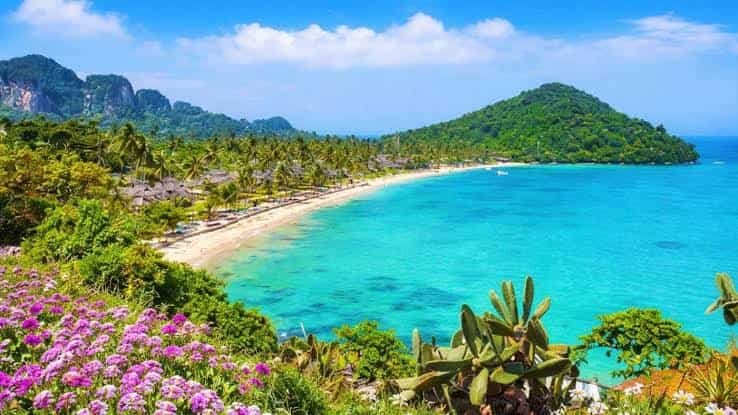
Gangtok is one of Northeast India’s most captivating and culturally rich destinations — the capital of Sikkim, a small Himalayan state perched between Nepal, Tibet, and Bhutan whose dramatic mountain landscape, ancient Buddhist monasteries, colourful prayer flags, rhododendron-covered hillsides, and sweeping views of Kanchenjunga — the world’s third-highest peak — create an atmosphere that feels genuinely removed from the rhythms of the Indian plains below. Whether you are planning a honeymoon retreat, a cultural monastery tour, a mountain trekking expedition, or a family holiday in one of India’s cleanest and most organised hill cities, choosing the best time to visit Gangtok ensures you experience this extraordinary destination at its most beautiful and accessible.
Located at 1,650 metres elevation in the Himalayan foothills of East Sikkim, Gangtok enjoys a pleasantly temperate mountain climate with four distinct seasons. Unlike many Indian destinations, Gangtok rewards visitors across all seasons — though the monsoon period requires flexibility and the winter months demand warm preparation. Understanding what each season offers makes planning the perfect Gangtok visit straightforward.
Gangtok Travel Overview
| Factor | Details |
| Best Overall Time | March to May and October to November |
| Peak Tourist Season | April, May, and October |
| Cheapest Time to Visit | July to September |
| Best for Rhododendrons | March to April |
| Best for Mountain Views | October to November |
| Best for Honeymoon | October to February |
| Best for Trekking | March to May and October to November |
| Best for Budget Travelers | July to September |
| Best for Festivals | May and December |
| Average Temperature | 4°C to 22°C (varies by season) |
Why Timing Matters When Visiting Gangtok
Gangtok experiences four distinct seasons — spring, summer, monsoon, and winter — each creating a genuinely different version of the destination. Spring brings rhododendron blooms and warming temperatures ideal for trekking and cultural exploration. Autumn offers the year’s clearest Kanchenjunga views and the most comfortable conditions for all outdoor activities. Monsoon brings the highest rainfall with landslide risk on mountain routes, and winter delivers crisp, clear days with occasional snowfall at higher elevations above the city.
Planning your visit around the experience you most want to have ensures Gangtok delivers exactly what you came for.
Visiting Gangtok During Spring (March to May)
Spring is widely considered the best time to visit Gangtok, combining the spectacular rhododendron bloom, warming temperatures, and the full awakening of Sikkim’s extraordinary natural and cultural life after winter’s quiet.
Weather During Spring
Temperatures range between 10°C and 22°C creating ideal outdoor conditions. March evenings remain cool while May days are comfortably warm. The rhododendron forests across the surrounding hills are in full bloom from late March through April, creating one of the most visually spectacular natural events in Northeast India.
Why Visit Gangtok in Spring?
- Over 40 species of rhododendron bloom across Sikkim’s hillsides from March to April
- Kanchenjunga views are clear and consistent before the monsoon cloud season builds
- The International Flower Show is held in Gangtok every spring showcasing rare orchids, alpine plants, ferns, and exotic flora
- Saga Dawa Festival — Sikkim’s most sacred Buddhist celebration — is held in May or June at the Tsuklakhang Royal Chapel
- Trekking trails including Dzongri and Goecha La become accessible after winter
- Cable car rides over the city and surrounding forests are most scenic amid spring blooms
- All sightseeing attractions including Rumtek Monastery, Enchey Monastery, and Tashi Viewpoint are fully operational
Spring is the most celebrated and popular season for Gangtok travel.
Best Places to Visit
Tashi Viewpoint
Located 8 kilometres from Gangtok town, this elevated viewpoint offers the most accessible Kanchenjunga panorama from the Gangtok area, most dramatically clear in spring and autumn. Morning visits before 9 AM provide the clearest views before haze builds.
Rumtek Monastery
The largest monastery in Sikkim and one of the most significant centres of Tibetan Buddhism outside Tibet, Rumtek sits 24 kilometres from Gangtok in a setting of extraordinary Himalayan beauty. Spring visits coincide with the monastery’s most active ritual calendar.
Enchey Monastery
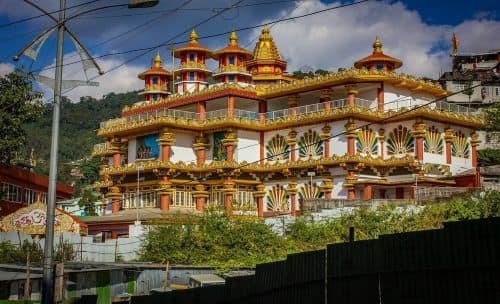
Perched on a spur above Gangtok town at 1,675 metres, Enchey Monastery is most beautifully surrounded by rhododendrons in bloom during March and April, its red and white facade set against flowering hillsides creating one of Gangtok’s most photographed compositions.
Ganesh Tok and Hanuman Tok Viewpoints
Two high viewpoints above Gangtok that offer unobstructed sunrise views of Kanchenjunga — most spectacular in spring and autumn when the sky is consistently clear and the mountain’s snow-covered faces catch the first golden light.
Advantages of Spring Travel
- Rhododendron bloom is one of Northeast India’s most spectacular natural events
- Clear Kanchenjunga views for most of the season
- International Flower Show creates a vibrant horticultural cultural experience
- Comfortable temperatures for all-day outdoor exploration
- All trekking routes and adventure activities fully operational
Disadvantages
- April and May are peak months requiring advance hotel booking
- The most popular viewpoints can be crowded on weekends in peak spring
- Pre-monsoon showers begin appearing in May adding some unpredictability
April and May — Gangtok’s Finest Festival Season
April and May represent Gangtok at its most culturally vibrant, combining the late rhododendron season with the Saga Dawa Festival and the International Flower Show.
What Makes April and May Special?
- International Flower Show at White Hall compound showcases orchids, gladioli, roses, alpines, and exotic plants from across Sikkim
- Saga Dawa Festival at Tsuklakhang Royal Chapel commemorates Lord Buddha’s birth, enlightenment, and passing with processions, butter lamp ceremonies, and sacred chanting
- Rhododendrons still flowering at higher elevations through early May
- Clear mountain views before monsoon cloud builds
- All travel routes to Tsomgo Lake and Nathu La Pass fully operational and at their most scenic
Book Gangtok accommodations at least 3 to 4 weeks in advance for April and May visits.
Visiting Gangtok During Autumn (October to November)
Autumn is Gangtok’s second prime travel window and arguably the one that delivers the most consistently outstanding Kanchenjunga views of any season. The monsoon retreats completely by late September, leaving the air freshly washed, the forests intensely green, and the sky a deep, clear Himalayan blue.
Weather During Autumn
Temperatures range between 10°C and 18°C creating the most comfortable conditions for extended outdoor exploration. October evenings are cool while November becomes progressively colder. Both months offer the year’s most reliably clear skies.
Why Visit Gangtok in Autumn?
- The clearest Kanchenjunga views of the entire year — consistently visible from Tashi Viewpoint and Ganesh Tok
- Post-monsoon freshness keeps forests and hillsides intensely green
- Comfortable temperatures for trekking and outdoor activities
- Festivals including Indra Jatra and Dashain create cultural richness
- Annual Gangtok Festival in December approaches — November sees preparations beginning
- Fewer crowds than spring peak with all facilities and attractions fully operational
- Accommodation rates begin easing from peak season levels
Many experienced Gangtok visitors consider October and November the finest months overall.
Popular Autumn Attractions
Tsomgo Lake in Autumn
The high-altitude glacial lake at 3,753 metres located 38 kilometres from Gangtok through mountain passes is most beautifully visited in October and November when autumn colours reflect in the still water surface and early snow dusts the surrounding peaks.
Nathu La Pass
The historic high-altitude mountain pass at 4,310 metres on the India-China border, accessible from Gangtok with a special permit, is most dramatically beautiful in October with autumn light and first snowfall on the surrounding peaks. Permits are arranged through Gangtok travel agencies.
Rumtek and Monasteries in Autumn Light
The warm golden quality of autumn light on Sikkim’s red and white monastery walls creates exceptional photography conditions throughout October and November with consistently clear skies providing the best backdrop for architectural monastery photographs.
Advantages of Autumn Travel
- Year’s finest Kanchenjunga views from all Gangtok viewpoints
- Post-monsoon freshness and clearest mountain air of the year
- Comfortable temperatures for extended outdoor activities
- Fewer tourists than spring peak with better accommodation availability
Disadvantages
- November evenings become genuinely cold requiring warm clothing
- Some higher trekking routes begin closing as December approaches
- The December Gangtok Festival is approaching but not yet underway
Visiting Gangtok During Winter (December to February)
Winter in Gangtok creates one of Northeast India’s most distinctive seasonal experiences — crisp, clear days with excellent Kanchenjunga visibility, occasional snowfall at higher elevations above the city, and the warmly festive atmosphere of the Annual Gangtok Festival and Christmas celebrations in December.
Weather During Winter
Temperatures in Gangtok town range between 4°C and 12°C with December and January being the coldest months. Higher elevations including Tsomgo Lake and Nathu La receive regular snowfall. The town itself occasionally experiences light frost but rarely snow at its 1,650-metre elevation.
Why Visit Gangtok in Winter?
- Annual Gangtok Festival in December brings cultural performances, food festivals, adventure activities, and handicraft exhibitions to the town
- Christmas is warmly celebrated in Christian-influenced Sikkim with festive decorations across MG Marg
- Kanchenjunga views on clear winter mornings are breathtaking with fresh snow on the peaks
- Tsomgo Lake partially freezes in January and February creating a spectacular high-altitude winter landscape
- Lower accommodation rates than spring and autumn peak seasons
- The Losar Tibetan New Year celebrations begin appearing in February
Popular Winter Attractions
Annual Gangtok Festival
Held in December, this multi-day government-organised festival showcases Sikkimese culture through traditional Chhau and Singhi Chham dances, archery and other traditional sports, mountain food festivals featuring thukpa, churpi, and chhang, and adventure activities in the surrounding hills.
Tsomgo Lake in Winter
The lake partially or fully freezes in January and February — visiting the frozen lake surrounded by snow-covered peaks is one of Gangtok’s most dramatic winter experiences. Yak rides on snow around the lakeside are a popular family activity.
MG Marg at Night in December
Gangtok’s beautiful pedestrianised central road is festively lit in December for Christmas and the Gangtok Festival, creating a warmly atmospheric evening destination for walking, shopping at local craft stalls, and experiencing Sikkimese street food culture.
Advantages of Winter Travel
- Gangtok Festival creates the year’s most culturally rich single month experience
- Clear Kanchenjunga views on winter mornings
- Tsomgo Lake winter landscape is spectacular
- Lower accommodation rates than peak spring and autumn seasons
Disadvantages
- Cold temperatures requiring warm woolens, thermal layers, and heavy jackets
- Shorter daylight hours reduce outdoor exploration time
- Some trekking routes are closed or require specialised winter preparation
- Tsomgo Lake road can be affected by snowfall requiring permit timing flexibility
Visiting Gangtok During Monsoon (July to September)
Monsoon brings the highest rainfall to Gangtok and Sikkim, creating the region’s most vividly green and dramatically misty landscape at the cost of landslide risk on mountain roads and restricted access to higher-altitude destinations.
Weather During Monsoon
Temperatures range between 15°C to 22°C with continuous to heavy rainfall particularly in July and August. Landslides are a genuine risk on mountain roads including the route to Tsomgo Lake and North Sikkim. September sees rainfall beginning to ease with conditions improving toward the excellent autumn window.
Why Some Travellers Visit Gangtok in Monsoon?
- Lowest accommodation rates of the year — significant savings on hotels
- The city itself remains functional and accessible despite hill roads being affected
- Waterfalls around Gangtok are at their most spectacular
- Gangtok’s MG Marg, monasteries, and city attractions remain open
- September offers improving conditions with the post-monsoon green landscape beginning
Advantages of Monsoon Travel
- Year’s lowest accommodation rates
- Dramatically green and misty landscape has its own atmospheric beauty
- September provides an excellent transition to the superb autumn season
Disadvantages
- Landslide risk on mountain roads restricts access to Tsomgo Lake, Nathu La, and North Sikkim
- Heavy rainfall can confine visitors to the town area
- Adventure activities including river rafting are suspended during peak monsoon
- Not recommended for first-time visitors planning a comprehensive Sikkim circuit
Best Time to Visit Gangtok for Different Travellers
For Honeymooners
October to February offers the most romantic combination of clear Kanchenjunga views, crisp mountain air, the festive Gangtok Festival in December, and the intimate winter atmosphere of a beautifully maintained Himalayan hill town at its most quietly charming.
For Families
April to May provides ideal family conditions — the International Flower Show, comfortable temperatures, all child-friendly activities operational, and the festive spring atmosphere that makes Gangtok most energetic and accessible.
For Budget Travellers
July to September offers the lowest hotel rates. September is the finest budget month with easing rainfall, dramatically green landscapes, and the approaching transition to excellent autumn conditions.
For Mountain View Seekers
October and November are the definitive months for Kanchenjunga views — the year’s clearest skies, most consistent morning visibility, and the finest mountain photography conditions make this the non-negotiable window for anyone whose primary purpose is seeing and photographing the great mountain.
For Festival Lovers
May for Saga Dawa and the Flower Show, and December for the Annual Gangtok Festival, are the two most culturally rich individual months in Gangtok’s calendar.
Best Time for Tsomgo Lake and Nathu La
These two high-altitude attractions are the most popular day trips from Gangtok.
Ideal Months
October to May for both destinations, with December to February adding spectacular winter snow to Tsomgo’s landscape.
Activities at Tsomgo Lake include:
- Lake viewpoint photography with snow-peaked backdrop
- Yak rides around the lakeside
- Winter ice photography when the lake partially freezes
- Birdwatching for Brahminey Ducks and Bar-headed Geese
- Traditional Sikkimese snack stalls serving hot soupy momos
Both Tsomgo and Nathu La require special permits arranged through Gangtok travel agencies. Indian nationals and foreign nationals have different permit requirements — verify current permit rules before planning.
Festivals and Events in Gangtok
Gangtok’s festival calendar reflects Sikkim’s rich Buddhist and multicultural heritage.
Saga Dawa Festival
The most sacred Buddhist festival in Sikkim’s calendar, commemorating the birth, enlightenment, and nirvana of Lord Buddha, celebrated at Tsuklakhang Royal Chapel in May or June with processions, butter lamp ceremonies, and community worship that draw pilgrims and visitors from across Sikkim and Bhutan.
Annual Gangtok Festival
Held every December, this multi-day celebration brings traditional dance performances, culinary festivals, adventure activities, cultural exhibitions, and craft markets to the city in the most concentrated celebration of Sikkimese identity in the annual calendar.
International Flower Show
Held in spring, typically in April or May at the White Hall compound, this showcase of Sikkim’s extraordinary botanical diversity — orchids, gladioli, roses, alpines, and endemic Himalayan species — is one of Northeast India’s finest horticultural events.
Travel Tips for Visiting Gangtok
To make your Gangtok trip most comfortable and rewarding, consider these practical guidelines:
- Book April and May accommodations at least 3 to 4 weeks in advance — spring peak season fills popular properties quickly.
- Arrange Tsomgo Lake and Nathu La permits through a local travel agency in Gangtok — permits cannot be arranged online and are only available for day-trip visits.
- Carry warm layers regardless of season — Gangtok evenings are cool in summer and cold in winter.
- Allow one acclimatisation day before visiting Nathu La Pass at 4,310 metres — altitude sickness is possible even from Gangtok’s 1,650 metres.
- Visit Tashi Viewpoint before 8 AM for the clearest Kanchenjunga views before morning haze develops.
- MG Marg — Gangtok’s beautifully maintained pedestrian promenade — is most enjoyable in the evening when the town gathers for the Sikkimese evening stroll.
- Explore local cuisine at the traditional restaurants along MG Marg — thukpa noodle soup, Sikkimese momos, and churpi hard cheese are local specialties not to be missed.
Conclusion
The best time to visit Gangtok is from March to May and October to November — the two prime seasonal windows that together cover the full range of experiences that make this small Himalayan capital one of Northeast India’s most rewarding destinations. March and April offer the extraordinary rhododendron bloom. October and November deliver the year’s clearest Kanchenjunga views and the finest overall weather for outdoor exploration.
December rewards festival and winter atmosphere seekers with the Annual Gangtok Festival and clear, brisk mountain conditions. Spring’s rhododendrons and autumn’s mountain clarity are each uniquely spectacular in ways that make return visits feel entirely justified.
Whether you come for Kanchenjunga’s snow-capped majesty, the sacred atmosphere of Rumtek Monastery, the International Flower Show’s botanical richness, the adventure of Tsomgo Lake and Nathu La, or simply the pleasure of walking MG Marg with a cup of Sikkimese tea while prayer flags flutter above the city’s rooftops, Gangtok will reward you with an experience that captures everything distinctive and beautiful about the Himalayas in miniature.
Frequently Asked Questions
Q1. What is the best month to visit Gangtok?
A: April for the rhododendron bloom, International Flower Show, and spring clarity, and October for the year’s finest Kanchenjunga views and post-monsoon freshness are the two finest individual months.
Q2. Does Gangtok get snow?
A: Gangtok town at 1,650 metres rarely receives snowfall. However, Tsomgo Lake at 3,753 metres and higher elevations receive regular snow from December to February, accessible as a day trip from Gangtok.
Q3. What is the peak tourist season in Gangtok?
A: April to May for spring and October to November for autumn are the two peak seasons. December is busy for the Annual Gangtok Festival and Christmas celebrations.
Q4. Is Gangtok safe to visit during monsoon?
A: Gangtok town itself remains functional during monsoon, but mountain roads to Tsomgo Lake, Nathu La, and North Sikkim are frequently affected by landslides. First-time visitors are advised to avoid the July to August peak monsoon period.
Q5. How many days are enough for Gangtok?
A: A 3 to 4-day visit covers MG Marg, Rumtek Monastery, Enchey Monastery, the main viewpoints, Tsomgo Lake, and Nathu La comfortably. Extend to 5 to 6 days to include the cable car, Namchi, and surrounding day trips.