Shimla is one of India’s most iconic and beloved hill stations, famous for its colonial-era architecture, the legendary Mall Road, the historic Christ Church, the toy train journey on the UNESCO-listed Kalka-Shimla Railway, panoramic Himalayan views from Jakhu Hill, and a cool mountain climate that has made it the preferred summer escape for generations of Indian travellers. Whether you are planning a family holiday, a honeymoon retreat, a solo mountain adventure, or a winter snow experience, choosing the best time to visit Shimla helps you align your trip with the experience that matters most to you.
Located at an elevation of approximately 2,200 metres in Himachal Pradesh, Shimla enjoys a distinctly Himalayan climate with warm, flower-filled summers, misty monsoons, golden autumns, and snow-blanketed winters. Often called the Queen of the Hill Stations, Shimla has something genuinely rewarding to offer in every season — the question is simply which version of the city suits your travel purpose and preferences.
Shimla Travel Overview
| Factor | Details |
| Best Overall Time | March to June and October to November |
| Peak Tourist Season | May, June, and December to January |
| Cheapest Time to Visit | July to September and November |
| Best for Snow | December to February |
| Best for Sightseeing | March to June and October to November |
| Best for Honeymoon | December to January and March to April |
| Best for Adventure Activities | March to June |
| Best for Budget Travelers | July to September and November |
| Best for Families | April to June |
| Average Temperature | Minus 6°C to 30°C (varies by season) |
Why Timing Matters When Visiting Shimla
Shimla experiences four distinct seasons — spring, summer, monsoon, and winter — each creating a different version of the destination. Summer is when the hill station performs its most traditional role as an escape from the plains’ heat. Winter transforms the town into a snow-covered fairy tale. Spring and autumn provide quiet, colourful windows that experienced Shimla travellers often prefer over the peak summer crowds.
The monsoon brings heavy rain and occasional landslides that make road travel unreliable, making it the least recommended season despite the beautiful greenery it creates. Understanding these distinctions before booking ensures your experience matches your expectations perfectly.
Visiting Shimla During Summer (March to June)
Summer is the most popular time to visit Shimla and the season that most defines its identity as India’s favourite hill station escape. The entire country’s plains are heating up, and Shimla offers a cool, flower-filled mountain alternative that draws millions of visitors annually.
Weather During Summer
Temperatures range between 15°C and 30°C during the day, with March and April being the coolest and most pleasant summer months. May and June see temperatures rising slightly but remaining far cooler than any plains city. Evenings are consistently cool requiring a light jacket even in June.
Why Visit Shimla in Summer?
- Pleasant, cool temperatures provide genuine relief from plains summer heat
- Spring blooms from March through April fill roadsides and forest clearings with colour
- All sightseeing attractions including Jakhu Temple, Mall Road, and Kufri are fully operational
- The Kalka-Shimla UNESCO toy train runs on full schedule with best booking availability confirmed in advance
- Trekking trails around Shimla and towards Chail are accessible and comfortable
- The summer entertainment calendar at Ridge Maidan and Gaiety Theatre is active
- Adventure activities including paragliding, river camping, and mountain cycling are fully operational at Kufri and nearby locations
Summer is the most complete and fully activated version of Shimla for all traveller types.
Best Places to Visit
Mall Road and The Ridge
Shimla’s pedestrianised central promenade and the open Ridge Maidan offer colonial-era architecture, mountain panoramas, and the lively atmosphere of a hill station at its busiest. Summer crowds are significant but the energy is festive and celebratory.
Jakhu Temple and Hill
The famous Hanuman temple at 2,455 metres elevation sits above the town and offers Shimla’s finest panoramic views. The forest trail to the summit is lined with rhesus monkeys and Himalayan oak and rhododendron trees at their most vivid in spring.
Kufri
Located 13 kilometres from Shimla at 2,600 metres, Kufri offers adventure activities in summer including pony rides, nature trails, and the Himalayan Wildlife Zoo. Winter converts Kufri into the region’s primary snow sports destination.
Chail
A peaceful alternative to busy Shimla, Chail sits at 2,250 metres through dense pine and cedar forests, home to the world’s highest cricket ground and the historic Chail Palace. Spring and early summer are the finest months for the Chail drive and walk.
Advantages of Summer Travel
- Full range of sightseeing, adventure, and cultural activities operational
- Ideal temperatures for extended outdoor exploration
- Spring blooms from March to April create the most visually beautiful landscapes
- The Kalka-Shimla UNESCO toy train journey is most enjoyable in clear summer weather
- Complete accommodation and hospitality infrastructure at peak capacity
Disadvantages
- May and June bring large tourist crowds requiring advance hotel bookings
- Mall Road can be congested on weekends during peak summer
- Hotel prices are at their annual highest during May and June
- The Kalka-Shimla toy train tickets for peak summer must be booked weeks in advance
May and June — Peak Season in Shimla
May and June represent Shimla’s absolute peak season when the hill station is at its most visited, most expensive, and most energetic. Every hotel, restaurant, and viewpoint is operating at maximum capacity.
What Makes May and June Special?
- Maximum footfall on Mall Road creates an especially festive town atmosphere
- Gaiety Heritage Cultural Complex hosts summer entertainment programmes
- All adventure activity operators in Kufri are fully operational
- Clear pre-monsoon skies offer some of the year’s finest mountain panoramas
- The annual Summer Festival in May brings cultural performances, food stalls, and competitions to Ridge Maidan
Book accommodations for May and June at least 6 to 8 weeks in advance — Shimla’s most popular heritage hotels and colonial guesthouses fill completely during this period.
Visiting Shimla During Autumn (October to November)
Autumn is the most underrated and arguably finest season for experienced Shimla visitors. The monsoon has cleared, leaving the forests intensely green and the skies crystal clear. Temperatures are comfortable, crowds have thinned dramatically from summer peaks, and hotel prices are at their most negotiable.
Weather During Autumn
Temperatures range between 10°C and 20°C with evenings dropping to 5 to 8°C by November. Days are bright and dry with excellent mountain visibility. The first hints of winter begin appearing in late November with temperatures starting their downward progression.
Why Visit Shimla in Autumn?
- Post-monsoon freshness gives forests and hillsides their most vivid green colour
- Clear skies and excellent air quality create outstanding mountain photography conditions
- Dramatically fewer tourists than summer — Mall Road and viewpoints are accessible without crowds
- Hotel rates are at their most negotiable of the year
- Autumn foliage begins appearing in October with oak and maple trees turning golden and red
- The atmosphere of a Himalayan hill station at its most unhurried and authentic
Autumn in Shimla is consistently the preference of experienced, return visitors who have already experienced the peak summer version.
Popular Autumn Attractions
Autumn Foliage Walks
The forests above Shimla — particularly around Annadale and the Jakhu Hill forest trails — develop beautiful autumn colours in October as deciduous trees turn golden, bronze, and red against the backdrop of Himalayan peaks.
Heritage Photography
Shimla’s colonial-era architecture — Christ Church, the Viceregal Lodge, Gorton Castle, and the Gaiety Theatre — looks most photogenic under autumn’s clear blue skies and warm golden light without summer haze.
Chadwick Falls
Located 7 kilometres from Shimla, these falls are at their most picturesque in the post-monsoon period when water levels are still strong from the monsoon but the surrounding forest has been freshly washed.
Advantages of Autumn Travel
- Best photography conditions with clear skies and post-monsoon freshness
- Dramatically reduced crowds compared to summer peak
- Most affordable hotel rates of the pleasant-weather season
- Autumn foliage adds unique visual character to forest and hillside landscapes
Disadvantages
- November evenings become genuinely cold requiring warm clothing
- Some adventure activity operators reduce operations in late November
- Days shorten noticeably in November reducing outdoor exploration time
Visiting Shimla During Winter (December to February)
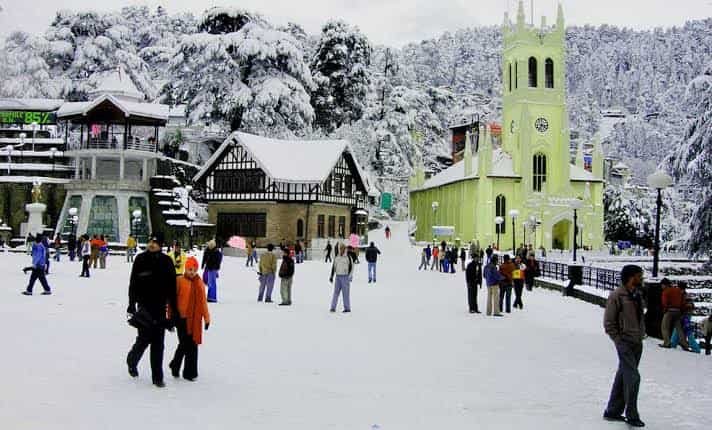
Winter transforms Shimla into one of north India’s most beloved snow destinations, attracting thousands of visitors for the experience of snow-covered colonial architecture, roasted corn on frosty evenings, and the joy of Kufri’s snow activities.
Weather During Winter
Temperatures range between minus 6°C and 10°C with December and January being the coldest months. Snowfall typically begins in late December and can continue through February. The town is occasionally blanketed in heavy snow that closes roads temporarily and creates a fairy-tale visual environment.
Why Visit Shimla in Winter?
- Snow-covered Shimla is one of north India’s most romantic and visually beautiful seasonal experiences
- Kufri skiing, sledging, and snowfall experiences are at their most accessible
- December Christmas and New Year celebrations bring a festive, international atmosphere
- The heritage hotels and lodges with fireplaces are most atmospheric in deep winter
- Snowfall photography along Mall Road and the Ridge is extraordinary
- Ice Skating Rink — one of Asia’s oldest natural ice skating rinks — opens from December onwards
Winter is the definitive season for couples, honeymooners, and first-time snowfall seekers visiting Shimla.
Popular Winter Attractions
Kufri Snow Sports
Kufri becomes Shimla’s primary snow activity hub in winter, offering skiing, snow tubing, and toboggan rides against a backdrop of snow-covered Himalayan peaks that are genuinely spectacular on clear winter days.
Ice Skating Rink
Shimla’s historic natural ice skating rink — operating since the British era — provides one of north India’s most charming winter experiences with open-air skating on natural ice surrounded by colonial-era buildings.
Christmas and New Year Celebrations
Shimla’s significant Christian heritage and colonial history make its Christmas celebrations among the most atmospheric in north India, with Christ Church services, carol singing on the Ridge, and hotel New Year events creating a distinctly festive winter atmosphere.
Advantages of Winter Travel
- Snow experiences are Shimla’s most visually dramatic and emotionally memorable
- Romantic, cosy atmosphere for honeymooners and couples
- Christmas and New Year create a uniquely festive Shimla experience
- Ice skating and Kufri snow activities are available only in this season
Disadvantages
- Extreme cold requiring heavy woolens, thermal underlayers, gloves, and boots
- Road closures possible during heavy snowfall
- Some restaurants and smaller hotels close during deep winter
- December 25th to January 1st sees extremely high demand and hotel rates
Visiting Shimla During Monsoon (July to September)
Monsoon brings Shimla’s most vivid green landscapes but also its most challenging travel conditions. Heavy rainfall, landslide risk on mountain roads, and disrupted sightseeing make it the least recommended season for first-time visitors.
Weather During Monsoon
Temperatures range between 13°C and 20°C with continuous to heavy rainfall, particularly in July and August. September sees rainfall beginning to ease with improving conditions by mid-September.
Why Some Travellers Visit Shimla During Monsoon?
- Hotel rates drop significantly — 30 to 50 percent below summer prices
- The landscape is at its most intensely green and dramatically beautiful
- Waterfalls around Shimla are at maximum flow
- Fewer tourists at all attractions and on Mall Road
- September offers a good compromise of green landscape with easing rainfall
Advantages of Monsoon Travel
- Lowest accommodation rates of the year
- Lush, dramatically green mountain landscapes
- Quiet, uncrowded version of Shimla’s attractions
Disadvantages
- Landslide and road blockage risk on mountain access roads
- Outdoor sightseeing and adventure activities severely restricted
- Persistent rain can confine visitors indoors for extended periods
- Not recommended for first-time visitors or those with fixed itineraries
Best Time to Visit Shimla for Different Travellers
For Honeymooners
December and January for snow romance with fireside evenings, and March to April for spring blooms and pleasant walks — both deliver the intimate, beautiful atmosphere that makes Shimla one of north India’s most celebrated honeymoon destinations.
For Families
April to June provides the ideal family combination — pleasant temperatures, all attractions operational, Kufri adventure activities, the Kalka-Shimla toy train, and the festive summer atmosphere that children find genuinely exciting.
For Budget Travellers
October to November and February to March are the finest budget windows — pleasant or improving weather with hotel rates well below summer and winter peak levels.
For Snow Seekers
December to February is the only window for snow in Shimla. January typically offers the most reliable and heaviest snowfall, though December’s Christmas-period snowfall creates the most atmospheric conditions.
For Photographers
March to April for spring blooms, October for autumn foliage and post-monsoon clarity, and December to January for snow photography each represent distinct and equally rewarding photographic seasons.
Best Time for the Kalka-Shimla Toy Train
The UNESCO World Heritage Kalka-Shimla Railway is one of Shimla’s most celebrated experiences.
Ideal Months
March to June and October to November for the clearest views and most comfortable journey conditions.
The toy train experience includes:
- 96-kilometre mountain railway journey through 103 tunnels
- Scenic viaducts and bridges through Himalayan forest
- 102-year heritage journey from Kalka to Shimla
- Views of Himalayan peaks on clear days from upper carriages
- Colonial-era station stops at Barog, Solan, and Kandaghat
Book tickets at least 2 to 4 weeks in advance for summer and peak winter travel on the Shivalik Deluxe or Himalayan Queen express services.
Festivals and Events in Shimla
Shimla’s cultural calendar reflects its Himalayan heritage and colonial history.
Summer Festival
Held every May at Ridge Maidan, this government-organised festival brings folk performances, cultural shows, craft exhibitions, and food stalls celebrating Himachal Pradesh’s diverse traditions.
Ice Skating Carnival
Held in January at Shimla’s historic ice skating rink, the carnival brings competitions, performances, and winter celebrations to the only open-air natural ice skating venue in south Asia.
Christmas at Christ Church
Shimla’s Christmas celebrations at the historic 1857 Christ Church on the Ridge are among the most atmospheric in north India, drawing visitors specifically for the carol services and festive hill station atmosphere.
Travel Tips for Visiting Shimla
To make your Shimla visit most comfortable and memorable, consider these practical tips:
- Book accommodations at least 4 to 6 weeks in advance for May-June and December-January visits.
- Carry warm layers regardless of season — Shimla evenings are cool even in summer.
- Book the Kalka-Shimla toy train tickets well in advance on IRCTC — heritage train berths fill quickly in peak season.
- Hire a local guide for treks beyond Jakhu Hill and Chadwick Falls.
- Private vehicles cannot enter central Shimla’s pedestrian zone — use the designated parking areas outside and walk or hire a porter for luggage.
- Carry snow boots, thermal underlayers, and waterproof gloves for December to February visits.
- Explore the quieter, less-photographed heritage buildings away from Mall Road — Gaiety Theatre, Gorton Castle, and the old Viceregal Lodge gardens reward curious visitors.
Conclusion
The best time to visit Shimla is from March to June and October to November — the two pleasant weather windows that combine comfortable temperatures, clear skies, fully operational attractions, and the natural beauty that makes this Himalayan hill station enduringly popular. March and April offer the most romantically beautiful version with spring blooms, while October delivers a quieter, more photogenic Shimla with golden autumn light and thin crowds.
However, Shimla genuinely rewards every season. Winter’s snow transforms it into a fairy tale. Summer’s energy makes it the celebratory escape destination it has always been. The monsoon’s dramatic green landscape is beautiful for those willing to accept its travel challenges.
Whether you come for the toy train, the snow, the colonial architecture, the Himalayan air, or simply the pleasure of walking Mall Road with a cup of hot apple tea, Shimla delivers an experience as warm and welcoming as any hill station in India.
Frequently Asked Questions
Q1. What is the best month to visit Shimla?
A: April and October are the two finest individual months — April for spring blooms and pleasant warmth, October for autumn clarity, thin crowds, and the year’s best photography conditions.
Q2. Does Shimla get snow?
A: Yes — snowfall typically occurs from late December through February. January usually offers the most reliable snowfall, and December’s Christmas-period snow creates the most atmospheric conditions.
Q3. What is the peak tourist season in Shimla?
A: May and June for summer visitors and December to January for snow seekers are the two peak seasons with the highest hotel prices and visitor numbers.
Q4. Is Shimla worth visiting in monsoon?
A: For budget travellers with flexibility, yes — the green landscape is beautiful and rates are low. For first-time visitors or those with fixed itineraries, the landslide risk and travel disruption make it the least recommended season.
Q5. How many days are enough for Shimla?
A: A 2 to 3-day visit covers Mall Road, Jakhu Temple, Kufri, Christ Church, and the Kalka-Shimla toy train journey comfortably. Extend to 4 to 5 days to include Chail, Mashobra, and surrounding nature walks.