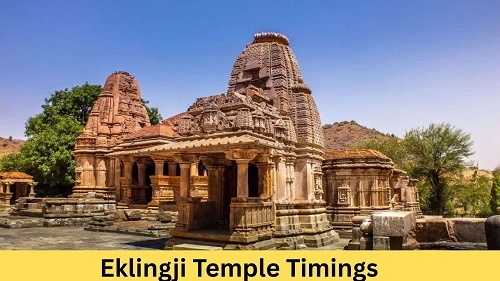
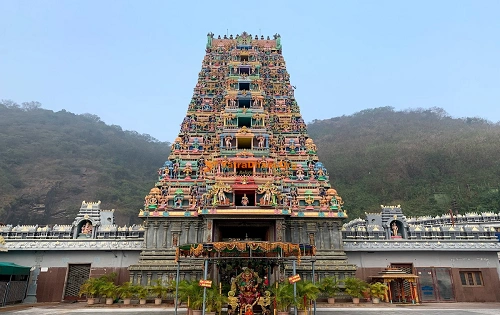
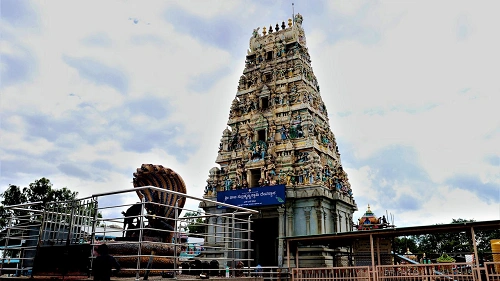
Hampi is one of India’s most extraordinary and most visually arresting heritage destinations — a UNESCO World Heritage Site in the Vijayanagara district of northern Karnataka that was once the magnificent capital of the Vijayanagara Empire, one of the greatest Hindu kingdoms in Indian history, covering an area of 26 square kilometres with over 500 ancient monuments, temples, palaces, market streets, elephant stables, and ceremonial complexes that represent the creative and military apex of 14th to 16th century South Indian civilisation. Famous for the living Virupaksha Temple — which has been in continuous worship since the 7th century — the extraordinary Vittala Temple complex with its famous stone chariot and musical pillars that produce musical notes when struck, the dramatic Hemakuta Hill sunrise viewpoint overlooking boulder-strewn valleys and temple ruins, the Tungabhadra River where coracle boats drift between banana plantations and ancient carved ghat steps, the massive Queen’s Bath and Lotus Mahal architectural marvels, and the otherworldly boulder landscape — massive granite boulders balanced improbably on hilltops creating a landscape that looks simultaneously ancient and from another planet — Hampi offers a heritage experience unlike anywhere else in India. Whether you are planning a historical temple circuit, a heritage photography expedition, a Tungabhadra coracle ride, a Hampi Utsava cultural festival visit, a backpacker circuit through the hippie island across the river, or simply a wandering exploration of one of South India’s most haunting and magnificent ruins landscapes, choosing the best time to visit Hampi ensures maximum comfort for the extensive outdoor exploration the site demands.
Hampi Travel Overview
| Factor | Details |
| Best Overall Time | October to February |
| Peak Tourist Season | November to February |
| Cheapest Time to Visit | April to June |
| Best for Sightseeing | October to February |
| Best for Hampi Utsava Festival | November 3 to 5, 2026 |
| Best for Photography | October to February |
| Best for Honeymoon | November to January |
| Best for Families | November to February |
| Best for Budget Travelers | April to June |
| Average Temperature | 16°C to 40°C (varies by season) |
Why Timing Matters When Visiting Hampi
Hampi’s ancient ruins are spread across an open, largely unshaded 26-square-kilometre landscape of granite boulders, paddy fields, and river banks. Unlike enclosed indoor heritage sites, exploring Hampi requires sustained outdoor walking — sometimes several kilometres between major monuments — in direct sunlight. This makes temperature and season far more consequential here than at most heritage destinations. In winter, the same walk from the Vittala Temple to the Queen’s Bath that feels effortless at 22°C becomes genuinely exhausting at 40°C in May.
The Hampi Utsava festival in November adds a major cultural timing dimension, transforming the ruins into a stage for one of South India’s finest classical dance performances against the backdrop of floodlit ancient architecture.
Visiting Hampi During Winter (October to February)
Winter is overwhelmingly the best time to visit Hampi — the season when the extensive outdoor heritage circuit can be explored in genuine comfort, the Tungabhadra River is at its most pleasant for coracle rides, and the Hampi Utsava festival creates the year’s most culturally vibrant single event.
Weather During Winter
Temperatures range between 16°C and 30°C — perfectly comfortable for all-day outdoor heritage exploration. October and November are warmer at 25°C to 32°C. December and January provide the most comfortable conditions with mornings at 16°C to 20°C and pleasant afternoons at 25 to 28°C. Evenings are cool requiring a light layer.
Why Visit Hampi in Winter?
- The entire 26-square-kilometre heritage zone is comfortable to explore on foot, bicycle, or motorcycle without the heat management that summer demands
- Hampi Utsava — held from November 3 to 5, 2026 — transforms the ancient Vijayanagara ruins into a magnificent cultural stage with classical Bharatanatyam and Kuchipudi dance performances, the illuminated stone chariot of the Vittala Temple as backdrop, folk music concerts, traditional craft demonstrations, and the most atmospheric single event in the Hampi calendar
- The Tungabhadra River is calm and clear in winter — coracle rides between the Virupaksha Ghat and the Anegundi side of the river are most pleasant and most scenic
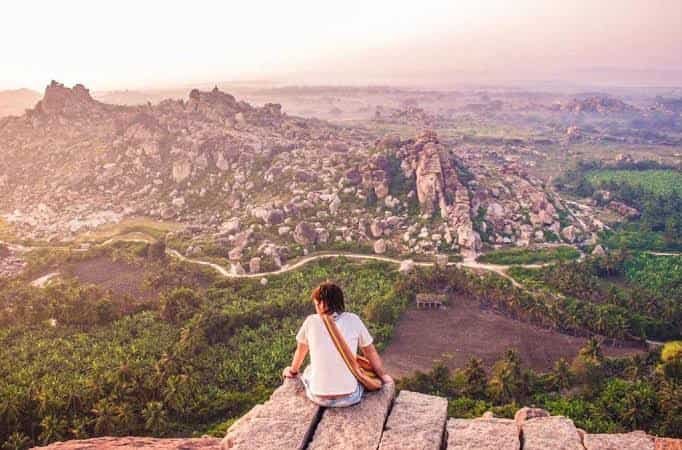
- Hemakuta Hill’s sunrise viewpoint — overlooking the Virupaksha Temple spire, the boulder landscape, and the Tungabhadra valley — is most dramatically lit in the clear winter morning light
- The Vittala Temple’s stone chariot and musical pillars are best appreciated with the energy of undivided attention that the comfortable winter conditions allow
- Bouldering and rock climbing on Hampi’s famous granite boulders are most safely and most productively attempted in winter’s cool conditions
- The local agricultural cycle means the paddy fields surrounding the ruins are either harvested golden or fresh bright green depending on the specific month — both states add to the visual richness of the heritage landscape
Winter is the most complete, most comfortable, and most culturally rich season for the full Hampi experience.
Best Places to Visit
Vittala Temple Complex
The most celebrated monument in Hampi — a 15th-century temple complex containing the famous stone chariot whose wheels once rotated, and the pillared mandapa whose granite columns produce musical sounds when struck gently. The elaborate carvings on every surface and the sheer grandeur of the approach avenue of columns are most fully appreciated when explored in the comfortable winter morning hours without heat fatigue.
Virupaksha Temple
The living temple at the centre of Hampi Bazaar — still actively worshipped and functioning since the 7th century — is most vibrantly atmospheric in the early winter morning when dawn puja is performed, the temple elephant roams the bazaar lane, and the light strikes the 52-metre gopuram tower from the east.
Hemakuta Hill
The hill above the main bazaar area, covered with a dozen pre-Vijayanagara temples, is most beautifully visited at sunrise — the view from the hill crest at dawn with the Virupaksha gopuram below, the Tungabhadra valley in the middle distance, and the boulder landscape stretching to the horizon creates one of South India’s finest heritage sunrise compositions.
Queen’s Bath and Zenana Enclosure
The royal complex including the exquisitely decorated Queen’s Bath — a water pavilion with projecting balconies over a large ornamental tank — and the elegantly proportioned Lotus Mahal with its curved brackets and lotus-bud towers is most pleasantly explored in winter’s comfortable temperatures.
Hippie Island (Virupapur Gaddi)
The banana plantation-covered island across the Tungabhadra from Hampi town — accessible by coracle — offers a completely different, budget-traveller-oriented atmosphere with guesthouses and cafes in a more relaxed setting. Most lively and most pleasant in the winter tourist season.
Advantages of Winter Travel
- Most comfortable temperatures for the extensive outdoor walking the heritage circuit demands
- Hampi Utsava festival creates a cultural pinnacle in November
- Tungabhadra coracle rides most pleasant in cool conditions
- Sunrise on Hemakuta Hill most beautifully lit in clear winter morning sky
- All adventure activities including bouldering and cycling fully operational
Disadvantages
- November to February is peak season — popular guesthouses on both sides of the river fill quickly
- Hampi Utsava week (November 3 to 5, 2026) requires advance accommodation booking 4 to 6 weeks ahead
- December and January weekends see maximum domestic tourist crowds
November — Hampi’s Finest Month
November is Hampi’s single finest travel month — the Hampi Utsava creates the year’s most extraordinary cultural experience, post-monsoon freshness keeps the surrounding agricultural landscape vivid, and temperatures are descending toward the most comfortable range.
What Makes November Special?
- Hampi Utsava from November 3 to 5, 2026 — classical dance performances at the Vittala Temple and Virupaksha Temple against floodlit ancient stonework, folk art exhibitions, traditional craft demonstrations by Karnataka’s master artisans, and the illuminated stone chariot creating one of India’s finest heritage festival settings
- Post-monsoon landscape retains its green freshness from September-October rainfall while skies have cleared completely
- Temperatures at a perfect 22°C to 30°C — neither the October warmth nor the December coolness, but the most comfortable middle ground
- The Tungabhadra River is still carrying significant post-monsoon volume — the most scenic and most photogenic for coracle rides and ghat photography
- Fewer tourists than December-January peak with better accommodation availability
Visiting Hampi During Summer (March to May)
Summer at Hampi is the most challenging season — the open boulder landscape with limited shade becomes genuinely harsh when temperatures exceed 40°C, making midday sightseeing uncomfortable and potentially dangerous.
Weather During Summer
Temperatures range between 30°C and 40°C — April and May are the hottest months with afternoon heat making outdoor exploration in the unshaded ruins very difficult. Early mornings before 8 AM and evenings after 5 PM remain manageable.
Why Some Travellers Visit in Summer?
- Hotel rates drop dramatically — 40 to 60 percent below winter peak rates
- The heritage sites are at their least crowded — the Vittala Temple and Virupaksha complex can be explored with near-complete solitude in the very early morning
- Budget travellers with flexible schedules find summer the most affordable and least crowded version of Hampi
- The Tungabhadra’s summer low water levels expose boulder formations along the river that are submerged in winter
Best Summer Strategy
- Begin all outdoor sightseeing before 8 AM and return to accommodation by 10:30 AM
- Resume exploration after 4 PM when temperatures begin dropping
- Use bicycles to cover larger distances quickly between monuments — minimises sun exposure time
- The Vittala Temple, Virupaksha, and Hemakuta are all accessible within the sunrise window
Benefits of Summer Travel
- Year’s lowest hotel and guesthouse rates
- Completely crowd-free heritage sites in early morning
- Solitary sunrise experiences at Hemakuta Hill
Drawbacks
- Afternoon temperatures reaching 40°C make outdoor exploration genuinely dangerous
- No shade across most of the heritage zone — exposed to direct Deccan sun
- Coracle rides on a lower Tungabhadra are less scenic
- Not recommended for families with elderly members or young children
Visiting Hampi During Monsoon (June to September)
Hampi receives moderate but meaningful monsoon rainfall from the southwest monsoon that flows inland from the Arabian Sea. The ruins landscape changes character dramatically — the boulder plains and paddy fields turn vivid green, the Tungabhadra swells with water, and the ancient temples acquire a mist-softened atmospheric quality unique to the rainy season.
Weather During Monsoon
Temperatures range between 24°C and 32°C with regular rainfall, particularly in July and August. The Tungabhadra River can rise significantly and coracle crossings to the hippie island may be suspended during high-water periods.
Why Some Travellers Visit in Monsoon?
- The landscape is at its most dramatically green — paddy cultivation transforms the agricultural areas around the ruins into vivid emerald, and the boulder slopes covered in seasonal vegetation create the most lush visual of any season
- Hotel rates are at their lowest — budget guesthouses on both the Hampi Bazaar side and Virupapur Gaddi are at their most affordable
- Fewer tourists create a more contemplative, personal experience at the major monuments
- September is the finest monsoon month — rainfall eases significantly, the landscape retains its maximum green character, and temperatures begin the transition toward the excellent October window
Popular Monsoon Attractions
Hemakuta Hill in Monsoon Mist
The misty, rain-softened atmosphere that rolls through the boulder landscape in August and September creates photography conditions completely different from the clear winter morning — more atmospheric, more mysterious, and more evocative of the ruined empire’s ghostly quality.
Agricultural Landscape at Its Greenest
The paddy fields surrounding the royal enclosure and the banana plantations of Virupapur Gaddi are most lushly productive in the monsoon months — the visual contrast between the green agriculture and the grey granite ruins is most dramatically beautiful in September’s clearing skies.
Advantages of Monsoon Travel
- Lowest accommodation rates of the year
- Landscape at maximum vivid green
- Most contemplative and personal exploration of the heritage sites
- September offers excellent conditions as rain eases
Disadvantages
- Coracle crossings to hippie island may be suspended during high-water periods
- Some boulder trails become slippery and inaccessible
- Rock climbing and bouldering are not safe in wet conditions
- Heavy rain can disrupt full-day outdoor monument circuits
Best Time to Visit Hampi for Different Travellers
For History and Heritage Enthusiasts
November to February for the most comfortable and most complete heritage exploration — all monuments accessible, weather suitable for sustained outdoor walking, and the Hampi Utsava festival in November creating the year’s most culturally immersive single event.
For Photographers
October to November for the finest conditions — post-monsoon green agricultural landscape, clear skies, warm afternoon light on ancient sandstone carvings, and the Hampi Utsava providing extraordinary cultural photography subject matter.
For Budget Travellers
April to June for the very lowest rates — or September for the best budget-quality balance, with easing monsoon rain, lush green landscape, and accommodation at below-peak-season pricing.
For Couples and Honeymooners
November to January for the most romantically atmospheric version of the destination — cool evenings, the floodlit Virupaksha Temple reflected in the evening sky, and the intimate traveller community of Hampi’s winter season creating a uniquely appealing social atmosphere.
For Adventure Enthusiasts
October to February for bouldering — Hampi’s granite landscape is considered one of India’s finest bouldering destinations, and the winter cool provides ideal conditions for extended climbing sessions on the massive rounded boulders that define the site’s visual character.
Best Time for the Vittala Temple
The Vittala Temple is Hampi’s most celebrated single monument.
Ideal Months
October to February for the most comfortable and most richly experienced Vittala Temple visit.
The Vittala Temple experience includes:
- The stone chariot — 56 wheels once rotated on axles; the chariot now has fixed wheels but remains the most photographed single element of all Hampi ruins
- Musical pillars — granite columns in the main hall produce seven distinct musical notes when struck with the knuckle
- The approach avenue of ornately carved columns — each column featuring mythological narratives and celestial dancers in intricate relief
- Dawn light striking the eastern facade of the main mandapa — most beautiful at approximately 7 to 8 AM in winter
- The annual illumination during Hampi Utsava when floodlights transform the complex into a night theatre backdrop
Festivals and Events in Hampi
Hampi Utsava (Vijaya Utsava)
Held from November 3 to 5, 2026, this government-organised festival of Karnataka is the single most significant cultural event in Hampi’s annual calendar. Classical Bharatanatyam and Kuchipudi performances at the Vittala Temple complex and Virupaksha Temple, folk music concerts by Karnataka’s traditional musicians, traditional craft exhibitions by master weavers and stone carvers, the illuminated stone chariot as performance backdrop, and cultural processions through the ancient bazaar street collectively create an experience that brings the Vijayanagara Empire’s golden cultural era most vividly back to life.
Virupaksha Car Festival
Held in February-March according to the Hindu lunar calendar, this temple chariot festival at the Virupaksha Temple draws tens of thousands of pilgrims from across Karnataka to the still-living temple in one of the most traditional and most authentic South Indian temple festival experiences visible in Hampi.
Travel Tips for Visiting Hampi
To make your Hampi visit most rewarding, consider these essential guidelines:
- Rent a bicycle or motorcycle from Hampi Bazaar — the heritage zone is too spread out for comfortable walking between all major sites and cycling covers the distances most efficiently and most enjoyably.
- Begin all outdoor sightseeing before 8 AM regardless of season — the best light for heritage photography, the coolest temperatures for walking, and the smallest crowds at major monuments all converge in the early morning hours.
- Stay at least 2 nights — ideally one on the Hampi Bazaar side and one in Virupapur Gaddi across the river for two completely different Hampi experiences.
- The coracle ride across the Tungabhadra — in a circular cane and tar vessel piloted by a single oarsman — is one of Hampi’s most distinctive experiences and should not be skipped.
- Book accommodation for Hampi Utsava (November 3 to 5, 2026) at least 4 to 6 weeks in advance — both sides of the river fill completely.
- Carry sufficient water and wear sun protection regardless of season — Hampi’s boulder landscape offers very little shade.
- The Karnataka government has implemented entry ticket systems for major monuments including Vittala and the Royal Enclosure — carry identification.
Conclusion
The best time to visit Hampi is from October to February — the winter season when the extensive outdoor heritage circuit can be explored in genuine comfort, the Hampi Utsava festival in November creates the most culturally extraordinary experience in the annual calendar, the Tungabhadra River is at its most scenic for coracle rides, and every monument from Vittala to Virupaksha to Hemakuta is accessible without the heat management that makes summer exploration so challenging.
November stands out as Hampi’s finest individual month — the Hampi Utsava from November 3 to 5, 2026 creates a once-a-year cultural spectacle against the backdrop of the ancient ruins, post-monsoon green freshness persists in the agricultural landscape, temperatures are at their most comfortable, and both sides of the Tungabhadra are at their most photogenic under clear November skies.
Whether you come for the stone chariot of the Vittala Temple, the musical pillars that have resonated for 600 years, the sunrise from Hemakuta Hill over the ancient gopuram, the coracle drift across the Tungabhadra, the Hampi Utsava’s floodlit classical dance, the bouldering on Hampi’s legendary granite landscape, or simply the profound and moving experience of wandering a once-great empire’s capital now given back to the boulders and the river, Hampi will leave you with one of India’s most powerful and most unforgettable heritage memories.
Frequently Asked Questions
Q1. What is the best month to visit Hampi?
A: November is the finest single month — the Hampi Utsava festival from November 3 to 5, 2026 creates the most culturally extraordinary experience of the year, post-monsoon landscape is at its most vivid green, and temperatures are most comfortable for heritage exploration.
Q2. When is Hampi Utsava in 2026?
A: Hampi Utsava (Vijaya Utsava) is scheduled from November 3 to 5, 2026 — a three-day festival featuring classical dance performances, folk music, craft exhibitions, and cultural events at the Vittala and Virupaksha temple complexes.
Q3. Is Hampi worth visiting in summer?
A: Only for budget travellers willing to restrict outdoor exploration strictly to before 8 AM and after 5 PM. Afternoon temperatures of 38 to 40°C in the unshaded ruins landscape are genuinely harsh. The severely reduced hotel rates and empty sites are the primary attraction.
Q4. What is the best way to explore Hampi?
A: Bicycle for the main heritage zone on the Hampi Bazaar side. Motorcycle for reaching more distant sites like the Daroji Bear Sanctuary and Anegundi. Always begin before 8 AM for the best light, coolest temperatures, and fewest crowds.
Q5. How many days are enough for Hampi?
A: A minimum of 2 to 3 days to cover the Vittala Temple, Virupaksha, Hemakuta Hill, the Royal Enclosure, Queen’s Bath, Lotus Mahal, and a Tungabhadra coracle ride. Extend to 4 to 5 days to include Virupapur Gaddi, Anegundi heritage, the Daroji Bear Sanctuary, and leisurely exploration at the pace the ruins deserve.