Switzerland is one of Europe’s most breathtaking and diverse travel destinations — a landlocked Alpine nation of extraordinary natural beauty and precision-engineered excellence, famous for the snow-capped Matterhorn rising above Zermatt, the turquoise waters of Lake Geneva and Lake Lucerne reflecting the surrounding peaks, the medieval old towns of Bern and Zurich, the world’s finest chocolate and watchmaking traditions, the Jungfraujoch railway ascending to 3,454 metres — the highest railway station in Europe — the vineyards of the Lavaux terraced above Lake Geneva, and a ski resort infrastructure at Verbier, St Moritz, and Davos that defines the global standard for winter mountain holidays. Whether you are planning a summer hiking adventure, a winter skiing holiday, a cultural city break, a scenic train journey through the Alps, or a honeymoon retreat, choosing the best time to visit Switzerland dramatically shapes the experience — this is a destination where seasonal differences are among the most dramatic of any European country.
Switzerland operates on a dual-peak tourism calendar — winter for skiing and the Christmas market season, summer for hiking and lakes — with two quieter shoulder seasons in spring and autumn that experienced travellers increasingly recognise as the finest times to visit for value, comfort, and the most distinctive alpine scenery.
Switzerland Travel Overview
| Factor | Details |
| Best Overall Time | June to September and December to March |
| Peak Tourist Season | July, August, and December to February |
| Cheapest Time to Visit | April to May and October to November |
| Best for Skiing | January to March |
| Best for Hiking | June to September |
| Best for Scenic Train Rides | June to October |
| Best for Honeymoon | September to October and June |
| Best for Budget Travelers | April to May and October to November |
| Best for Christmas Markets | Late November to December 24 |
| Average Temperature | Minus 10°C to 28°C (varies by altitude and season) |
Why Timing Matters When Visiting Switzerland
Switzerland’s geography creates dramatically different seasonal experiences across its three main zones — the Swiss Plateau where cities like Zurich, Bern, and Basel are located, the Alpine region with its ski resorts and mountain villages, and the southern Ticino canton bordering Italy which enjoys a warmer, near-Mediterranean microclimate. Understanding which zone you are primarily visiting helps calibrate seasonal expectations more precisely than a single national weather summary.
The dual-peak tourism pattern also means Switzerland has two distinct expensive and crowded periods — summer and winter — with two shoulder seasons that offer noticeably lower prices, manageable crowds, and their own distinctive beauty. The question of when to visit is less about finding the single best season and more about matching your travel purpose with the season that serves it best.
Visiting Switzerland During Summer (June to September)
Summer is the most popular time to visit Switzerland and the season when the country’s extraordinary outdoor beauty is most completely accessible. Every mountain trail, cable car, lake beach, and outdoor festival is in full operation, creating the most comprehensive version of the Swiss experience.
Weather During Summer
Temperatures in lowland cities range between 20°C and 28°C — warm and pleasant for extended outdoor days. The Alps maintain cooler conditions at elevation — a hike at 2,000 metres on a 28°C city day will feel more like 18°C, making proper layering essential. June and July are statistically the rainiest months but rain typically comes in brief afternoon thunderstorms rather than sustained all-day precipitation.
Why Visit Switzerland in Summer?
- All high-altitude hiking trails including the iconic Haute Route, Zermatt circuit, and Jungfrau Region trails are fully open and snow-free from July
- Lake swimming in Zurich, Geneva, and Interlaken is a uniquely Swiss summer pleasure — urban lake swimming in turquoise mountain-fed water is one of the most pleasurable experiences in European summer travel
- The Jungfraujoch, Schilthorn, and Titlis cable cars and trains all operate at full summer schedules
- The Montreux Jazz Festival in July is one of Europe’s most celebrated music events
- Swiss National Day on August 1st brings bonfires, fireworks, and community celebrations across every Swiss village
- Glacier Express and Bernina Express panoramic train journeys are most dramatic with snow-free mountain landscapes
- Wild Alpine flower meadows are in full bloom from June through August
Summer is the most complete and most celebrated version of Switzerland for first-time visitors.
Best Places to Visit
Zermatt and the Matterhorn
The car-free mountain resort village below the Matterhorn at 1,620 metres is most fully accessible and most dramatically clear-skied from July to September. The Zermatt hiking network of over 360 kilometres of trails opens progressively through June and July as snow clears. The Gornergrat Railway and Klein Matterhorn cable car — ascending to Europe’s highest mountain station at 3,883 metres — operate full summer schedules.
Jungfrau Region — Grindelwald and Interlaken
The Bernese Oberland’s most iconic landscape of the Eiger, Mönch, and Jungfrau peaks is most fully accessible in summer. The Jungfraujoch railway to 3,454 metres operates all year but summer provides the clearest summit views and the most comfortable descent to the Aletsch Glacier — the longest in the Alps.
Lake Geneva — Lausanne and Montreux
The northern shore of Lake Geneva with its UNESCO-listed Lavaux vineyard terraces, the Château de Chillon medieval lakeside fortress, and the Montreux Jazz Festival creates the most culturally rich and scenically beautiful Swiss summer experience outside the high Alps.
Swiss National Park — Engadin Valley
Switzerland’s only national park in the Graubünden canton near St Moritz is most rewarding in summer when ibex, red deer, bearded vultures, and marmots are most actively visible across the high-altitude protected landscape.
Advantages of Summer Travel
- All hiking trails, cable cars, and mountain railways fully operational
- Lake swimming, outdoor festivals, and open-air cultural events
- Longest daylight hours — up to 16 hours of light in June
- Wild Alpine flower meadows at their most spectacular
- Swiss National Day celebrations on August 1st
Disadvantages
- July and August are the most crowded months — Interlaken and Lucerne in particular can feel overwhelmed with visitors in peak season
- Hotel prices are at their annual highest in July and August
- Advance booking of 2 to 3 months essential for popular mountain resorts in summer peak
- Afternoon thunderstorms are most frequent in June and July — flexibility in outdoor schedules is needed
July and August — Peak Summer in Switzerland
July and August are Switzerland’s most visited months, particularly popular with Indian, Chinese, and Middle Eastern tourists for whom summer is the primary annual travel window.
What Makes July and August Special?
- All mountain infrastructure operating at 100 percent capacity — cable cars, funiculars, cogwheel trains, and hiking trails simultaneously open
- Aare River swimming in Bern — floating through the historic old town on the glacially cold Aare is one of Switzerland’s most unique summer experiences
- Montreux Jazz Festival in early July brings world-class performances to the lakefront stage
- Swiss National Day on August 1st with bonfires on mountain tops visible across the country
- Alpine markets and summer festivals in every village
- Glacier views at Gorner Glacier (Zermatt) and Mer de Glace (accessible from Chamonix) are most accessible
Book July and August accommodations in Zermatt, Grindelwald, and Lucerne at least 3 to 4 months in advance for guaranteed availability.
June and September — The Sweet Spot Months
June and September are increasingly recognised as Switzerland’s finest individual months for the balanced travel experience — summer conditions with manageable crowds and lower prices than the July-August peak.
Why June is Special
Early June sees some higher trails still snow-dusted while valley meadows are in their most spectacular wildflower display. Prices are 15 to 20 percent below July-August. The Montreux Jazz Festival begins in late June. Cable cars and mountain railways are operational with short or no queues compared to peak season. The quality of light in June — long evening sun low on the Alps — creates some of the finest conditions for mountain photography of the entire year.
Why September is Special
September delivers Switzerland’s most consistently beautiful weather — the afternoon thunderstorm risk of summer diminishes, morning clarity is exceptional, and the first golden tints of autumn begin appearing in the valley larches and mountain birch. Crowds drop noticeably from August. Hotel rates fall 15 to 25 percent below August peaks. All trails and infrastructure remain fully operational through September.
Visiting Switzerland During Autumn (October to November)
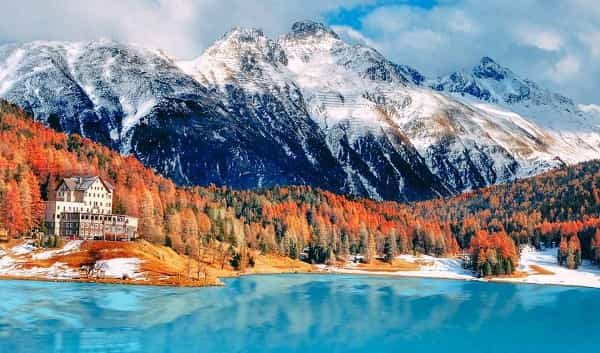
Autumn in Switzerland is a season of extraordinary visual character — golden larches and beech forests against snow-dusted peaks, the wine harvest in Lavaux and Valais, and the crystal clarity of the air before winter arrives.
Weather During Autumn
October temperatures in the lowlands range from 8°C to 18°C — pleasantly cool for city exploration and lower-altitude walks. November drops further toward 2°C to 10°C. The Alps begin receiving early season snowfall from October with high passes closing progressively through November.
Why Visit Switzerland in Autumn?
- Alpine larches and beech forests turn brilliant gold and orange in October creating the most vivid landscape colour of the year
- The autumn wine harvest in the Lavaux terraced vineyards above Lake Geneva is a celebrated annual event open to visitors
- Hotel rates drop significantly from summer highs — some properties offer autumn rates 30 to 40 percent below August
- City attractions in Zurich, Bern, Basel, and Geneva are uncrowded and at their most comfortable for extended exploration
- Early ski season snowfall on high peaks creates dramatic photographic contrasts of golden valley and white mountain summit
- The Lucerne Festival — one of Europe’s finest classical music events — concludes in late October
Popular Autumn Attractions
Lavaux Wine Harvest
The UNESCO-listed Lavaux vineyard terraces above Lake Geneva produce their annual Chasselas white wine harvest in September and October — visitors can participate in harvest weekends, visit cave tastings, and explore the terrace footpaths through golden vines with the lake gleaming far below.
Autumn Foliage — Bernese Oberland
The valley forests of Lauterbrunnen, Grindelwald, and Meiringen turn vivid gold in October, creating extraordinary landscape conditions for photography with the snow-dusted Eiger, Mönch, and Jungfrau above.
Christmas Market Preparation
Late November sees Switzerland’s celebrated Christmas markets begin in Basel, Zurich, and Bern — the Basel Christmas Market at Barfüsserplatz is one of Europe’s most beautiful and traditionally authentic.
Advantages of Autumn Travel
- Most vivid landscape colour season — golden foliage against snow-capped peaks
- Significantly lower hotel rates than summer or winter ski peaks
- Uncrowded cultural attractions and city exploration
- Wine harvest experiences unique to this season
Disadvantages
- High-altitude hiking trails begin closing from October
- November sees many cable cars close for annual maintenance
- Shorter daylight hours from October reduce outdoor exploration time
- Some mountain resorts close the gap between summer and ski seasons
Visiting Switzerland During Winter (December to March)
Winter transforms Switzerland into one of the world’s most magical destinations — snow-covered alpine villages, the finest skiing on earth, glühwein at Christmas markets, and the cosy atmosphere of alpine chalets that defines the Swiss winter aesthetic internationally.
Weather During Winter
Mountain resort temperatures range from minus 10°C to 5°C depending on elevation. Lowland cities like Zurich and Geneva are milder at minus 2°C to 8°C. Snowfall in the major ski resorts from Zermatt and Verbier to Davos and St Moritz is most reliable from January to March, with December sometimes receiving only light early-season cover.
Why Visit Switzerland in Winter?
- World’s finest ski infrastructure at Zermatt (no seasonal closure — year-round glacier skiing), Verbier, St Moritz, Davos, Grindelwald, and Villars
- Christmas markets in Basel, Zurich, Bern, Lucerne, and Geneva are among Europe’s most atmospheric — running from late November to December 24
- Swiss National Museum and Old Town attractions in Zurich and Bern are most pleasantly explored in the crisp winter air
- Fondue and raclette dinners in alpine restaurants are most authentically atmospheric in the deep winter cold
- Jungfraujoch snow experience at 3,454 metres delivers its most dramatic winter conditions
- Ice skating on Lake St Moritz in late January — one of the world’s most glamorous winter sports settings
Best Ski Resorts
Zermatt
Switzerland’s most famous ski resort sits in a car-free village below the Matterhorn with access to 360 kilometres of ski runs and year-round glacier skiing at Klein Matterhorn. January and February deliver the most reliable powder conditions. The Matterhorn’s presence above every run creates the most dramatic skiing backdrop in the Alps.
Verbier
The fashionable resort in the Valais canton is the Freeride World Tour’s most celebrated venue — off-piste powder skiing in the high mountains above the village is world-class from December to March. The après-ski culture at Verbier’s famous Le Rouge bar is one of Alpine Europe’s most vibrant social scenes.
St Moritz
The original Swiss luxury ski resort in the Engadin valley offers a unique combination of glacier skiing, the world’s only natural bobsled run, the frozen lake horse racing events in January and February, and a resort village that has defined Alpine glamour for over a century.
Advantages of Winter Travel
- World-class skiing at the finest resort infrastructure on earth
- Christmas markets create Europe’s most magical festive atmosphere
- The Swiss alpine village winter aesthetic is most completely realised in January and February
- Jungfraujoch winter snow experience is most dramatic
Disadvantages
- Ski season peak from December to February carries the year’s highest accommodation rates at major resorts
- Non-skiers may find winter resort focus less rewarding — city breaks in Zurich and Geneva are better value
- January and February book out at Zermatt and Verbier months in advance
- Some lower-altitude hiking trails and cultural attractions outside cities are closed
Best Time to Visit Switzerland for Different Travellers
For Honeymooners
September and October for the finest balance of summer access, autumn colour, comfortable temperatures, and hotel rates below both summer and ski season peaks. The Lavaux wine harvest, the lake views of Montreux, and the mountain clarity of September create the most romantic version of Switzerland.
For Families
July and August for the fullest access to everything — cable cars, lake swimming, mountain railways, and the celebratory National Day atmosphere. Book 3 to 4 months ahead.
For Budget Travellers
Late April to May and October to early November offer the lowest hotel rates of the year. Note that some mountain cable cars close for maintenance in these transition months — research specific sites before booking.
For Skiers
January to March offers the most reliable snow conditions across the major resorts. Zermatt with its glacier skiing is the most consistent for early December and late March when other resorts have thin cover.
For Photographers
June for wildflower meadows and long evening light. October for golden larch forests against first-snow peaks. January for pristine ski resort snow scenes. September for the crystal clarity and stable weather that produces the year’s finest mountain photography conditions.
Best Time for Scenic Train Journeys in Switzerland
Switzerland’s famous panoramic trains are among the world’s finest travel experiences.
Ideal Months
June to October for all scenic train journeys in full operation with clear mountain views.
The key routes include:
- Glacier Express — St Moritz to Zermatt through the highest Alpine passes
- Bernina Express — Chur to Lugano crossing the UNESCO-listed Bernina Pass
- Golden Pass Line — Montreux to Interlaken through pre-Alps farmland and lake scenery
- Jungfrau Railway — Grindelwald to Jungfraujoch at 3,454 metres
- Gotthard Panorama Express — Lugano to Flüelen by boat and train
All major scenic routes require advance reservation — book at least 2 weeks ahead in summer peak season.
Festivals and Events in Switzerland
Switzerland’s festival calendar reflects its diversity of cultural influences across French, German, and Italian traditions.
Montreux Jazz Festival
Held annually in early July on the shores of Lake Geneva, this two-week event is one of the world’s most celebrated music festivals with a programme spanning jazz, blues, soul, and contemporary music at multiple indoor and outdoor venues.
Swiss National Day — August 1st
Switzerland’s national day brings bonfires on mountain tops, fireworks over the lakes, and community celebrations in every village. The bonfires visible from mountain viewpoints across the country at midnight on August 1st create one of Europe’s most atmospheric national celebrations.
Basel Christmas Market
Running from late November to December 24 at Barfüsserplatz, Basel’s Christmas market is one of Europe’s oldest and most beautifully authentic — over 100 market stalls selling handmade gifts, seasonal food, and Swiss crafts under Gothic church spires festively illuminated.
Travel Tips for Visiting Switzerland
To make your Switzerland trip most rewarding, consider these practical guidelines:
- The Swiss Travel Pass is the single most valuable purchase for most visitors — covering trains, buses, boats, and many cable cars on a flat-price daily rate. Buy it before arriving in Switzerland.
- Book July and August mountain resort accommodations at Zermatt, Grindelwald, and Interlaken at least 3 to 4 months in advance.
- Swiss mountain weather changes extremely rapidly — always carry a waterproof jacket and warm layer regardless of the season or morning forecast.
- Lake swimming in Swiss cities — the Aare in Bern, Lake Zurich, Lake Geneva — is free, delightful, and one of Switzerland’s most authentic local summer pleasures.
- Grocery shopping at Migros and Coop supermarkets significantly reduces food costs compared to restaurant dining — Switzerland’s food prices are among Europe’s highest.
- Ski passes at major resorts can be reduced by booking online at least one week in advance — on-snow window purchases carry the highest price.
- The Swiss Museum Pass covers entry to over 500 museums nationwide — excellent value for cultural travellers.
Conclusion
The best time to visit Switzerland depends on what you want from the country’s extraordinary diversity of experiences — but June to September for summer hikers and December to March for winter skiers represent the two seasons when Switzerland’s defining character is most completely and most accessibly expressed.
September stands out as the single finest individual month for the broadest range of visitors — summer conditions continue with every trail and cable car operational, autumn colours begin appearing in the Alpine larch forests, crowds noticeably thin from August peaks, and hotel rates fall below the summer high while remaining well above the winter ski peak.
Whether you come for the Matterhorn at sunrise, the Jungfrau railway at 3,454 metres, the Lavaux vineyards above Lake Geneva, the Bernina Express crossing high above the snowfields, the Christmas market glühwein in Basel, or the powder skiing at Zermatt, Switzerland delivers an experience of precision, beauty, and natural grandeur that rewards every kind of traveller in every season.
Frequently Asked Questions
Q1. What is the best month to visit Switzerland?
A: June for summer hiking with wildflower meadows and long evenings, September for the finest balance of summer access, autumn colour, clear mountain views, and lower prices — both are consistently rated as Switzerland’s finest individual travel months.
Q2. Is Switzerland worth visiting in winter if I don’t ski?
A: Yes — the Christmas market season from late November to December 24 is among Europe’s most magical experiences. City breaks to Zurich, Bern, and Basel are rewarding in winter. The Jungfraujoch snow experience is most dramatic in January and February.
Q3. What is the peak tourist season in Switzerland?
A: Two peaks — July and August for summer hiking and lakes, and December to February for ski season and Christmas markets. Both carry the year’s highest accommodation prices.
Q4. Is Switzerland affordable in shoulder season?
A: April to May and October to November offer hotel rates 20 to 40 percent below summer and ski season peaks. Note that some cable cars close for maintenance in May and November — check specific site schedules before booking.
Q5. How many days are enough for Switzerland?
A: A 7 to 10-day trip comfortably covers Zurich, Lucerne, Interlaken and the Jungfrau Region, Zermatt, and either Geneva-Montreux or Bern. Extend to 12 to 14 days for a more relaxed itinerary including scenic train journeys and the Ticino southern region.