Jaisalmer is one of Rajasthan’s most spectacular and uniquely compelling destinations — the Golden City of India, rising from the Thar Desert like a mirage made solid, its 15th-century Jaisalmer Fort entirely constructed from golden-yellow Jaisalmer limestone that catches the desert sunlight and glows with a warm, honeyed intensity that gives the city its defining colour and its enduring reputation. Built by the Rajput ruler Rawal Jaisal in 1156 AD, Jaisalmer Fort remains one of the world’s finest living fortresses — a UNESCO World Heritage Site where approximately 3,000 people still live within its ancient walls, maintaining merchant havelis, temples, restaurants, and guesthouses exactly as they have for centuries. Beyond the fort, Jaisalmer offers the Sam Sand Dunes — the finest dune landscape in Rajasthan’s portion of the Thar Desert — for camel safaris, sunset photography, overnight desert camping under extraordinary star-filled skies, folk music and dance by campfire, and the annual Desert Festival that turns the dunes into a three-day celebration of Rajasthani cultural identity. Whether you are planning a desert safari and sand dune camping experience, a heritage fort and haveli exploration, a photography expedition, the Desert Festival experience, or a honeymoon in the most romantically golden landscape in India, choosing the best time to visit Jaisalmer determines how comfortable and how rewarding the experience will be.
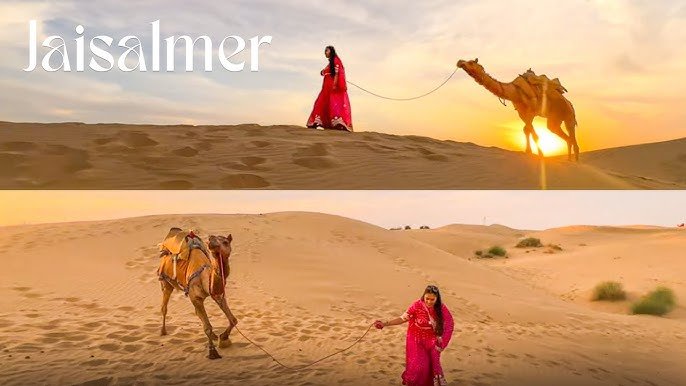
Jaisalmer Travel Overview
| Factor | Details |
| Best Overall Time | October to March |
| Peak Tourist Season | December to February |
| Cheapest Time to Visit | April to June |
| Best for Desert Festival | January to February |
| Best for Desert Safari | October to March |
| Best for Honeymoon | November to February |
| Best for Photography | October to February |
| Best for Budget Travelers | July to September |
| Best for Stargazing | October to March |
| Average Temperature | 5°C to 48°C (varies dramatically by season) |
Why Timing Matters When Visiting Jaisalmer
Jaisalmer sits at the heart of the Thar Desert — India’s largest hot desert and one of the world’s most extreme arid environments. This means the contrast between seasons is among the sharpest of any Indian destination. In summer the mercury routinely exceeds 45°C and can reach 48°C in the desert, making afternoon exploration of the dunes and extended city walks genuinely dangerous. In winter the nights drop to 5°C and below while days are a perfect 20 to 25°C — ideal for camel safaris, fort exploration, and campfire evenings on the dunes.
The decision of when to visit is therefore less nuanced than most destinations and more clear-cut: October to March is when Jaisalmer is at its most liveable, most beautiful, and most culturally vibrant. Everything outside this window involves trade-offs that most visitors would not choose willingly.
Visiting Jaisalmer During Winter (October to March)
Winter is overwhelmingly the best time to visit Jaisalmer — the period when the Golden City performs its most complete and most compelling version of the desert city experience in conditions comfortable enough to spend full days exploring without heat as a limiting factor.
Weather During Winter
Temperatures range between 5°C and 27°C — cool mornings at the dunes perfect for sunrise camel rides, pleasant sunny afternoons ideal for fort and haveli exploration, and cold evenings around the campfire that make the folk music and star-gazing desert nights most atmospheric. December and January are the coldest months with nights occasionally dropping below 5°C requiring warm layers. March warms toward the upper end of this range but remains entirely comfortable.
Why Visit Jaisalmer in Winter?
- Camel safaris across the Sam Sand Dunes and Khuhri dunes are most enjoyable in the cool desert air — sunrise and sunset rides deliver the finest light for photography
- Jaisalmer Fort’s golden limestone glows most beautifully under clear winter sunlight — the colour difference between a winter noon visit and a summer visit is dramatic
- Overnight desert camping under one of India’s finest night skies — air pollution is minimal in the desert and winter air clarity creates extraordinary stargazing conditions
- The annual Jaisalmer Desert Festival — the Maru Mahotsav — held in January or February brings camel races, turban-tying contests, the celebrated Mr Desert competition, folk music performances, and the magical full-moon final night at the Sam Sand Dunes
- Patwon Ki Haveli, Salim Singh Ki Haveli, and Nathmal Ki Haveli — Jaisalmer’s three most magnificent merchant mansions with extraordinary sandstone filigree facades — are most pleasantly explored in the comfortable winter temperatures
- Gadisar Lake — a 14th-century reservoir on the edge of the city with ornate chhatris and temples around its banks — is most beautifully photogenic in the golden winter light
Winter is the definitive Jaisalmer experience season.
Best Places to Visit
Jaisalmer Fort
The magnificent living fort — one of the world’s largest — rises 99 metres above the desert on Trikuta Hill, its 30-metre walls and 99 bastions constructed entirely from Jaisalmer limestone. The fort’s narrow lanes contain ornate merchant havelis, Jain temples of extraordinary marble craftsmanship, rooftop cafes with panoramic desert views, and the city’s most atmospheric overnight guesthouses. Winter conditions make full-day fort exploration genuinely enjoyable.
Sam Sand Dunes
Located 42 kilometres from Jaisalmer city, the Sam Sand Dunes form the most classically photogenic dune landscape in Rajasthan — great arching dunes reaching 30 metres creating a pure desert environment for camel safaris, sunset photography, and overnight camping. The dunes at sunset in winter light take on a range of golden, amber, and rust colours that justify every photographer’s journey to this remote location.
Patwon Ki Haveli
The grandest of Jaisalmer’s merchant mansions — a complex of five havelis built by the Patwa family between 1800 and 1860 — features the most elaborate sandstone filigree carving visible in Rajasthan’s architecture. The golden limestone’s intricate decoration is best photographed in the soft morning light of winter when clear skies and low-angle sunlight reveal the full depth of the stone carving.
Gadisar Lake
This 14th-century reservoir — commissioned by Maharawal Gadsi Singh — retains its ornate ghats, memorial chhatris, and shrines around a lake that serves as both a bird-watching destination and one of Jaisalmer’s most romantic sunset photography locations.
Advantages of Winter Travel
- Ideal temperatures for all-day desert and city exploration
- Desert safari and overnight camping are most comfortable and most atmospheric
- Jaisalmer Desert Festival creates a vibrant three-day cultural celebration
- The fort and havelis glow most beautifully under clear winter sunlight
- Stargazing from desert camp is outstanding in clear winter skies
Disadvantages
- December and January nights can be cold at 5°C or below — warm layers essential for campfire evenings and dune walks
- Peak tourist season means advanced booking essential for desert camps and popular fort guesthouses
- The Desert Festival week sees the highest crowd levels and accommodation rates of the year
- Some sand dune areas near Sam get crowded with vehicles and camel operators during peak season
February — The Desert Festival Month
February is the single most celebrated month in Jaisalmer’s annual calendar, anchored by the Jaisalmer Desert Festival — the Maru Mahotsav — which transforms the Sam Sand Dunes into a three-day spectacle of Rajasthani cultural heritage.
What Makes February Special?
- The Desert Festival 2026 expected between January 30 and February 1 brings the most vibrant cultural programme of any single event in the Jaisalmer calendar
- Camel races, camel polo, camel decoration competitions, turban-tying contests, the hugely popular Mr Desert contest, and the Best Moustache competition create a uniquely Rajasthani cultural carnival
- Folk music and dance performances by Manganiyar and Langa musicians under the open desert sky
- The final night under the full moon at Sam Sand Dunes — moonlight reflecting off the golden dunes with folk music filling the air — is considered one of the most magical cultural experiences in Rajasthan
- February weather is perfectly calibrated for desert camping — cool enough for comfort, clear enough for extraordinary stargazing
Book Desert Festival accommodation at least 6 to 8 weeks in advance — Sam Sand Dune camps fill completely and Jaisalmer city hotels see their annual demand peak during this three-day period.
October and November — The Finest Value Window
October and November are increasingly recognised as the most rewarding value window for Jaisalmer travel — post-monsoon freshness, comfortable temperatures, no festival crowds, and hotel rates 20 to 30 percent below the December-February peak.
What Makes October and November Special?
- The desert air is freshly washed after the brief monsoon and unusually clear — visibility is exceptional for dune photography
- Temperatures are perfectly comfortable at 18°C to 30°C — warm enough to enjoy the desert sunshine, cool enough for comfortable afternoon sightseeing
- Hotel and desert camp rates are below the December peak
- Few tourists at the Sam Sand Dunes create a more authentic, less commercialised safari experience
- The post-monsoon desert has occasional patches of sparse green vegetation from the rain, creating a unique visual contrast against the golden sand
Visiting Jaisalmer During Summer (April to June)
Summer in Jaisalmer is the most extreme version of the desert city experience — temperatures climb from 30°C in April through 40°C in May to 45°C to 48°C in peak June. The same landscape that glows gold and warm in winter becomes a bleached, fierce, oppressive environment where afternoon outdoor exposure is genuinely unsafe.
Weather During Summer
Temperatures range between 30°C and 48°C — with hot, dry desert winds called loo blowing in the afternoons raising perceived temperatures further. Nights remain warm at 25°C to 30°C.
Why Some Travellers Visit in Summer?
- Lowest hotel rates of the year — luxury desert camps and heritage properties at deeply discounted rates
- Empty attractions — the fort and dunes are essentially crowd-free
- The desert’s raw, harsh character is most fully expressed — for those seeking the unfiltered experience of the Thar Desert without the softening influence of tourism
- Budget travellers willing to plan all outdoor activity before 9 AM and after 6 PM can still see the fort and take evening dune rides
Benefits of Summer Travel
- Year’s lowest hotel and camp rates
- Empty heritage sites with unlimited photography access
- Luxury desert camps at budget-accessible prices
Drawbacks
- Afternoon temperatures of 45°C to 48°C are genuinely dangerous for outdoor exposure
- Camel safaris during afternoon hours are not possible or advisable
- Hot, dry loo winds make even shaded outdoor spaces uncomfortable from noon to 5 PM
- The desert’s beauty is obscured by heat haze that dramatically reduces photography quality
Visiting Jaisalmer During Monsoon (July to September)
Jaisalmer’s monsoon is the briefest and most modest in Rajasthan — the deep desert location means annual rainfall averages only 50 to 100 mm compared to 650 mm in Jaipur. The rain when it arrives is brief and dramatic — when it does fall, the parched limestone fort and golden sand dunes gleam with a distinctive rain-washed quality that is genuinely unusual.
Weather During Monsoon
Temperatures range between 28°C and 35°C with high humidity on the rare days when rain arrives. The overwhelming majority of monsoon days in Jaisalmer are dry and hot rather than rainy — the desert location means most southwest monsoon moisture is absorbed before reaching this far northwest.
Why Some Travellers Visit in Monsoon?
- Hotel and camp rates are at their lowest levels
- On the rare days when rain falls, the fort and dunes look extraordinarily beautiful under dramatic monsoon clouds
- The desert is most atmospheric in the post-rain quiet
- For budget-conscious travellers comfortable with summer heat, late September offers an excellent combination of falling temperatures and low rates as the season transitions
Advantages of Monsoon Travel
- Year’s lowest accommodation rates for heritage hotels and desert camps
- Post-rain desert photography is genuinely distinctive
- Gadisar Lake fills to maximum level after monsoon rainfall
Disadvantages
- Hot and occasionally humid — not comfortable for extended outdoor activity
- Desert safari conditions are uncomfortable in the heat
- Sand can be wet and compacted — dune experiences are less dramatic than in dry winter
- Some desert camp operators reduce or suspend operations during monsoon months
Best Time to Visit Jaisalmer for Different Travellers
For Honeymooners
November to February offers the most romantic version of Jaisalmer — private desert camp evenings with candlelit dinner on the dunes, camel sunset rides, folk music under starlit skies, and the golden fort illuminated at night create an atmosphere of genuine desert romance unlike any other Indian destination.
For Families
November to February provides comfortable temperatures for all ages, safe camel safari conditions, and the cultural richness of the festival season. December and January in particular suit families with children who can participate in the dune activities and evening cultural programmes at desert camps.
For Budget Travellers
April to June offers the lowest hotel and camp rates but with significant heat challenges — October and November provide the best budget-quality balance with reasonable rates, no crowds, and entirely comfortable conditions.
For Photographers
The golden hour at Sam Sand Dunes in December and January — when low winter sunlight hits the dunes from the southwest and every grain of sand glows amber — is the single finest desert photography opportunity in India. February’s Desert Festival adds cultural photography of extraordinary colour and character.
For Festival Lovers
January and February for the Jaisalmer Desert Festival — the Maru Mahotsav — which is the most concentrated expression of Rajasthani desert culture available anywhere in the state.
Best Time for Desert Safari and Camping
Desert safari is the defining Jaisalmer experience and timing matters significantly.
Ideal Months
October to March for the most comfortable and most atmospheric desert experience.
The desert experience includes:
- Camel safari across Sam Sand Dunes at sunrise or sunset — the golden hour light on the dunes in winter is extraordinary
- Jeep safari across the wider dune landscape around Khuhri and Kanoi villages
- Overnight desert camp with private Swiss tent accommodation under the stars
- Evening folk music and fire dance performance at camp
- Rajasthani dinner by campfire with Manganiyar or Langa musicians
- Dawn photography from the dune crest as the sun rises over the eastern horizon
Festivals and Events in Jaisalmer
Jaisalmer Desert Festival — Maru Mahotsav
Held annually in January or February on the full-moon days, the three-day Desert Festival is Rajasthan’s finest celebration of desert cultural heritage. Camel races, turban-tying and moustache competitions, puppet shows, folk music, camel polo, fire dancing, and the famous Mr Desert contest create an unrivalled carnival of Rajasthani tradition at the Sam Sand Dunes and within the fort.
The 2026 edition is expected between January 30 and February 1, ending on the Maha Shivratri full moon night.
Gangaur Festival
Celebrated by Rajasthani women in March, Gangaur brings colourful processions, traditional dress, and devotional ceremonies to Jaisalmer — a quieter but genuinely beautiful local festival that rewards visitors who time their March visit to coincide.
Travel Tips for Visiting Jaisalmer
To make your Jaisalmer visit most rewarding and comfortable, consider these practical guidelines:
- Book Desert Festival period (late January to early February) accommodation at least 6 to 8 weeks in advance — this is the most competitive booking window of the year.
- Book desert camp and safari operators directly or through reputable agencies — avoid touts who approach at the bus stand or fort entrance.
- Carry warm layers for all visits from October to February — desert nights drop rapidly and campfire evenings at 5°C to 8°C are cold without a jacket.
- Visit Patwon Ki Haveli in the morning between 9 and 11 AM when the eastern-facing carved facade catches the finest directional light.
- The Jaisalmer Fort is most photogenic at golden hour — 30 minutes before sunset when the limestone literally glows — viewed from the vantage point near Gadisar Lake.
- All major monuments in Jaisalmer charge an entry fee — the Rajasthan Heritage ticket covers multiple sites and provides better value than individual entry.
- Carry sunscreen and a hat for all visits, even in winter — desert UV intensity at midday is high regardless of the comfortable air temperature.
- Hire a registered local guide inside the fort for the most enriching heritage experience — the storytelling associated with merchant havelis, Jain temples, and royal history requires local knowledge to fully appreciate.
Conclusion
The best time to visit Jaisalmer is between October and March — the winter season when the Golden City is at its most magnificent, most comfortable, and most culturally vibrant. February stands out as the finest single month — the Desert Festival fills the Sam Sand Dunes with the most spectacular concentration of Rajasthani cultural heritage visible anywhere in the state, the weather is perfectly calibrated for both daytime sightseeing and campfire evenings, and the golden fort glows under clear winter skies with a warmth and beauty that is genuinely incomparable.
October and November offer an excellent alternative for those seeking the Jaisalmer experience without festival crowds — comfortable temperatures, beautiful dune light, and hotel rates below the winter peak with the full authenticity of the desert environment intact.
Whether you come for the Desert Festival’s camel races and folk music, the Sam Sand Dunes at sunset on a private camel, the Jaisalmer Fort’s living medieval world, the Patwon Ki Haveli’s golden filigree stonework, the Manganiyar musicians around a campfire, or simply the profound, ancient stillness of the Thar Desert under a canopy of stars undiminished by any light pollution, Jaisalmer delivers an experience that is completely unlike any other Indian destination — a city that the desert has always defined and that the desert has always made extraordinary.
Frequently Asked Questions
Q1. What is the best month to visit Jaisalmer?
A: February is the finest single month — the Desert Festival is held in late January to early February, weather is perfectly comfortable at 15°C to 25°C, and the golden fort is at its most beautifully lit under clear winter skies.
Q2. When is the Jaisalmer Desert Festival in 2026?
A: The 2026 Jaisalmer Desert Festival (Maru Mahotsav) is expected between January 30 and February 1, ending on the full moon night — an event of extraordinary cultural richness at the Sam Sand Dunes.
Q3. Is summer in Jaisalmer completely unavoidable?
A: For most visitors, yes — temperatures of 45°C to 48°C in May and June make afternoon outdoor activity dangerous. Budget travellers willing to restrict activity to very early mornings and evenings can access the city at its cheapest, but the experience is significantly compromised by heat.
Q4. What is the best time for desert safari in Jaisalmer?
A: October to March for the most comfortable camel safari and overnight camping conditions. November to February provides the finest evening temperatures for campfire culture, and the winter golden hour light on the Sam Sand Dunes is the most photogenic of the year.
Q5. How many days are enough for Jaisalmer?
A: A 2 to 3-day visit comfortably covers Jaisalmer Fort, Patwon Ki Haveli, Gadisar Lake, the Sam Sand Dunes, a desert safari, and an overnight camp stay. Extend to 4 to 5 days to include day trips to Khuhri village, Kuldhara ghost village, and Tanot Mata Temple near the Pakistan border.