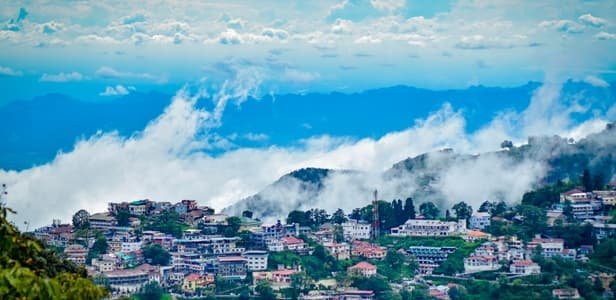
Mussoorie is one of North India’s most celebrated and most visited hill stations — the Queen of the Hills, perched at 2,005 metres on the lower ridges of the Garhwal Himalayas in Uttarakhand, where the snow-capped peaks of the Greater Himalayas are visible on clear days from Gun Hill, the Camel’s Back Road offers a gentle 3-kilometre promenade through cedar and oak forest, the famous Mall Road buzzes with the energy of India’s quintessential hill station experience, Kempty Falls cascades 40 metres through dense forest 13 kilometres from the town, Lal Tibba’s highest accessible point reveals panoramic mountain views, George Everest’s House on the western ridge offers a heritage connection to the surveyor who mapped the world’s highest peak, and the Cable Car from the Library area to Gun Hill provides both panoramic views and the unmistakable thrill of aerial Himalayan travel. Famous for its colonial-era heritage, the nearby Doon Valley visible in the valley below, the Landour cantonment’s quiet lanes and Char Dukan tea stalls, the weekend escape energy that draws visitors from Delhi in under four hours, and a climate that transforms from snow-covered in January to misty monsoon green in August to crisp and clear in November, Mussoorie offers a genuinely different experience in each season. Whether you are planning a summer family holiday, a romantic snow-seeking winter escape, a monsoon atmospheric retreat, or a photography-focused autumn visit, choosing the best time to visit Mussoorie determines the version of this iconic hill station you will encounter.
Mussoorie Travel Overview
| Factor | Details |
| Best Overall Time | March to June and October to November |
| Peak Tourist Season | May to June and December to January |
| Cheapest Time to Visit | July to September |
| Best for Snow | December to February |
| Best for Sightseeing | March to June and October to November |
| Best for Honeymoon | December to January and March to April |
| Best for Families | April to June |
| Best for Photography | October to November |
| Best for Budget Travelers | July to September |
| Average Temperature | Minus 1°C to 30°C (varies by season) |
Why Timing Matters When Visiting Mussoorie
Mussoorie’s popularity as India’s most-visited hill station means that seasonal timing affects not just weather but crowd levels, hotel rates, and the quality of the experience significantly. The summer months bring maximum visitors escaping the Delhi heat, December to January attracts snow seekers, and the monsoon reduces crowds dramatically at the cost of outdoor activity.
Understanding which season aligns with your primary travel purpose — cool-weather sightseeing, snowfall experience, photography, budget travel, or the romantic atmosphere of a misty hill station — transforms this popular destination from a sometimes-crowded tourist circuit into the personalised mountain escape it can genuinely be.
Visiting Mussoorie During Summer and Spring (March to June)
Spring and summer represent Mussoorie’s most popular and most activated season — the period when the hill station performs its essential function as a cool, pleasant escape from the North Indian plains’ intense heat, and when every attraction, activity, and viewpoint is most fully accessible.
Weather During Summer
Temperatures range between 10°C and 25°C in March and April — the most comfortable months with the clearest mountain views of the warm season. May and June see temperatures rising to 15°C to 30°C while remaining dramatically cooler than the 45°C simultaneously occurring in Delhi and the surrounding plains. Evenings are consistently cool requiring a light jacket throughout summer.
Why Visit Mussoorie in Summer?
- The most complete and comfortable escape from North Indian summer heat — the temperature difference from Delhi is typically 15 to 20 degrees, felt immediately upon ascending from Dehradun
- Spring blooms from March through April fill the hillsides with rhododendron, wild strawberry, and oak forest flowers creating the most colourful natural display of the year
- The Kempty Falls 13 kilometres from town is most pleasantly visited in the dry spring and early summer conditions — the waterfall flows well from seasonal streams without the monsoon mud and landslide risk
- Lal Tibba viewpoint — Mussoorie’s highest accessible point at 2,275 metres — provides the most panoramic Himalayan views on clear spring mornings before heat haze builds
- Camel’s Back Road, the 3-kilometre promenade with sunset views over the Doon Valley, is most pleasantly walked in the cool spring evenings
- The Summer Festival in May or June brings cultural programmes, folk dance performances, and food stalls to Mall Road in a festive celebration of Mussoorie’s tourist season
- George Everest’s House on the western ridge — the heritage estate of Colonel Sir George Everest who supervised the Great Trigonometrical Survey — is most comfortably visited in the spring walk through the surrounding oak forest
Summer is the most complete and most celebratory version of Mussoorie.
Best Places to Visit
Mall Road
Mussoorie’s 2-kilometre pedestrian promenade — the spine of the hill station’s commercial and social life — is most vibrantly alive in the summer season when visitors from Delhi and the surrounding plains fill its cafes, shops, and viewpoints in a festive hill station atmosphere most characteristic of its character.
Gun Hill
The second-highest peak of Mussoorie at 2,122 metres — accessible by Cable Car from the Library area or by a short trek from the upper Mall Road — offers a 360-degree panorama of the Himalayan range including Gangotri, Yamunotri, and the Bandarpunch peaks on the clearest spring mornings.
Lal Tibba
Mussoorie’s highest accessible point at 2,275 metres in the Landour cantonment area — equipped with a telescope for close-up views of specific Himalayan peaks — is most clearly rewarding on the transparent blue-sky mornings of March and April.
Kempty Falls
The 40-metre cascade into natural rock pools 13 kilometres from Mussoorie on the Chakrata road is most comfortably visited in spring and early summer when the approach road is dry and the falls themselves provide a refreshing backdrop without the monsoon crowds and slippery conditions.
Advantages of Summer Travel
- Most complete escape from North Indian summer heat
- Spring rhododendron and forest blooms create the most colourful landscape
- All viewpoints, activities, and cable car fully operational
- Summer Festival in May brings cultural energy to Mall Road
- The Camel’s Back Road sunset promenade most pleasantly walked in cool evenings
Disadvantages
- May and June bring the year’s largest tourist crowds
- Hotel rates are at their highest during the peak summer season
- Mall Road and popular viewpoints can feel congested on summer weekends
- Advance booking essential 2 to 4 weeks ahead for May and June visits
October and November — The Finest Post-Monsoon Months
October and November are increasingly recognised by experienced travellers as Mussoorie’s most rewarding months — the monsoon has fully retreated, the forests are at maximum vivid post-monsoon green, the air has a crystal clarity that delivers the finest Himalayan views of the entire year, and hotel rates are below both the summer and winter peaks.
What Makes October and November Special?
- Post-monsoon air clarity delivers the year’s most transparent and most dramatic Himalayan panoramas from Gun Hill, Lal Tibba, and Camel’s Back Road
- The surrounding Garhwal oak and rhododendron forests are intensely green from monsoon rainfall while the sky is clear blue — the most visually striking combination of the year
- Dramatically fewer tourists than May-June peak — Mall Road, the cable car, and all viewpoints are most peacefully accessible
- Hotel rates are below both the summer and winter festival peaks
- October morning temperatures of 10°C to 18°C are ideal for the Camel’s Back walk, the Lal Tibba trek, and extended hill station exploration
- The first hints of winter approaching from November add a brisk, energising quality to morning walks
Visiting Mussoorie During Winter (December to February)
Winter transforms Mussoorie into one of North India’s most romantically atmospheric destinations — snow-covered colonial buildings, frost on the oak trees, the Mall Road occasionally blanketed in white, and the Himalayan peaks shining with fresh winter snowfall on clear days.
Weather During Winter
Temperatures range between minus 1°C and 10°C — genuinely cold with December and January being the coldest months. Snowfall is regular from late December through February, with the Mall Road and surrounding hillsides occasionally receiving 10 to 30 centimetres of fresh snow. Sub-zero temperatures on the coldest nights require warm thermal clothing.
Why Visit Mussoorie in Winter?
- Snowfall transforms Mussoorie into one of North India’s most beautiful winter hill station scenes — the colonial heritage buildings, the Mall Road’s Victorian-era structures, and the surrounding cedar forests covered in snow create images that define the romantic Indian hill station winter aesthetic
- December and January hotel rates peak as snow-seeking visitors from Delhi, Punjab, and Haryana fill the hill station — but the conditions they seek are genuinely spectacular on the best snowfall days
- The Landour cantonment’s quiet lanes — already Mussoorie’s most charming and least commercial area — become the most atmospheric walking destination in winter when the old stone houses have frost on their windows and the Char Dukan tea stalls serve the most warming glasses of hot chai
- Nearby Dhanaulti — 24 kilometres from Mussoorie at 2,286 metres — receives more reliable snowfall than Mussoorie town itself and makes an ideal day trip in winter for the most dramatic snow scenes in the region
- Mussoorie’s Cable Car to Gun Hill in winter, when the town and Doon Valley below are snow-covered, is the most dramatically beautiful version of this ride
Popular Winter Attractions
Dhanaulti in Snow
The smaller, quieter destination 24 kilometres from Mussoorie is consistently covered in snow when the higher elevation receives fresh falls, and the ECO Park’s cedar and rhododendron forest under deep snow creates one of Uttarakhand’s finest winter landscape experiences.
Mussoorie in Snowfall
When fresh snowfall covers Mall Road — typically after overnight falls in January — the morning view of the hill station with fresh white snow on every surface, the surrounding peaks glistening in pale winter sun, and the silence that follows snowfall creates Mussoorie’s most memorable single sensory experience.
Advantages of Winter Travel
- Snowfall creates the most romantically beautiful hill station landscape
- Dhanaulti day trips for more reliable and deeper snowfall
- Landour cantonment most atmospherically charming in winter
- Ideal for honeymooners seeking the romantic snow experience
Disadvantages
- Temperatures of minus 1°C at night and sub-zero on the coldest days require heavy thermal layers
- Snowfall can occasionally disrupt road conditions on the Dehradun-Mussoorie approach
- December and January weekends see very high domestic tourist demand
- Some outdoor viewpoints and adventure activities are restricted by snow and cold
Visiting Mussoorie During Monsoon (July to September)
Mussoorie’s monsoon is one of North India’s more intense — Uttarakhand’s Garhwal hills receive significant rainfall, and the Mussoorie-Dehradun road passes through landslide-prone sections that require careful monitoring during July and August.
Weather During Monsoon
Temperatures range between 15°C to 25°C — pleasantly cool with continuous to heavy rainfall particularly in July and August. The surrounding forest and Doon Valley are at maximum vivid green. September sees rainfall easing progressively toward the excellent October window.
Why Some Travellers Visit in Monsoon?
- Hotel rates are lowest of the year — the most significant savings on all accommodation categories
- The Garhwal forest surrounding Mussoorie is at its most lush and most dramatically green
- Kempty Falls and all waterfall sites are at their most powerful — an entirely different character from the dry-season trickle
- Fewer tourists create the most peaceful and most authentic version of Mussoorie’s town life
- Misty, atmospheric conditions — clouds floating at eye level, the Doon Valley obscured below — create the romantic fog-covered hill station atmosphere that photographers specifically seek
Advantages of Monsoon Travel
- Year’s lowest hotel rates
- Waterfalls at maximum power and visual drama
- Most lush and green forest and valley landscape
- Atmospheric mist and cloud conditions for photography
- Peaceful, crowd-free version of Mall Road and all attractions
Disadvantages
- Landslide risk on the Dehradun-Mussoorie approach road during heavy rainfall events
- Outdoor adventure activities including trekking and cable car are frequently suspended
- Sustained heavy rain can confine visitors indoors for extended periods
- Not recommended for first-time visitors or those with fixed itineraries
Best Time to Visit Mussoorie for Different Travellers
For Honeymooners
December to January for the romantic snow experience — fresh snowfall on the Landour lanes, hot chai at the Char Dukan stalls, and the intimate atmosphere of a hill station in its most quietly beautiful winter character. March and April for spring romance with rhododendron blooms and the most comfortable walking weather.
For Families
April to June — the most complete range of activities for all ages, comfortable temperatures, all attractions operational, and the festive summer atmosphere that makes Mussoorie the quintessential North Indian family hill station experience.
For Snow Lovers
December to February — Mussoorie receives regular snowfall through these months, with January providing the most reliable and most dramatic winter conditions. Combine with a Dhanaulti day trip for guaranteed deeper snow cover.
For Photographers
October and November for the year’s clearest Himalayan panoramas and most vivid post-monsoon green — the finest conditions for both mountain photography and forest landscape.
For Budget Travellers
July to September — hotel rates are lowest, the green landscape is beautiful, and Kempty Falls is at its most powerful, though outdoor activity restrictions and landslide risk require flexibility.
Best Time for Kempty Falls
Kempty Falls is Mussoorie’s most visited natural attraction.
Ideal Months
March to June for comfortable access, and July to September for maximum water volume.
The Kempty Falls experience includes:
- A 40-metre cascade into natural rock pools accessible from a viewpoint above
- Natural bathing pools at the base most popular in summer months
- Cable car descent from the parking area to the falls viewing area
- Surrounding tea stalls and local food vendors
Festivals and Events in Mussoorie
Mussoorie Summer Festival
Held in May or June on Mall Road and the Library Chowk area — this Uttarakhand Tourism-organised festival brings folk performances, cultural programmes, photography competitions, and the festive energy of the hill station’s peak season to its most vibrant single event.
Mussoorie Winter Carnival
Held in January when snowfall is most likely — celebrating the winter season with bonfires, folk music, snow sculpture competitions, and community events in the most atmospherically beautiful single month of the hill station’s winter calendar.
Landour Language School Cultural Events
The renowned Landour Language School — attended by foreign students and missionaries for generations — hosts occasional cultural evenings that provide a window into the distinctive Anglo-Indian heritage that makes Landour’s character unlike any other hill station enclave in India.
Travel Tips for Visiting Mussoorie
To make your Mussoorie visit most rewarding, consider these practical guidelines:
- Vehicles are restricted in central Mussoorie during peak hours and on Saturdays and Sundays — park at the Gandhi Chowk or Library area parking lots and explore the Mall Road and Landour on foot.
- Book May and June weekend accommodations at least 2 to 3 weeks in advance — Mussoorie’s proximity to Delhi makes it the most accessible hill station from the capital and demand is very high on summer weekends.
- The Landour cantonment area above the main Mussoorie commercial zone is significantly quieter, more historically atmospheric, and more naturally beautiful than the busy Mall Road — prioritise time here regardless of season.
- Carry warm layers for all visits throughout the year — Mussoorie evenings are cool in summer and cold in winter.
- Dehradun is the gateway city — well-connected by train from Delhi (5 to 6 hours on Shatabdi Express) and by road (approximately 300 kilometres, 6 to 7 hours). The Mussoorie bus or shared taxi from Dehradun takes approximately 1.5 hours.
- Check road conditions before visiting in monsoon and after snowfall events — the 35-kilometre Mussoorie-Dehradun road passes through sections that can be temporarily blocked by landslides or snow.
Conclusion
The best time to visit Mussoorie is from March to June and October to November — the two comfortable weather windows that provide the most complete Mussoorie experience across sightseeing, trekking, viewpoint visits, and the classic hill station escape that this destination has offered visitors since the British first built their summer homes here in the 1820s.
October and November stand out as the finest overall months for the most discerning visitor — post-monsoon green landscape, year’s clearest Himalayan views from Gun Hill and Lal Tibba, the most comfortable temperatures for walking, and hotel rates below both summer and winter peaks create the most rewarding balance of conditions.
Whether you come for the snow-covered Mall Road of January, the rhododendron-lined spring walk, the Summer Festival’s cultural energy, the atmospheric monsoon mist, the Landour lane tea stall in October’s crisp morning air, or simply the profound pleasure of watching the Doon Valley and the Himalayan range frame either side of your hill station world, Mussoorie delivers the quintessential North Indian hill station experience with a warmth and accessibility that has made it India’s most-visited mountain retreat for nearly two centuries.
Frequently Asked Questions
Q1. What is the best month to visit Mussoorie?
A: April for the spring ideal — rhododendron blooms, clear mountain views, and comfortable temperatures with manageable crowds. October for the post-monsoon finest — clearest Himalayan panoramas, vivid green forest, and hotel rates below both summer and winter peaks.
Q2. Does Mussoorie get snow?
A: Yes — regular snowfall from late December through February, with January providing the most reliable and most dramatic snowfall. Dhanaulti 24 kilometres away receives more consistent and deeper snow and is an excellent day trip for guaranteed winter snow experiences.
Q3. What is the peak tourist season in Mussoorie?
A: Two peaks — May and June for summer visitors escaping Delhi’s heat, and December to January for snow seekers. Both periods require advance hotel booking and see the year’s highest accommodation rates.
Q4. Is Mussoorie worth visiting in monsoon?
A: For budget travellers who embrace rain and atmospheric mist, yes — lowest rates, waterfalls at maximum power, and the most lush forest landscape. Landslide risk on the approach road and restricted outdoor activities require flexibility and careful weather monitoring.
Q5. How many days are enough for Mussoorie?
A: Two to three days comfortably covers Mall Road, Camel’s Back Road, Gun Hill by cable car, Lal Tibba, Kempty Falls, and a Landour cantonment walk. Extend to 4 days to include a Dhanaulti day trip and George Everest’s House.