On a farm in Punjab, a plot under construction in Pune or a weekend house outside Bengaluru, the nearest power socket may be hundreds of metres away, and that’s exactly where a solar CCTV camera and a wired CCTV camera start to look very different. A solar camera carries its own panel and battery, often connects through a 4G SIM card and can be mounted on a pole in an open field within an hour. A wired camera draws steady power from the grid and records continuously to a recorder inside the building. Both protect property well, but each is built for a different kind of location.
Two Ways to Power a Camera
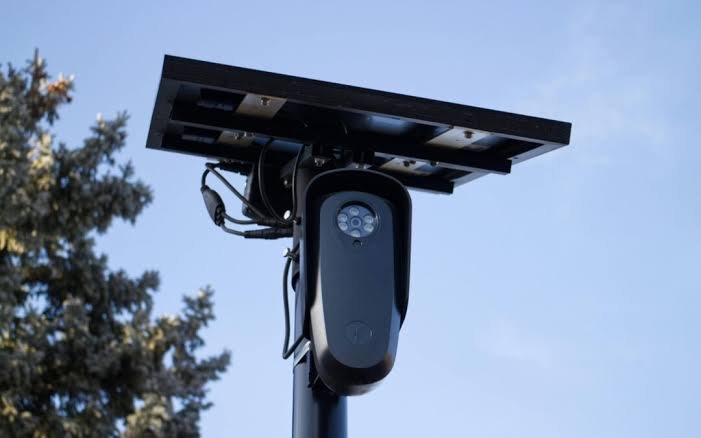
A solar CCTV camera combines a small solar panel, typically around 20 to 40 watts on outdoor models, with a built-in rechargeable lithium battery. The panel charges the battery by day, and the battery runs the camera through the night. Most models connect through a 4G SIM or Wi-Fi and store footage on a microSD card, with optional cloud backup.
A wired CCTV camera runs on mains electricity, delivered either through a separate power cable or through a network cable using PoE (Power over Ethernet). It sends video to a DVR or NVR with a hard disk, which records everything and allows viewing on a monitor or phone.
Recording Style: Event Clips vs Round-the-Clock
This is the biggest practical difference, and many buyers notice it only after installation.
To save battery, most solar cameras stay in a low-power standby mode and start recording when their motion sensor detects a person, animal or vehicle. You get short event clips, plus live view whenever you open the app. Some premium models offer continuous recording, but they need larger panels and batteries.
Wired cameras record continuously, 24 hours a day, without any concern about battery levels. If you need a complete timeline of everything that happened, such as at a shop counter, a home entrance or a busy gate, wired recording gives the fuller picture.
Sites Where Solar Makes Sense
- Agricultural land, pump houses and tube-well rooms
- Under-construction plots and building sites
- Farmhouses and weekend homes outside city limits
- Plot boundaries in new layouts with no electricity connection yet
- Warehouse yards, poultry farms and dairy sheds
- Village homes with long, frequent power cuts
In these places, solar cameras avoid digging trenches, laying cables and paying for new electrical connections.
Where Wired Remains the Better Fit
- City homes, apartments and independent houses with reliable power
- Shops, clinics, offices and showrooms needing round-the-clock records
- Large properties needing many cameras managed from one recorder
- Indoor areas where a solar panel can’t receive sunlight
- Locations where high-resolution continuous footage is important
Wired systems also suit installations planned during construction, when cables can run neatly through conduits.
The Distance Problem
Distance often decides the matter on farms and large plots.
Network cables carrying PoE work reliably up to about 100 metres. Beyond that, extenders, fibre or additional switches are needed. HD analog cameras on coaxial cable can go further, but they still need a separate power line.
Suppose a farm gate sits 200 metres from the farmhouse. Laying power and video cable that far, with conduit or poles, could easily cost ₹6,000 to ₹12,000 in cable and labour alone, before the camera and any extenders. A 4G solar camera for the same gate commonly costs around ₹6,000 to ₹12,000 in total, with nothing to dig or lay.
Closer to the house, within 30 to 50 metres, the cabling cost drops sharply and a wired camera becomes the more economical and reliable option.
Mobile Data on a 4G Solar Camera
Since many solar cameras use a SIM card, it’s worth estimating data use.
If a camera uploads around 50 motion clips a day, each about 20 seconds long at roughly 2 Mbps, that’s about 250 MB a day or around 7.5 GB a month. Watching live video for an hour a day can add another 600 to 700 MB daily.
So a SIM plan with 1 to 2 GB of daily data comfortably covers most farm and site cameras. Adjusting motion sensitivity to ignore small animals and moving crops also reduces both data use and battery drain.
Getting Good Results From a Solar Camera
Panel Position and Cleaning
In India, solar panels perform best facing south, tilted at an angle close to your location’s latitude. Avoid shade from trees, water tanks or walls during the main sunlight hours. In dusty regions like Rajasthan, Gujarat or the Deccan plateau, wipe the panel every few weeks, since a dusty panel charges far less.
Monsoon Weeks
Long cloudy spells reduce charging. Choose models with larger batteries and panels if you’re in Kerala, coastal Karnataka, the Northeast or other heavy-rainfall areas. Reducing night-time recording sensitivity during the monsoon helps the battery last.
Theft Protection
Solar cameras on open land can attract theft. Mount them at least 3 to 4 metres high, use anti-theft brackets and choose models with cloud backup so footage survives even if the camera is removed.
Network Signal
Check 4G signal strength at the exact mounting spot with a phone before buying. Choose the SIM operator with the strongest coverage in that area.
Pricing at a Glance
Approximate 2026 market prices in India:
- Basic solar CCTV cameras: about ₹2,500 to ₹5,000
- Wi-Fi solar cameras: about ₹4,000 to ₹8,000
- 4G SIM solar cameras: about ₹6,000 to ₹12,000
- Dual and triple-lens solar cameras: about ₹7,000 to ₹18,000
- Additional wired camera on an existing DVR, including cable and labour: about ₹2,000 to ₹5,000
FAQs
Q1. Is a solar CCTV camera better than a wired one?
A: Solar cameras are better for remote sites without power, while wired cameras are better for continuous recording at homes and shops.
Q2. Do solar CCTV cameras work at night?
A: Yes, they run on battery power charged during the day and use infrared or colour night vision.
Q3. Do solar cameras record 24 hours?
A: Most record when motion is detected to save battery, though some premium models support continuous recording.
Q4. How much data does a 4G solar camera use?
A: A typical farm camera may use around 5 to 10 GB a month, depending on motion events and live viewing.
Q5. Do solar cameras work in the monsoon?
A: Yes, though cloudy weeks reduce charging, so larger batteries and panels work better in rainy regions.
Q6. Can a wired CCTV camera work far from the house?
A: Yes, but network cables need extenders beyond about 100 metres, which adds cost and complexity.