The fan stops mid-spin, the WiFi light blinks out, and somewhere in that half-second of darkness, one of the brands on this list of the top 10 inverter manufacturers in India 2026 is either about to save your evening or let you down. For most Indian households, an inverter isn’t a luxury gadget — it’s the difference between a normal evening and sitting around with candles while the fridge slowly warms up.
With so many brands shouting about “smart,” “silent,” and “solar-ready” inverters, picking the right one gets confusing fast. This guide cuts through the marketing noise and looks at which manufacturers actually deliver on reliability, service, and value for money in 2026.
| Brand | Best For | Typical Price Range | Known Strength |
| Luminous | All-round home use | ₹6,500 – ₹55,000 | Widest dealer and service network |
| V-Guard | Digital/lithium upgrades | ₹8,000 – ₹60,000 | Voltage stabilization expertise |
| Livguard | Lithium-based backup | ₹9,000 – ₹50,000 | Large dealer base, 35+ countries |
| Microtek | Budget homes | ₹5,500 – ₹40,000 | Affordable, low-maintenance models |
| Su-Kam | High-capacity backup | ₹10,000 – ₹65,000 | Sine wave technology pioneer |
| Exide | Battery-inverter pairing | ₹6,000 – ₹45,000 | Long battery life |
| Genus | Small commercial setups | ₹7,500 – ₹50,000 | Stable, engineering-first design |
| Okaya | Lithium-focused buyers | ₹9,500 – ₹48,000 | Fast-growing lithium range |
| UTL Solar | Solar hybrid homes | ₹12,000 – ₹70,000 | Off-grid and hybrid solar focus |
| Smarten | Industrial/commercial loads | ₹15,000 – ₹1,00,000+ | Heavy-load and UPS-grade systems |
Prices are approximate and vary by capacity, retailer, and city.
1. Luminous Power Technologies
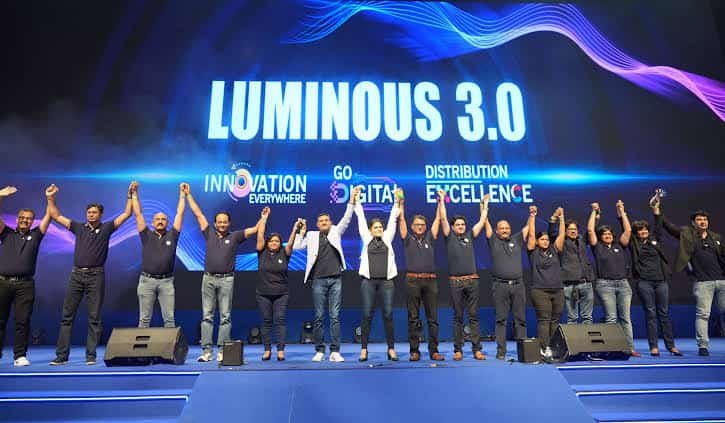
Ask any electrician in your neighbourhood which brand they’d recommend first, and there’s a decent chance they’ll say Luminous. It’s been around since 1988, runs seven manufacturing plants, and has built a service network that reaches even smaller towns — which matters far more than spec sheets once your inverter actually breaks down.
- Covers everything from basic sine wave models to full solar hybrid systems
- Strong resale and exchange value due to brand trust
- Sachin Tendulkar’s long association with the brand has kept it culturally visible for decades
2. V-Guard Industries
V-Guard began life making voltage stabilizers in 1977, and that background shows in how carefully engineered its inverter-battery combos feel. Its newer Li-Smart series pairs a lithium battery with automatic voltage regulation and app monitoring — genuinely useful if you’re tired of manually checking backup status during a power cut.
Homeowners upgrading from an old lead-acid setup to something more modern tend to land on V-Guard, mainly because the company’s service reach extends well beyond metro cities.
3. Livguard
Livguard, backed by the SAR Group, has quietly built one of the largest dealer networks in the country — over 30,000 outlets. That kind of reach means spare parts and service technicians aren’t hard to find, even outside major cities.
The brand’s lithium portfolio has expanded fast, and its inverter-battery combos are designed to work as a matched pair rather than mixing components from different manufacturers, which reduces compatibility issues down the line.
4. Microtek International
Microtek earns its spot through sheer consistency rather than flash. It’s been a fixture in Indian homes for years, particularly in smaller cities and rural areas where budget matters as much as performance. Its square wave and sine wave models remain some of the most affordable reliable options on the market.
If your priority is a no-fuss inverter that just works without draining your wallet, Microtek is usually the smartest starting point.
5. Su-Kam Power Systems
Su-Kam holds a genuinely interesting place in Indian inverter history — it built the country’s first sine wave UPS, which eliminated the annoying hum that older inverters used to produce. The company holds over 100 patents and has bounced back strongly after a rough patch a few years ago, now focusing heavily on modern solar-integrated inverters.
It’s also announced a 500 MW lithium-ion battery facility in Himachal Pradesh, signalling serious investment in next-generation backup technology.
6. Exide Industries
Everyone knows Exide for batteries first, but its Home UPS range — including the Home Star and Home GQP families — has become a genuine inverter contender in its own right. The obvious advantage: pairing an Exide inverter with an Exide battery means one company to call if something goes wrong, instead of pointing fingers between two brands.
- Strong reputation for long battery life under heavy load
- Extensive service network built on decades of battery-business trust
- Popular choice for homes with high daily backup requirements
7. Genus Power Infrastructures
Genus takes a quieter, engineering-heavy approach rather than competing on marketing. Its MaxiLion lithium inverter line has gained traction among buyers who want stable, predictable performance for both home and small commercial setups. The company’s background in power infrastructure and metering gives it a technical depth that pure consumer brands sometimes lack.
8. Okaya Power
Okaya doesn’t have Luminous-level name recognition, but it’s earned a loyal following through consistent performance and genuinely competitive pricing. It’s moved aggressively into lithium-based inverters, which is where a lot of the category’s real innovation is happening right now.
9. UTL Solar
If your home already runs on solar panels, or you’re planning to install them soon, UTL is worth evaluating directly. The company has built its entire identity around solar-integrated and hybrid inverter systems rather than trying to be everything to everyone — a smart focus for a segment growing fast as electricity bills keep climbing.
10. Smarten Power Systems
Smarten rounds out this list as the option for heavier loads — small businesses, offices, and homes running larger appliances that a standard residential inverter can’t comfortably handle. Its UPS-grade systems are built for continuous, high-demand use rather than occasional power cuts, making it a solid pick for commercial or semi-commercial spaces.
How to Choose the Right Inverter for Your Home
Picking a brand is only half the job — the capacity and battery type matter just as much:
- Calculate your actual load — add up the wattage of everything you want to run during a cut (fans, lights, fridge, router, TV) rather than guessing
- Match the battery to your usage pattern — tubular batteries suit frequent, long outages; lithium suits shorter cuts with faster recharge needs
- Check warranty terms separately — inverter and battery warranties are often sold independently and rarely match in duration
- Confirm local service availability — a great inverter with no nearby technician becomes a problem fast
- Don’t oversize unnecessarily — a bigger capacity than you need just adds cost without real benefit
FAQs
Q1. Which inverter brand offers the best backup time for frequent, long power cuts in India?
Su-Kam and Exide tend to perform best for extended outages, largely due to stronger battery pairing options. Actual backup time still depends on your battery’s amp-hour rating and total connected load.
Q2. Is a lithium inverter battery worth the extra cost over a tubular battery in 2026?
Lithium batteries charge faster and last longer overall, making them worthwhile for shorter, frequent cuts. For long daily outages of several hours, tubular batteries still offer better value per rupee spent.
Q3. Can I mix an inverter from one brand with a battery from another?
Technically yes, if voltage and capacity match, but performance and warranty claims often work better when both come from the same manufacturer, since compatibility issues are less likely to arise.
Q4. How much load capacity do I actually need for a 2BHK home in India?
Most 2BHK homes with fans, lights, a fridge, and a router comfortably run on an 850VA–1100VA inverter. Add a few hundred VA extra if you also want to run a TV or computer during outages.