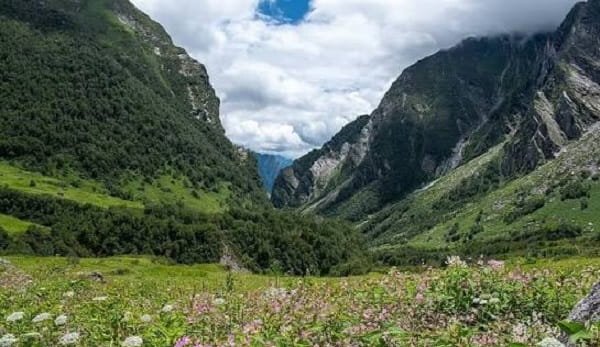
The Valley of Flowers is one of India’s most extraordinary natural spectacles — a UNESCO World Heritage Site and national park nestled in the Garhwal Himalayas of Uttarakhand at an elevation of 3,500 to 3,600 metres, where over 500 species of rare and endemic alpine wildflowers bloom in a compressed, dramatic seasonal explosion across a 87-square-kilometre high-altitude valley. Brahma Kamal — Uttarakhand’s state flower and one of the rarest blooms in the world — Himalayan Blue Poppy, Cobra Lily, Potentilla, Anemone, Aster, Geranium, Primula, and dozens of species visible nowhere else on earth collectively transform this valley into what botanists, trekkers, and nature lovers consistently describe as the most densely and spectacularly floral landscape in all of India. Whether you are an experienced Himalayan trekker, a nature photographer, a botanical enthusiast, a first-time high-altitude hiker, or simply someone who wants to walk through a landscape that resembles no other on earth, choosing the best time to visit the Valley of Flowers is the single most important planning decision your trip requires.
Unlike most Indian destinations, the Valley of Flowers is not a year-round destination. It exists within a narrow annual window defined by snowmelt, monsoon bloom cycles, and government-regulated opening and closing dates — and within that window, timing your visit to specific weeks determines whether you encounter the full bloom spectacle or a landscape that is either still waking up or already fading.
Valley of Flowers Travel Overview
| Factor | Details |
| Best Overall Time | Mid-July to Mid-August |
| Peak Bloom Period | July 20 to August 20 |
| Valley Opening Date | Approximately June 1 to October end |
| Best for Brahma Kamal | First two weeks of August |
| Best for Maximum Flowers | Late July to Early August |
| Best for Himalayan Blue Poppy | Mid-July to August |
| Best for Fewer Crowds | Early July or Mid-September |
| Best for Photography | Late July to Mid-August |
| Best for Combined with Hemkund Sahib | July to September |
| Nearest Base | Ghangaria (3,050 metres) |
Why Timing Matters More Here Than Anywhere Else
No destination in this entire series of travel guides has its timing as precisely defined as the Valley of Flowers. This is not a destination where a two-week variation in your travel date changes the hotel rate or the crowd level. Here, a two-week variation changes whether you see a valley covered in hundreds of thousands of blooming wildflowers in every colour imaginable, or a valley that is either still snowpatched and just beginning to green, or one where the flowers have already faded to bare alpine meadow.
The valley blooms because of the monsoon. The southwest monsoon rain and the preceding snowmelt together provide the precise moisture and temperature conditions that trigger the simultaneous bloom of hundreds of alpine species. Remove the monsoon and the bloom does not happen. This is why the Valley of Flowers is — uniquely among India’s great natural attractions — at its absolute finest not despite the rain but precisely because of it.
Understanding the Bloom Cycle — Week by Week
Early June: Snow Clearing and Early Green
The valley opens in early June 2026 — expected around June 1 — as winter snow recedes and the forest department confirms trail accessibility to Ghangaria and beyond. In early June, remnants of winter snow still cover significant portions of the valley floor and upper elevations. The landscape is transitioning — early green appears, small early-season wildflowers begin emerging near the valley margins, and the overall character is fresh but incomplete. Visitor numbers are very low and the experience rewards those who want solitude and are interested in the early-season botanical emergence rather than the full bloom spectacle.
Late June: Building Colour
By late June, the valley is greening consistently. Flowers are appearing in growing numbers — predominantly yellow and white species at the lower elevations — but the high-altitude spectacle of the full bloom has not yet arrived. The monsoon is strengthening and rainfall is increasing. Trekking conditions require rain gear and flexibility.
First Two Weeks of July — Greenery, Snow Remnants, and Emerging Bloom
Early July is when the serious colour begins building. The monsoon is active, rainfall is regular and sometimes heavy, but the valley is responding — greens intensify, early wildflower species are in full colour at lower elevations. Higher areas of the valley may still carry snow patches. This period is ideal for visitors who want fewer crowds — July is the valley’s least crowded month within the bloom season — and who appreciate the freshness and dynamism of a landscape still arriving at its peak.
Mid-July to Early August — Peak Bloom Window
This is it. The ten to fourteen days spanning the third week of July through the first week of August represent the Valley of Flowers at its absolute maximum — the highest density of simultaneously blooming species, the deepest and most diverse colour coverage across the full extent of the valley floor and slopes, and the most complete expression of what makes this UNESCO site globally unique. Hundreds of thousands of flowers in red, purple, blue, yellow, orange, white, and pink cover the valley in a visual impact that photographs cannot adequately prepare first-time visitors for.
During this period, every major species is in simultaneous bloom — Himalayan Blue Poppy, Anemone, Geranium, Primula, Aster, Cobra Lily, Potentilla, Bistort, and many more compete for visual attention across every section of the valley. Rainfall is active during this period — expect daily showers and plan sightseeing around the morning windows before afternoon rain typically arrives.
First Two Weeks of August — The Brahma Kamal Window
This is the most specifically sought timing within the entire bloom season. Brahma Kamal — Saussurea obvallata, Uttarakhand’s sacred state flower and one of the world’s most revered alpine blooms — flowers specifically in the first two weeks of August at the higher elevations near the Hemkund Sahib ascent. The flower is white, intensely fragrant, uniquely structured, and deeply sacred to both Hindu and Buddhist traditions. Trekkers who specifically want to see Brahma Kamal in bloom must time their visit to early-to-mid August — the bloom window is narrow and very specific.
The valley’s overall bloom is still at or near its peak during this period, meaning the early August visit captures both the maximum general bloom and the exclusive Brahma Kamal spectacle simultaneously — making it the single most rewarding timing within the entire season.
Mid-August to Mid-September — Late Bloom and Transition
By mid-August the peak bloom begins its gradual transition. Most species remain visible but the density and vibrancy begin to ease. Late-blooming species and some high-altitude varieties that appear after the peak create a different but still colourful landscape. September sees the monsoon progressively retreating and conditions improving significantly — rainfall reduces, trails become more stable, and the valley takes on the first hints of autumn colouration in the surrounding grasslands.
September is increasingly popular with experienced trekkers who prioritise clear views, comfortable trail conditions, and solitude over maximum flower density. The trade-off is explicit — the full bloom has passed but the landscape remains beautiful and the Himalayan views in September’s clearing skies are the finest of the entire season.
October — Closing Season
The valley typically closes by the end of October. October sees the alpine meadows transitioning toward their winter rest, most flower species have seeded and faded, and the landscape shifts toward golden and amber grassland colours as the first snowfall begins appearing on surrounding peaks.
The Trek to Valley of Flowers — Essential Information
Starting Point and Route
The trek begins at Govindghat on the Badrinath Highway in Chamoli district. From Govindghat, trekkers walk or hire a pony to Ghangaria (also spelled Ghangria) — a 14-kilometre trek at 3,050 metres — which serves as the only base camp for the Valley of Flowers. Ghangaria has basic guesthouses, GMVN accommodation, and food facilities.
From Ghangaria, the Valley of Flowers is an 8-kilometre round trip — a 4-kilometre trail through the park gate climbing gently through the valley. Hemkund Sahib, the revered Sikh gurdwara at 4,329 metres beside a glacial lake, is a separate 12-kilometre round trip from Ghangaria and is typically combined with the Valley of Flowers visit in a multi-day itinerary.
Trek Distance and Duration
The complete round trip from Govindghat to Ghangaria, Valley of Flowers, Hemkund Sahib, and back to Govindghat covers approximately 38 to 42 kilometres and is typically completed in 4 to 6 days depending on fitness level and how much time is spent in the valley.
Difficulty Level
The Valley of Flowers trek is rated easy to moderate — it is one of the most accessible high-altitude Himalayan treks in India, suitable for reasonably fit beginners without technical climbing experience. The elevation of 3,500 metres requires acclimatisation awareness but the gentle gradient of the valley approach is manageable by most healthy adults.
Permits Required
A forest permit is mandatory to enter the Valley of Flowers National Park. This is obtained at the forest check post near Ghangaria on the day of entry. The park entry fee is nominal. No advance online booking is currently required for the permit, but fees and regulations are subject to annual revision — confirm current requirements through the Uttarakhand Tourism portal before travel.
What You Will See by Month
July (First Half)
Early wildflowers beginning, predominantly lower-elevation species, some snow patches at higher valley sections, lush green meadows, minimal crowds.
July (Second Half)
Peak bloom building rapidly — Primula, Geranium, Anemone, Aster, and Potentilla in full colour, Himalayan Blue Poppy at mid-elevation, valley rapidly filling with colour, monsoon active but manageable with morning starts.
August (First Half)
Full peak bloom — all major species simultaneously in flower, Brahma Kamal emerging in the first two weeks near the upper valley and Hemkund Sahib approach, the most diverse and densest floral colour of the entire season. This is the Valley of Flowers at its absolute finest.
August (Second Half)
Bloom beginning to transition — some species at their peak, others past, late-season flowers extending the colour, still a beautiful and rewarding visit with diminishing crowds from the Independence Day long weekend.
September
Bloom largely completed, landscape transitioning to autumn, dramatically clearer weather and views, near-zero crowds, the finest conditions for Himalayan photography and comfortable trekking without rain disruption.
Best Time for Specific Experiences
For Maximum Flower Density
Visit July 20 to August 10 — the ten-to-twenty-day window when the highest number of species are simultaneously in bloom across the full extent of the valley.
For Brahma Kamal
Visit August 1 to 15 — the specific window when Uttarakhand’s sacred state flower blooms near the upper valley and the Hemkund Sahib trail.
For Himalayan Blue Poppy
Visit mid-July to late July — the blue poppy blooms at mid to high elevations through this period before most other species reach their peak.
For Fewest Crowds
Visit early July or mid-September — both periods offer the valley with minimal other trekkers while still providing either the early bloom or a beautiful post-bloom landscape.
For Best Photography
Visit late July to mid-August for maximum flower colour diversity and density, or September for clear skies and autumn landscape photography with visible high peaks in the background.
Visiting Hemkund Sahib Alongside Valley of Flowers
Hemkund Sahib — one of Sikhism’s holiest shrines, set beside a glacial lake at 4,329 metres surrounded by seven Himalayan peaks — shares Ghangaria as its base camp with the Valley of Flowers and is combined in most itineraries.
Hemkund opens in May and closes in October. July to September is the most popular period for combined visits. The climb from Ghangaria to Hemkund is steep and demanding — 6 kilometres of significantly steeper ascent than the valley approach. Morning starts (before 7 AM) allow both a Hemkund Sahib visit and a Valley of Flowers exploration within a two-day Ghangaria stay.
At the Hemkund Sahib lakeside, Brahma Kamal blooms in August along the upper approach trail — making August the finest month for combining both the gurdwara experience and the Brahma Kamal sighting.
How to Reach Govindghat — the Trek Starting Point
The Valley of Flowers trek starts at Govindghat, 273 kilometres from Rishikesh and 22 kilometres from Badrinath.
By Road: Rishikesh to Govindghat by bus or taxi takes approximately 10 to 12 hours. The route passes through Devprayag, Rudraprayag, Karanprayag, and Joshimath.
By Air: The nearest airport is Jolly Grant Airport in Dehradun, approximately 295 kilometres from Govindghat. Taxis connect the airport to Rishikesh and onward to Govindghat.
By Train: Rishikesh and Haridwar are the nearest major railway stations, both well-connected to Delhi and other cities.
Essential Packing for the Trek
The combination of high altitude, active monsoon rainfall, and cool temperatures requires specific preparation.
- Waterproof rain jacket and rain cover for backpack — essential throughout the season
- Warm layering including a fleece and light down jacket for evenings in Ghangaria
- Sturdy waterproof trekking boots with ankle support — the trail has wet and muddy sections in peak monsoon
- Trekking poles — helpful on the descent from Hemkund Sahib in particular
- High-SPF sunscreen and UV sunglasses — high altitude UV is intense even on cloudy days
- First aid kit including altitude sickness medication — carry Diamox only after medical consultation
- Sufficient cash — ATMs do not exist at Ghangaria and connectivity is limited
Important Rules — Valley of Flowers National Park
The Valley of Flowers National Park enforces strict conservation rules that all visitors must respect.
Camping, cooking, eating, and carrying food are strictly prohibited inside the valley boundary — all meals must be consumed at Ghangaria. No flowers, plants, or rocks may be removed. Littering carries heavy penalties. Pets are not permitted. The park gate closes at 5 PM — all visitors must be back at Ghangaria before this time. These rules exist to protect one of India’s most biologically precious and fragile ecosystems, and enforcement is genuine.
Best Time for Different Types of Trekkers
For First-Time High-Altitude Trekkers
Late July to early August — full bloom, established trail conditions, and maximum fellow trekkers on the route create the most supportive and rewarding first high-altitude trek experience.
For Experienced Trekkers Seeking Solitude
Early July for the fewest crowds within the bloom season, or September for the finest weather and most serene experience with a post-bloom landscape.
For Photographers
August 1 to 15 — maximum species diversity, Brahma Kamal in flower, and the valley at its densest colour creates the finest photography subject of the entire season.
For Botanical Enthusiasts
The entire July to September window is rewarding, with different species dominant in different weeks. Carrying a Himalayan wildflower field guide enhances the experience substantially.
For Families with Children
Late July to early August with older children (12 and above) who can manage the 14-kilometre Govindghat to Ghangaria section comfortably. The valley trail itself is flat and manageable for most children of this age.
Festivals and Cultural Context
The Valley of Flowers region sits within one of Uttarakhand’s most sacred landscapes. The Char Dham Yatra — the pilgrimage circuit covering Yamunotri, Gangotri, Kedarnath, and Badrinath — brings millions of Hindu pilgrims past Govindghat on the way to Badrinath. July and August see the highest pilgrimage traffic on the Badrinath highway, creating a unique cultural context for the trek approach — shared roads with spiritual seekers heading to one of Hinduism’s most sacred dhams while you head to one of the natural world’s most extraordinary botanical landscapes.
Nanda Devi Raj Jat — the great pilgrimage to the Nanda Devi Biosphere Reserve of which the Valley of Flowers forms a part — is held once every twelve years. When it coincides with the bloom season it creates a uniquely sacred and extraordinary atmosphere in the entire region.
Travel Tips for Visiting Valley of Flowers
To make your Valley of Flowers trek most rewarding and safe, consider these essential guidelines:
- The best single-day weather window at the valley is typically 7 AM to noon — morning clarity is most reliable, afternoon clouds and showers build progressively from midday throughout the monsoon season. Start your valley day early.
- Book Ghangaria guesthouses in advance for the Independence Day long weekend around August 14 to 16 — all accommodation fills completely during this period and must be arranged 30 to 40 days ahead.
- Allocate at least 2 full days at Ghangaria — one for the valley and one for Hemkund Sahib — for the most complete experience of this extraordinary landscape.
- Hire a licensed local guide from Ghangaria for the valley floor — their knowledge of specific species locations, seasonal bloom timing, and rare flower habitats significantly enhances the botanical experience.
- Pony hire from Govindghat to Ghangaria is available for those who find the 14-kilometre approach challenging — book at Govindghat before starting.
- Mobile network connectivity is extremely limited from Govindghat onwards — inform family members of your plans and expected return dates before beginning the trek.
- Altitude sickness is possible at Ghangaria (3,050 metres) and more acute at Hemkund Sahib (4,329 metres) — ascend gradually, rest on arrival, stay hydrated, and descend immediately if symptoms worsen.
Conclusion
The best time to visit the Valley of Flowers is between mid-July and mid-August — the bloom window when the valley is transformed into the most densely and spectacularly floral landscape in India, with over 500 species in simultaneous colour across its 87-square-kilometre expanse. August 1 to 15 stands out as the single finest window — the overall bloom is at or near its peak while the rare and sacred Brahma Kamal adds its exclusive presence to the already extraordinary floral abundance.
However, the entire June to October season offers genuinely rewarding experiences to different types of visitors — early June for solitude and emergence, late July for the building peak, September for clear skies and serene post-bloom landscapes, and October for autumn colours before winter closure.
This is a destination unlike any other in India — not a famous fort, not a religious site, not a city, not a beach. It is simply a valley in the Garhwal Himalayas that becomes, for a few weeks each monsoon season, covered in more flowers than you believed the earth could produce in one place. Time your visit correctly and the Valley of Flowers will give you a memory that stays permanently, vividly, and joyfully with you for the rest of your life.
Frequently Asked Questions
Q: What is the absolute best time to visit the Valley of Flowers for maximum bloom?
A: July 20 to August 15 — this three-to-four-week window delivers the highest flower density and species diversity of the season, with Brahma Kamal specifically blooming in the first two weeks of August.
Q: When does the Valley of Flowers open and close in 2026?
A: The valley is expected to open in early June 2026 — around June 1 — and close by the end of October. Exact dates are confirmed annually by the Uttarakhand Forest Department.
Q: Can I visit the Valley of Flowers without trekking experience?
A: Yes — the trek is rated easy to moderate and is India’s most accessible high-altitude wildflower destination. Reasonable fitness and proper footwear are the primary requirements. The 14-kilometre Govindghat to Ghangaria approach can also be covered by pony if needed.
Q: Is the Valley of Flowers open in September?
A: Yes — the valley remains open through October. September offers clearer weather, minimal crowds, post-bloom autumn meadow beauty, and the finest Himalayan views of the entire season.
Q: How many days does the Valley of Flowers trek take?
A: A minimum of 5 to 6 days is recommended including travel from Rishikesh, the Govindghat to Ghangaria approach, two full days at Ghangaria covering the valley and Hemkund Sahib, and the return. Extend to 7 days for a more relaxed pace.