Rub a whole turkey down with salt, put it in the fridge uncovered, and forget about it for a couple of days — that’s genuinely the entire process behind one of the most reliable ways to guarantee juicy meat and crisp skin without any of the mess a wet brine demands. No large containers of liquid, no fridge space eaten up by a submerged bird, no risk of forgetting to submerge a wing properly. But “a couple of days” hides real variation depending on your turkey’s size, and getting that timing right matters more than most people realise.
What’s Actually Happening When You Dry Brine
- Dry brining, also called pre-salting, means rubbing salt, seasonings, and sometimes sugar directly onto the meat and skin, then letting the bird rest uncovered in the refrigerator
- Salt initially draws moisture out of the turkey through osmosis — this is a normal, expected part of the process, not a sign anything’s going wrong
- That drawn-out moisture then dissolves the salt into a natural brine on the meat’s surface, which gradually gets reabsorbed back into the turkey along with the salt itself
- This reabsorption is what seasons the meat all the way through, not just the surface, while also breaking down muscle proteins for genuinely more tender results
The Standard Timeline: 24 to 48 Hours for Most Turkeys
- Most whole turkeys need a minimum of 24 hours and can benefit from up to 48 hours of dry brining time for a fully seasoned, tender result
- Some recipes push this further, recommending 48 to 72 hours specifically for maximum flavour penetration and moisture retention
- A whole turkey genuinely needs anywhere from one to three days of brining time depending on size and how far ahead you’re planning — this flexibility is exactly why dry brining works so well for holiday cooking, since you can do it during the quieter days before the actual roasting day
Why Turkey Size Genuinely Changes Your Timing
- Larger, whole birds need longer for the salt to fully migrate through the meat compared to smaller cuts like a bone-in or boneless turkey breast
- A smaller turkey breast alone typically needs considerably less time than a full 12-14 pound whole bird, since there’s simply less mass for the salt to work through
- If you’re working with a genuinely large bird, 20 pounds or more, leaning toward the longer end of the 24-48 hour window, or even extending slightly beyond it, gives the salt adequate time to reach the thickest parts of the meat
Why the Minimum 24 Hours Genuinely Matters, Even If You’re Short on Time
- Some recipes show acceptable results with as little as 8 hours or overnight brining, but this shorter window primarily affects surface seasoning rather than deep, even flavour throughout the meat
- If you’re genuinely pressed for time, an overnight dry brine of 8-12 hours is still considerably better than skipping the process entirely, even though it won’t deliver quite the same depth as the full 24-48 hour window
- Never brine for less than a few hours if you can help it — the whole benefit of dry brining specifically comes from giving the salt enough time to draw out moisture and then reabsorb it, a process that genuinely needs real time to complete properly
Why the Skin Should Stay Uncovered During This Time
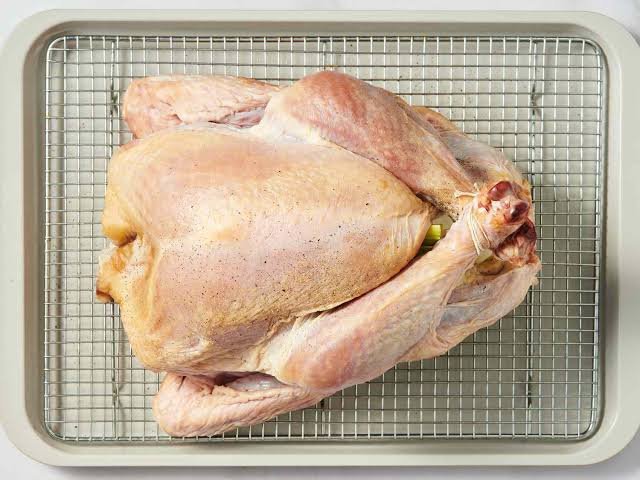
- Dry-brined turkey sits uncovered in the fridge specifically to let the skin dry out, which is exactly what produces that crisp, golden-brown skin once roasted
- If fridge space is tight and you’re worried about the turkey touching other food, covering loosely with plastic wrap or foil is fine as a compromise — just remember to pat the skin dry again right before roasting if you do this
- Skipping this drying step and roasting a turkey with damp skin genuinely results in a less crisp, more rubbery exterior, regardless of how well-seasoned the meat underneath turns out
A Few Practical Details Worth Getting Right
- Make sure your turkey is genuinely fully thawed before you start — a partially frozen bird won’t let the dry brine work properly, and thawing itself takes roughly 24 hours per 4-5 pounds of turkey weight
- Rub the salt mixture under the skin as well as on top of it, and inside the cavity, for genuinely even seasoning rather than just surface-level coverage
- Before roasting, wipe off any remaining visible salt and pat the turkey completely dry — this final step matters for achieving properly crisp skin
- Adjust your salt quantity down proportionally for smaller turkeys — using the full amount meant for a larger bird on a smaller one genuinely risks over-salting
Frequently Asked Questions
Q1. Can I dry brine my turkey for longer than 48 hours if I’m planning several days ahead?
Yes, generally — some recipes extend up to 72 hours for maximum flavour and moisture retention, though going much beyond this doesn’t meaningfully improve results further and mainly just requires more fridge planning around the uncovered bird.
Q2. Do I need to rinse off the salt mixture before roasting a dry-brined turkey?
Not necessarily rinse, but definitely wipe off any excess visible salt and pat the skin thoroughly dry before roasting — this differs from a wet brine, where rinsing is often recommended to remove excess surface salt from the liquid soak.
Q3. Is dry brining genuinely better than wet brining, or is it just more convenient?
Both methods deliver moist, well-seasoned meat, but dry brining avoids the need for a large vessel and significant fridge space to submerge the bird, and it also produces genuinely crisper skin since there’s no extra surface moisture to deal with before roasting.
Q4. What happens if I only have 12 hours before I need to roast — is dry brining even worth doing?
Yes, still worth doing — while it won’t achieve quite the same deep, even seasoning as the full 24-48 hour window, even a shorter 8-12 hour overnight dry brine genuinely improves flavour and skin texture compared to roasting a completely unseasoned turkey straight from the fridge.