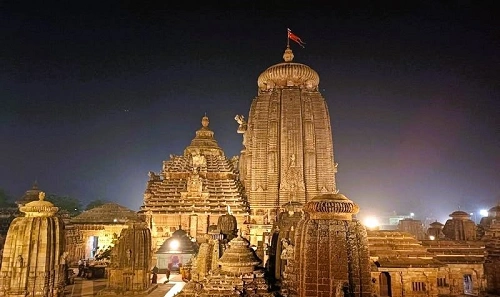
The historic Lingaraj Temple is the largest and most revered temple in the city of Bhubaneswar, often called the “Temple City of India.” Dedicated to Lord Harihara, a combined form of Lord Shiva and Lord Vishnu, the temple represents a rare spiritual unity between Shaivism and Vaishnavism.
Built during the 11th century by the Somavamsi dynasty, the temple stands as one of the finest examples of classical Kalinga temple architecture. Its towering 180-foot shikhara dominates the skyline of Bhubaneswar and can be seen from several kilometers away.
The temple complex contains more than 150 smaller shrines, each dedicated to various forms of Hindu deities. For centuries, devotees have visited this sacred shrine to seek blessings of Lord Lingaraj, believed to be a powerful manifestation of Lord Shiva.
1. Daily Lingaraj Temple Timings
The temple operates in two main darshan sessions separated by an afternoon break.
| Session | Opening Time | Closing Time |
| Morning Session | 5:00 AM | 1:00 PM |
| Afternoon Break | 1:00 PM | 3:30 PM |
| Evening Session | 3:30 PM | 9:00 PM |
The temple doors remain closed during the afternoon break for a special ritual known as Mahasnana, a ceremonial purification bath performed for the deity.
Although the inner sanctum closes around 9:00 PM, parts of the temple complex may remain accessible slightly later as devotees exit gradually.
Early morning hours between 5:30 AM and 7:00 AM are usually considered the most peaceful time for darshan.
2. Daily Rituals and Pooja Schedule
Several traditional rituals are performed throughout the day at Lingaraj Temple.
| Ritual | Timing | Significance |
| Temple Opening | 5:00 AM | Gates open for the day’s first rituals |
| Mangal Aarti | 5:30 AM | Sacred lamp ceremony welcoming the day |
| Sahan Mela | 6:00 AM – 11:30 AM | Public darshan inside the sanctum |
| Sakala Dhupa | 12:00 PM | Morning food offering to the deity |
| Sandhya Aarti | 7:00 PM – 7:30 PM | Evening worship ceremony |
| Badasinghar | 8:30 PM – 9:00 PM | Final decoration before the Lord rests |
The Sahan Mela period is the most important darshan time when devotees can approach closer to the sanctum and offer prayers.
Evening aarti is also a beautiful experience, as the temple courtyard fills with lamps and devotional chants.
3. Entry Restrictions and Viewing Platform
One of the unique aspects of Lingaraj Temple is its strict entry rules.
1. Hindus Only
Entry into the main temple complex is restricted exclusively to Hindus.
This rule has been followed for centuries to preserve the religious sanctity of the shrine.
2. Viewing Platform for Non-Hindus
Visitors who are not allowed inside the temple can still admire the architecture from a special viewing platform outside the northern compound wall.
The platform was built during the British era so that Lord Curzon could observe the temple during his visit around 1900.
From this elevated platform, visitors can enjoy a clear view of:
- The 180-foot temple tower (Vimana)
- The temple courtyard
- The surrounding shrines within the complex
It is one of the best spots to appreciate the scale of the temple architecture.
4. Dress Code and Prohibited Items
The temple administration has recently increased enforcement of dress code guidelines to maintain the sanctity of the sacred site.
Recommended Dress Code
Men
- Dhoti
- Kurta-pyjama
- Formal trousers and shirt
Shorts, sleeveless shirts, or ripped jeans are not allowed.
Women
- Saree
- Half-saree
- Salwar kameez with dupatta
Visitors are advised to avoid sleeveless tops or short skirts.
Strictly Prohibited Items
Several items are banned inside the temple premises.
- Mobile phones and cameras
- Leather items such as belts, wallets, and bags
- Tobacco or pan products
Visitors must deposit phones and footwear at the locker stands located near the entrance.
5. Important Visitor Tips
1. Bindusagar Tank
Just outside the temple complex lies the sacred Bindusagar Tank.
According to temple tradition, the tank contains water from every holy river in India. Many devotees take a ritual dip here before entering the temple.
During festivals, the tank area becomes an important center for religious ceremonies.
2. Temple Prasadam (Abhada)
Like the famous offerings at the Jagannath Temple, Lingaraj Temple also prepares sacred food known as Abhada.
This prasadam usually consists of cooked rice, dal, and traditional temple dishes prepared in earthen pots.
Devotees can purchase tokens for the afternoon meal near the temple office.
Temple Architecture
The Lingaraj Temple complex showcases several important architectural structures:
- Vimana – the towering main sanctum
- Jagamohana – the assembly hall
- Natamandira – the festival hall used for temple dances
- Bhoga-mandapa – the hall where offerings are prepared
These structures were built in different centuries but together form one of the most impressive temple complexes in eastern India.
Final Thoughts
Lingaraj Temple is not only the spiritual heart of Bhubaneswar but also one of the most magnificent temples representing the rich heritage of Odisha.
Its towering spire, ancient rituals, and deep connection to Lord Shiva make it a powerful pilgrimage destination for devotees across India.
Whether visiting for morning darshan, witnessing the evening aarti, or simply admiring the majestic Kalinga architecture, the temple offers an unforgettable spiritual experience.
For anyone exploring Bhubaneswar, a visit to Lingaraj Temple remains one of the most meaningful and historic journeys into the sacred traditions of India.