The Kamakhya Temple located in Guwahati is one of the most powerful Shakti shrines in India. Situated on the Nilachal Hill overlooking the Brahmaputra River, this temple is a central pilgrimage site for devotees of the Divine Mother.
Unlike most temples that worship a physical idol, Kamakhya represents the creative power of the feminine. The Goddess here is worshipped in the form of a natural rock fissure symbolizing the Yoni (womb) of the Divine Mother.
The temple is also a major center for Tantric worship, attracting spiritual seekers, saints, and devotees from across India. The powerful energy of the shrine, its ancient rituals, and its association with the sacred feminine cycle make Kamakhya one of the most mysterious and spiritually intense temples in the country.
1. Daily Kamakhya Temple Timings
The temple follows a structured daily schedule with a mid-day closure for ritual offerings to the Goddess.
Daily Darshan Schedule
| Session | Timing |
| Temple Opening (Snana & Puja) | 5:30 AM – 8:00 AM |
| Morning Darshan | 8:00 AM – 1:00 PM |
| Afternoon Break (Closed) | 1:00 PM – 2:30 PM |
| Evening Darshan | 2:30 PM – 5:30 PM |
| Evening Aarti & Closing | 5:30 PM – 6:00 PM |
Important Note:
The temple closes every afternoon for Bhog offerings and internal rituals.
Best Darshan Time:
Arrive by 5:00 AM to complete darshan before heavy crowds build up.
2. History and Divine Legend
The history of Kamakhya Temple is deeply tied to the legend of Sati and Shiva.
The Yoni Peetha Legend
According to the Kalika Purana, when Lord Shiva carried the lifeless body of Sati across the universe in grief, Lord Vishnu used his Sudarshan Chakra to cut the body into pieces to calm Shiva’s cosmic dance.
The body parts fell in different places, forming the 51 Shakti Peethas. At Kamakhya, the Yoni (womb) of Goddess Sati is believed to have fallen.
This is why the temple has no idol. Instead, the Goddess is worshipped through a naturally formed stone cleft that is constantly bathed by an underground spring.
The Bleeding Goddess
One of the most fascinating beliefs associated with Kamakhya is the annual menstrual cycle of the Goddess.
During the Ambubachi festival in June, the temple remains closed for three days because it is believed that the Goddess undergoes her yearly menstruation. When the temple reopens, devotees receive sacred cloth believed to be stained with the divine energy of the Goddess.
3. Architectural Significance
The temple is a remarkable example of medieval Assamese architecture blended with traditional Hindu temple design.
The Nilachal Style
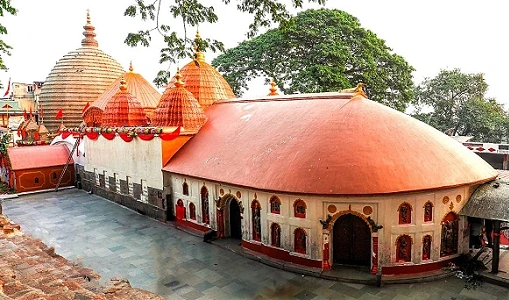
Kamakhya Temple features a distinctive Nilachal architectural style, characterized by a beehive-shaped dome and sculpted panels of gods and goddesses.
Dome Structure
The temple’s dome is shaped like a hemispherical structure crowned with smaller spires. This style is unique to temples in Assam.
Cave-like Sanctum
The inner sanctum is reached by descending stone steps into a dark cave chamber. The natural rock fissure covered with red cloth represents the Goddess.
Temple Complex
The complex includes shrines dedicated to the Das Mahavidya, the ten wisdom goddesses of Tantra, including:
- Kali
- Tara
- Bagalamukhi
- Matangi
- Dhumavati
These shrines make Kamakhya a major spiritual center for Tantric practitioners.
4. Major Festivals in 2026
Ambubachi Mela (June 22 – 25, 2026)
This is the most important festival at Kamakhya.
- Temple remains closed for three days
- Doors reopen on June 25
- Lakhs of devotees gather for darshan
The festival celebrates the fertility of Mother Earth.
Durga Puja & Navratri (October 11 – 21, 2026)
Special Tantric rituals, Kumari Puja, and elaborate ceremonies are conducted.
Manasha Puja (August 2026)
A traditional festival dedicated to the serpent goddess Manasha.
5. Best Time to Visit Kamakhya Temple
Ideal Season
October to March offers pleasant weather in Guwahati.
Best Days
Weekdays are less crowded.
Avoid
Ambubachi festival unless you specifically wish to experience the grand pilgrimage atmosphere.
Ideal Darshan Hours
5:00 AM – 8:00 AM.
6. Entry Types and Fees
| Type | Fee | Details |
| General Darshan | Free | Wait time 4–8 hours |
| Special Darshan | ₹501 | Faster entry (1–2 hours) |
| Defence Personnel | ₹50 | With valid ID |
Special tickets are usually purchased at counters near the temple entrance.
7. Dress Code and Visitor Guidelines
Although there is no strict uniform, respectful attire is recommended.
Men
- Dhoti
- Kurta
- Formal trousers and shirt
Women
- Saree
- Salwar Kameez with dupatta
Avoid shorts, sleeveless clothing, or revealing outfits.
Temple Rules
- Mobile phones allowed only in outer complex
- Photography prohibited inside sanctum
- Footwear must be deposited at entrance counters
8. How to Reach Kamakhya Temple
By Air
Nearest airport: Lokpriya Gopinath Bordoloi International Airport
Distance: about 20 km.
Taxis and buses are easily available.
By Train
Nearest station: Kamakhya Junction Railway Station (4 km).
Major trains also arrive at Guwahati Railway Station.
By Road
Guwahati is well connected by highways to major cities in Assam and Northeast India.
From the city center, taxis and shared autos run regularly to Nilachal Hill.
9. Where to Stay Near Kamakhya Temple
Pilgrims usually stay in Guwahati city.
Budget Options
- Temple guesthouses
- Dharamshalas near the hill
Mid-range Hotels
- Vishwaratna Hotel
- Hotel Dynasty
Luxury Hotels
- Radisson Blu Guwahati
- Vivanta Guwahati
FAQs
Q1. How long does darshan take?
Ans: Weekdays: 2–4 hours. Festivals: up to 8 hours.
Q2. Is online booking available?
Ans: Online booking is inconsistent; most tickets are purchased at the temple.
Q3. Is the temple open during Ambubachi?
Ans: No. It remains closed for three days.
Q4. Can elderly people visit easily?
Ans: Yes, vehicles can reach near the temple entrance.