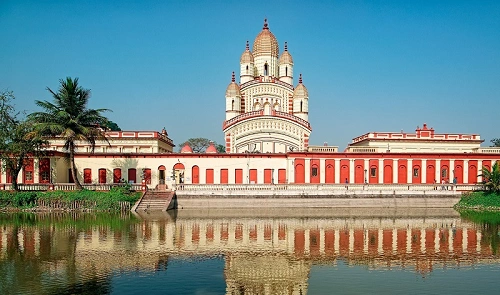
The Dakshineswar Kali Temple located in Kolkata is one of the most famous temples dedicated to Kali in India. Built in 1855 by the philanthropist Rani Rashmoni, the temple stands on the eastern bank of the Hooghly River and attracts millions of pilgrims every year.
The temple is historically significant because it is closely associated with the great mystic Ramakrishna Paramahansa, who served here as a priest and experienced profound spiritual realizations.
The presiding deity of the temple is Bhavatarini, a form of Goddess Kali believed to liberate devotees from worldly suffering. The temple complex also includes twelve Shiva temples, a Radha–Krishna shrine, and beautiful courtyards overlooking the river.
1. Daily Dakshineswar Kali Temple Timings
The temple follows different seasonal schedules. Since March falls within the winter period, the temple currently follows the winter timing pattern.
Winter Timings (October – March)
| Event | Morning Session | Evening Session |
| Temple Opening | 6:00 AM | 3:00 PM |
| General Darshan | 6:00 AM – 12:30 PM | 3:00 PM – 8:30 PM |
| Temple Closing | 12:30 PM | 8:30 PM |
During the afternoon break, the sanctum closes for ritual offerings and rest for the deity.
Summer Timings (April – September)
| Event | Timing |
| Temple Opening | 5:30 AM |
| Morning Darshan | 5:30 AM – 12:30 PM |
| Evening Darshan | 3:30 PM – 9:00 PM |
| Temple Closing | 9:00 PM |
Summer timings extend the evening darshan hours to accommodate larger crowds.
2. Aarti and Ritual Schedule
Aarti at Dakshineswar is a deeply spiritual experience, especially with the peaceful flow of the Hooghly River beside the temple.
| Ritual | Winter Timing | Summer Timing |
| Mangal Aarti | 5:00 AM | 4:00 AM |
| Bhog Aarti | 12:00 PM | 12:00 PM |
| Sandhya Aarti | 6:30 PM | 7:00 PM |
Devotees gather in large numbers during the evening aarti, which is accompanied by devotional singing and ringing temple bells.
Bhog Prasad
The temple distributes cooked bhog to devotees.
- Coupon distribution: 9:00 AM – 10:00 AM
- Meal served: around 1:00 PM
- Cost: approximately ₹50
The bhog meal usually includes rice, vegetables, and traditional Bengali preparations.
3. History and Divine Significance
The Dream of Rani Rashmoni
According to legend, Rani Rashmoni planned a pilgrimage to Varanasi. Before leaving, Goddess Kali appeared in her dream and instructed her to build a temple on the banks of the Ganges instead.
Following this divine command, she constructed the Dakshineswar Temple complex in 1855.
Ramakrishna Paramahansa
The temple became globally known due to Sri Ramakrishna Paramahansa, who served as the head priest of the Kali temple.
During his years here, he entered deep states of meditation and spiritual ecstasy, attracting disciples from across India. His teachings later inspired the formation of the Ramakrishna Mission.
Bhavatarini Kali
The main deity is known as Bhavatarini, meaning “the one who liberates devotees from the ocean of worldly suffering.”
The idol depicts Goddess Kali standing on Lord Shiva, symbolizing the balance between destruction and compassion.
4. Architectural Significance
The temple is an outstanding example of Bengal temple architecture.
Navaratna Style
The main shrine is built in the Navaratna (nine-spired) architectural style. The central tower is surrounded by eight smaller towers arranged symmetrically.
Twelve Shiva Temples
Along the riverbank are 12 identical Shiva temples arranged in a straight row. Each temple houses a Shiva Lingam and represents different aspects of Lord Shiva.
Radha-Krishna Temple
The complex also includes a temple dedicated to Radha and Krishna, symbolizing harmony between Shaivism and Vaishnavism.
Hooghly River Ghat
Pilgrims often take a holy dip in the Hooghly River before entering the temple, following traditional pilgrimage customs.
5. Major Festivals in 2026
Dol Jatra (Holi) – March 3–4, 2026
Celebrated with devotional songs and colorful festivities.
Poila Baisakh – April 14, 2026
The Bengali New Year draws thousands of devotees to the temple.
Snana Yatra – June 2026
Marks the foundation anniversary of the temple.
Kali Puja – November 2026
The biggest festival celebrated here with elaborate decorations, rituals, and night-long worship.
6. Best Time to Visit Dakshineswar Temple
Ideal Season
October to March offers pleasant weather in Kolkata.
Best Time for Darshan
Early morning between 6:00 AM – 8:00 AM.
Avoid
Weekend evenings and major festival days when the temple becomes extremely crowded.
7. Dress Code and Visitor Guidelines
The temple encourages traditional and modest clothing.
Men
- Dhoti or Kurta
- Formal trousers and shirts
Women
- Saree
- Salwar Kameez with dupatta
Shorts, sleeveless clothing, and inappropriate attire are discouraged.
Photography Rules
Photography is allowed in the outer temple courtyard but strictly prohibited inside the sanctum.
Dakshineswar Skywalk
A modern Dakshineswar Skywalk connects the railway station directly to the temple entrance. This helps pilgrims avoid the crowded market streets.
8. How to Reach Dakshineswar Kali Temple
By Air
Nearest airport: Netaji Subhas Chandra Bose International Airport
Distance: approximately 12 km.
By Train
Nearest station: Dakshineswar Railway Station
The temple is connected through suburban trains from Kolkata.
By Metro
Dakshineswar Metro Station on the Kolkata Metro network is located close to the temple.
By Ferry
A popular option is taking the ferry from Dakshineswar to Belur Math, located on the opposite bank of the Hooghly River.
9. Where to Stay Near Dakshineswar Temple
Most visitors stay in Kolkata city.
Budget Hotels
Several affordable lodges are available near Dakshineswar.
Mid-range Hotels
- Hotel Dynasty
- Hotel Eastern Plaza
Luxury Hotels
- Taj Bengal Kolkata
- ITC Royal Bengal
FAQs
Q1. How long does darshan take?
Ans: On weekdays, about 30–60 minutes.
Q2. Is Dakshineswar connected to Belur Math?
Ans: Yes, a ferry service connects the two temples across the Hooghly River.
Q3. Can mobile phones be taken inside the temple?
Ans: Yes in the outer complex, but not inside the sanctum.
Q4. Is bathing in the river required before darshan?
Ans: It is optional but many devotees follow this tradition.