The Dakshinamnaya Sri Sharada Peetham, located in the serene town of Sringeri, is one of the most important spiritual centers in India. Nestled on the peaceful banks of the Tunga River, Sringeri is revered as the first of the four cardinal mathas established by Adi Shankaracharya in the 8th century.
Dedicated to Goddess Sharadamba, the presiding deity of wisdom and learning, Sringeri is not just a temple town—it is the spiritual heart of Advaita Vedanta. Scholars, students, saints, and pilgrims from across the world visit Sringeri seeking knowledge, clarity, and inner peace.
Unlike bustling pilgrimage centers, Sringeri maintains a calm, disciplined atmosphere. The sound of Vedic chants, the flow of the Tunga River, and the presence of the Jagadguru create an environment that feels timeless and deeply contemplative.
Daily Sringeri Temple Timings
The Sringeri temple complex follows a structured daily schedule. Timings may vary slightly on festival days, but the general routine remains consistent.
Darshan Timings
| Deity / Event | Morning Session | Evening Session |
| Sri Sharadamba Temple | 6:00 AM – 2:00 PM | 4:00 PM – 9:00 PM |
| Sri Vidyashankara Temple | 7:00 AM – 1:00 PM | 5:00 PM – 8:30 PM |
| Jagadguru Darshanam | 10:30 AM – 11:30 AM | 5:45 PM – 6:30 PM |
| Chandramoulishwara Pooja | — | 8:30 PM – 10:00 PM |
Aarti & Sevas
- Maha Mangala Aarti: 10:00 AM, 12:00 PM, 7:30 PM
- Aksharabhyasa (Vidyarambha): 8:00 AM – 1:00 PM (daily)
Annadanam (Free Meals):
- Lunch: 12:15 PM – 2:30 PM
- Dinner: 7:15 PM – 8:30 PM
Best Time to Visit: Early morning (6:00–8:00 AM) for peaceful darshan, or evening aarti for a deeply devotional experience.
History: The Legend of Compassion
The origin of Sringeri is rooted in a moment of rare spiritual symbolism.
The Cobra and the Frog
While traveling across India, Adi Shankaracharya witnessed an extraordinary sight at this spot—a cobra spreading its hood to protect a pregnant frog from the harsh sun. This act of natural harmony and non-violence (Ahimsa) convinced him that the land was divinely blessed.
Birth of the First Matha
Moved by the sanctity of the place, Shankaracharya established his first monastic seat here to propagate Advaita Vedanta, the philosophy of non-dualism. He installed Goddess Sharadamba as the presiding deity of knowledge.
Evolution Through Dynasties
Though founded in the 8th century, Sringeri flourished under later dynasties, especially the Vijayanagara rulers. The 12th Jagadguru, Sri Vidyaranya, played a crucial role in expanding the matha and replacing the original sandalwood idol with the current gold idol of Sharadamba.
Architectural Significance
The Sringeri complex represents a refined blend of Hoysala and Dravidian architectural styles.
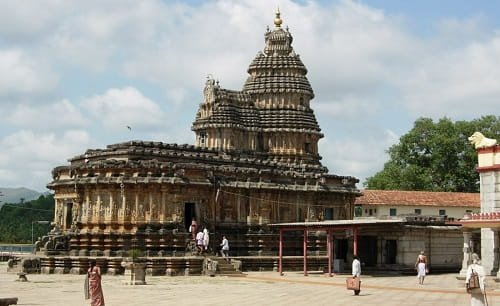
Vidyashankara Temple
Built in 1338 CE, this stone temple is architecturally unique in India.
- Zodiac Pillars: Twelve pillars represent the twelve Rashis (zodiac signs). Sunlight falls precisely on the corresponding pillar of the current solar month.
- Dual Style: The structure blends Hoysala chariot-style design with Dravidian vimana elements.
Sharadamba Temple
Rebuilt in the early 20th century after a fire, the current structure follows Kerala–Dravidian design principles.
- The Rajagopuram (1930s) is richly carved with scenes from the Puranas.
- The gold idol of Sharadamba is adorned daily in elegant alankarams.
Chandramoulishwara Temple
This shrine houses a sacred Shiva Lingam worshipped personally by Adi Shankaracharya. Only the Jagadguru performs Abhishekam here every night.
Major Festivals in 2026
Sringeri observes festivals with discipline and Vedic grandeur rather than loud celebrations.
- Sharadamba Maharathotsava: October 21, 2026
- Sharada Navaratri: October 2026 (9 days of special alankarams)
- Shankara Jayanti: April/May 2026
- Maha Shivaratri: February 15, 2026 (night-long poojas)
Navaratri is the most vibrant time to visit, with cultural programs, discourses, and large pilgrim gatherings.
Dress Code & Visitor Etiquette
Sringeri strictly follows traditional decorum.
Dress Code
- Men: Dhoti or formal trousers. Shirts must be removed inside inner sanctums and Guru areas. Shorts and lungis are not allowed.
- Women: Saree or Salwar Kameez with dupatta.
Rules
- Photography is strictly prohibited inside temples and Guru areas.
- Silence must be maintained throughout the math complex.
- Footwear must be removed before crossing the Vidya Tirtha Sethu (bridge).
How to Reach Sringeri
By Road
- 90 km from Chikmagalur
- 100 km from Mangalore
KSRTC buses run regularly from Bengaluru, Mysuru, and Mangalore.
By Train
Nearest railway stations:
- Udupi – 80 km
- Shivamogga – 95 km
By Air
Nearest airport: Mangalore (IXE), approx. 105 km.
Where to Stay in Sringeri
Matha Accommodation
- Sringeri Sharada Peetham Guest Houses – Clean, simple, and affordable (advance booking recommended during festivals).
Private Hotels
- Hotel Mathura Yatri Nivas
- Advaitha Residency
- Sringeri Residency
Most accommodations are within walking distance of the temple.
FAQs
Q1. Is there an entry fee for darshan?
Ans: No. Darshan and annadanam are completely free.
Q2. How much time is needed for darshan?
Ans: Usually 20–40 minutes on normal days. Festivals may take longer.
Q4. Can children perform Aksharabhyasa daily?
Ans: Yes. It is conducted daily between 8:00 AM and 1:00 PM.
Q5. Is Sringeri suitable for elderly pilgrims?
Ans: Yes. The temple complex is compact, well-maintained, and calm.
Sringeri is not a place you merely visit—it is a place you absorb. With its riverbank serenity, scholarly discipline, and spiritual depth, the Sharada Peetham offers an experience that stays with you long after you leave.