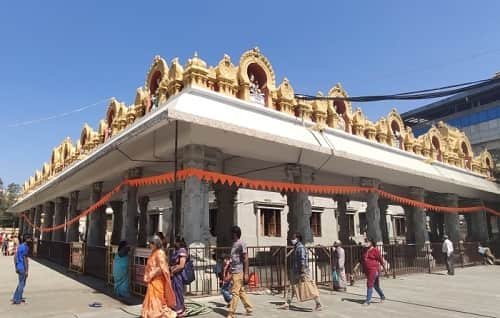
The Sri Banashankari Amma Temple, located in the southern part of Bengaluru, is one of the city’s most powerful Shakti shrines.
Dedicated to Goddess Banashankari—an incarnation of Parvati—the temple is famous for something very unusual: the main worship happens during Rahu Kala, a time most Hindu temples normally avoid. Devotees believe that prayers offered here during Rahu Kala remove long-standing obstacles, financial stress, and emotional burdens.
Unlike grand heritage temples, Banashankari Amma Temple feels personal and intense. Office workers stop by after work. Families light lemon lamps in silence. Elderly devotees sit near the entrance whispering mantras. The energy is raw, direct, and deeply comforting.
For many Bengaluru locals, this is not just a temple—it’s where they come when life feels stuck.
Daily Sri Banashankari Amma Temple Timings
The temple follows a split schedule on most weekdays, with extended hours on highly auspicious days like Tuesday, Friday, and Sunday.
Regular Days (Monday, Wednesday, Thursday, Saturday)
- Morning: 6:00 AM – 1:00 PM
- Afternoon Break: 1:00 PM – 4:30 PM
- Evening: 4:30 PM – 8:00 PM
Tuesday (Most Powerful Day)
- Open continuously: 6:00 AM – 9:00 PM
(No afternoon closure)
Friday & Sunday
- Morning: 6:00 AM – 1:00 PM
- Break: 1:00 PM – 4:30 PM
- Evening: 4:30 PM – 9:30 PM
Daily Rituals
- Abhishekam: 6:30 AM & 8:30 AM
Aarti:
- Morning – 6:00 AM
- Midday – 12:00 PM
- Evening – 7:00 PM
If you want a calmer darshan, weekday mornings are best.
The Rahu Kala Ritual (Famous Lemon Lamp Offering)
This temple is nationally known for its Rahu Kala Pooja.
While Rahu Kala is usually avoided elsewhere, here it is considered the most powerful time to worship Banashankari Amma.
Devotees perform the Nimbe Hannina Deepa ritual—lighting lamps made from lemon halves.
Rahu Kala Pooja Timings
- Sunday: 4:30 PM – 6:00 PM
- Tuesday: 3:00 PM – 4:30 PM
- Friday: 10:30 AM – 12:00 PM
You’ll see hundreds of lemon lamps glowing together. It’s quiet, emotional, and surprisingly moving.
Vendors outside the temple sell ready-made lemon lamps if you don’t want to prepare one yourself.
History & Architecture
The Bengaluru Banashankari temple was established in 1915 by Sri Somanna Shetty, who brought the Goddess idol from the ancient Banashankari shrine in Badami.
The Goddess is also worshipped as Shakambhari Devi—the nourisher of humanity during famine.
Architecturally, the temple blends Dravidian and Vijayanagara styles. The black stone idol shows the Goddess seated on a lioness, holding weapons in eight arms while crushing a demon beneath her feet—a powerful symbol of protection and victory over negativity.
Key Festivals in 2026
- Banashankari Jatre / Brahmarathotsava: January (grand chariot procession)
- Temple Anniversary: Pushya Maasa (late Dec / early Jan)
- Navaratri: October (10 days of special alankaras)
- Banashankari Amma Birthday: September 13 (mass Annadanam)
Expect heavy crowds during Navaratri and Rahu Kala on Fridays.
Best Time to Visit
- Weather: October to March is most comfortable.
- Peaceful Darshan: Monday or Thursday mornings between 6:30 AM – 9:00 AM.
- Avoid If Possible: Friday evenings and Rahu Kala hours unless you specifically want that ritual.
Dress Code & Visitor Rules
The temple now enforces modest clothing.
- Men: Dhoti or formal trousers
- Women: Saree or Salwar Kameez
Avoid shorts, ripped jeans, mini-skirts, or sleeveless tops.
- Footwear counters available outside
- Photography strictly prohibited inside sanctum
- Parking is very limited—public transport is strongly recommended
How to Reach Sri Banashankari Amma Temple
By Metro
Get down at Banashankari Metro Station.
The temple is just a 2-minute walk.
By Bus
Banashankari TTMC bus terminal is right opposite the temple.
By Air
Nearest airport: Kempegowda International Airport (about 45 km).
Metro + auto is the easiest combination from the airport.
FAQs
Q1. Is there an entry fee?
Ans: No. General darshan is free.
Q2. Can I get lemon lamps at the temple?
Ans: Yes. Vendors outside sell lemons, oil, and wicks.
Q3. Is VIP darshan available?
Ans: Only during peak festivals, sometimes for a small fee.
Q4. Is parking available?
Ans: Very limited. Metro is highly recommended.