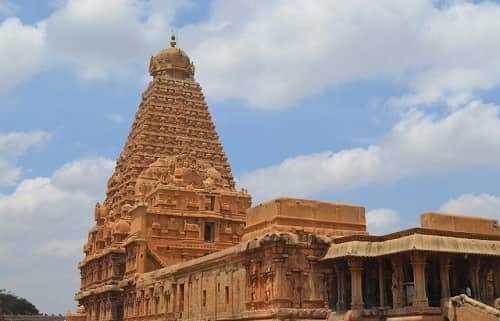
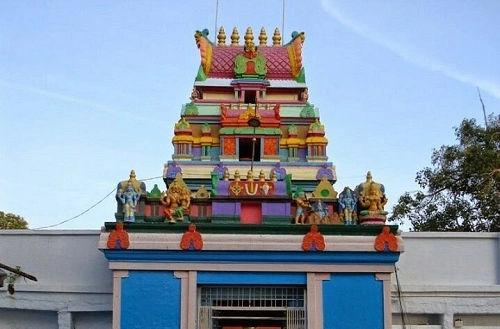
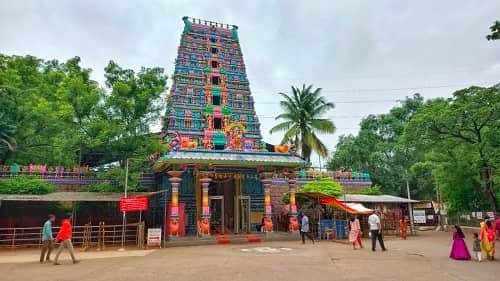
The Sri Panakala Lakshmi Narasimha Swamy Temple in Mangalagiri is one of the most fascinating temples dedicated to Narasimha. Located between Vijayawada and Guntur, the temple is known for a mysterious ritual where the deity is believed to drink Panakam (jaggery water) offered by devotees.
Unlike many traditional temples, the main hill shrine does not contain a full idol. Instead, devotees worship a wide-open mouth carved in the rock, representing the fierce form of Lord Narasimha. When priests pour jaggery water into this mouth, a distinct gurgling sound is heard as the deity is believed to consume the offering.
This unique tradition, combined with centuries of mythology and architecture, makes Mangalagiri one of the most intriguing pilgrimage destinations in South India.
1. Daily Panakala Swamy Temple Timings
The temple complex actually consists of two important shrines—the Panakala Narasimha Temple on the hill and the Lakshmi Narasimha Temple at the foothills.
The hill temple has limited hours because it is believed that Gods and sages worship the Lord there during the night.
Upper Hill Temple – Panakala Narasimha Swamy
| Event | Time |
| Temple Opening | 7:00 AM |
| Panakam Offering & Darshan | 7:00 AM – 3:30 PM |
| Avasara Nivedana | 12:00 PM |
| Maha Nivedana | 3:30 PM |
| Temple Closing | 4:00 PM |
Important Note:
The hill temple closes strictly by 4:00 PM, and no darshan is allowed afterward.
Foot of the Hill – Lakshmi Narasimha Temple
| Session | Timing |
| Morning Darshan | 5:00 AM – 1:00 PM |
| Evening Darshan | 4:00 PM – 8:30 PM |
Many pilgrims first visit the foothill temple and then climb or drive up the hill for Panakala Swamy darshan.
2. History and Divine Legends
The story of Mangalagiri is recorded in the Brahma Vaivarta Purana and several regional legends.
The Elephant Hill Legend
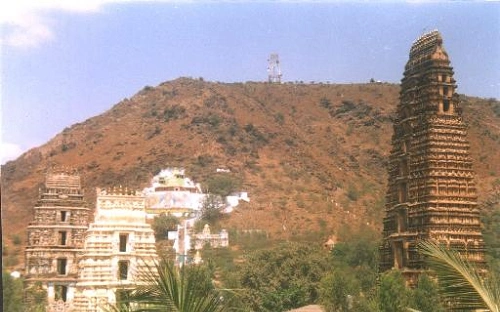
The hill where the temple stands resembles a reclining elephant. According to mythology, a prince named Hrasva Srungi performed intense penance here. Pleased by his devotion, Lord Vishnu allowed the prince to transform into the hill itself so that the Lord could reside there permanently.
The Demon Namuchi
Another legend says that Lord Narasimha killed the demon Namuchi at this very place. After the battle, the Lord remained in his fierce “Ugra” form.
The Devas offered Amrit (divine nectar) to calm him. The Lord declared that in the age of Kali, he would accept Panakam (jaggery water) as the offering that would cool his anger.
The Panakam Miracle
When priests pour jaggery water into the mouth of the deity, a clear gurgling sound is heard. It is believed that exactly half the liquid is consumed by the Lord, while the rest flows back as sacred prasadam.
Even more fascinating—despite the constant offering of sweet liquid, no ants or insects are ever found in the sanctum, which devotees consider a divine miracle.
3. Architectural Significance
The temple complex is a remarkable combination of natural rock formations and classical South Indian architecture.
The Gali Gopuram
At the base temple stands a towering 153-foot tall Rajagopuram with 11 stories. Built between 1807 and 1809 by Raja Vasireddy Venkatadri Nayudu, it is among the tallest temple towers in Andhra Pradesh.
The Cheekati Koneru
During construction, engineers noticed the massive gopuram leaning slightly due to gravitational imbalance. To stabilize it, architects built a deep water tank opposite the tower. This clever design balanced the weight and prevented collapse.
The Mouth of the Deity
Inside the hill temple, the deity appears as a rock formation representing the mouth of Narasimha, covered with a golden mask called a Kavacham. This unusual representation symbolizes the Lord’s fierce form.
Vijayanagara Influence
Stone inscriptions from the Krishnadevaraya period reveal royal patronage and donations made to the temple during the Vijayanagara Empire.
4. Major Festivals in 2026
Maha Shivaratri – February 15, 2026
Special rituals and night-long prayers are conducted.
Phalguna Brahmotsavam – March 2026
An 11-day festival featuring the divine wedding ceremony (Kalyanotsavam) and grand chariot processions.
Narasimha Jayanti – April 30, 2026
The most important celebration marking the appearance of Lord Narasimha.
During these festivals, thousands of devotees climb the hill to witness special rituals.
5. Best Time to Visit Panakala Swamy Temple
Ideal Season
October to February offers the most comfortable weather.
Less Crowded Days
Monday to Thursday mornings.
Peak Rush
Narasimha Jayanti and Brahmotsavam attract huge crowds.
Best Darshan Time
Early morning between 7:00 AM and 9:00 AM.
6. Dress Code and Visitor Tips
Traditional attire is recommended to maintain the sanctity of the temple.
Men:
Dhoti or formal trousers with a shirt.
Women:
Saree or Salwar Kameez with dupatta.
Avoid shorts, sleeveless tops, and inappropriate clothing.
Climbing the Hill
The temple can be reached by climbing about 600 steps. The path offers beautiful views of the surrounding town.
For those who prefer not to walk, a ghat road allows cars and auto-rickshaws to reach the hilltop.
Prasadam and Annadanam
The temple distributes Panakam prasadam after the ritual.
Free Annadanam (community meals) are served daily at the foothill temple around noon.
Local Shopping
Mangalagiri is famous for handloom cotton sarees with unique borders. Many visitors buy these traditional textiles from local weaving centers near the temple.
7. How to Reach Panakala Swamy Temple
By Air
Nearest airport: Vijayawada International Airport, about 25 km away.
By Train
Nearest railway station: Mangalagiri Railway Station, about 5 km from the temple.
Major rail hub: Vijayawada Junction (12 km).
By Road
Mangalagiri lies on the Vijayawada–Guntur highway and is well connected by buses and taxis.
FAQs
Q1. Why does the temple close early?
Ans: It is believed that celestial beings worship the Lord after sunset.
Q2. Can devotees climb the hill?
Ans: Yes, 600 steps lead to the temple.
Q3. Is the Panakam ritual performed daily?
Ans: Yes, it is the central ritual of the temple.
Q4. How long does darshan take?
Ans: Weekdays: 30–60 minutes. Festivals: 2–3 hours.