When we talk about Hindu temples, then no doubt, the oldest ones are found in India, and not just one or two; there are a bunch of them that are still standing even after centuries or even thousands of years. Yes, there are temples in India that are ancient, like literally thousands of years, and that’s what makes them special and still seen as pretty significant in Sanatan Dharma. While we’re on the topic of that, why not let’s talk about the Top 10 Oldest Temples In India 2026? Let’s just get to that right away.
1. Sanchi Temple 17, Madhya Pradesh (c. 400 CE)
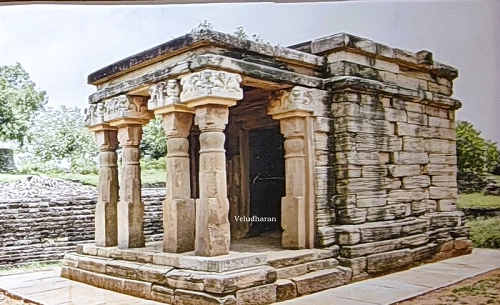
At Number One on our list is Sanchi Temple 17, which is generally considered to be the oldest surviving structural temple in India. And that alone is a sufficient reason for us to put it at the very top. Constructed during the Gupta period around 400 CE, this temple may seem quite unpretentious at first. It features a square sanctum, a flat roof, and a small pillared porch at the front. However, this very layout in fact became the blueprint for many temples that were constructed later in India.
2. Kevalanarasimha Temple, Ramtek (5th Century CE)
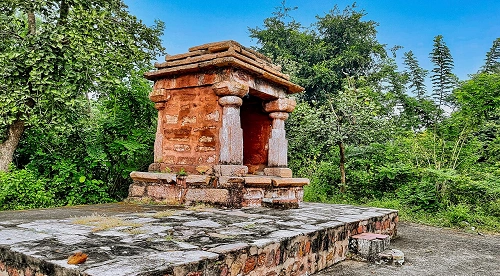
Talking about how ancient some temples really are, well, Kevalanarasimha Temple at Ramtek surely deserves a mention, and that’s mainly because it was built back in the 5th century CE and has a connection with the Vakataka dynasty. That’s confirmed too. Here’s something intriguing like this temple, although not very big, was pivotal in demonstrating the advancement of temple planning after the Gupta era. Another major highlight is that the door jamb sculptures depict the early central Indian temple art.
3. Dashavatara Temple, Deogarh (c. 475 to 500 CE)
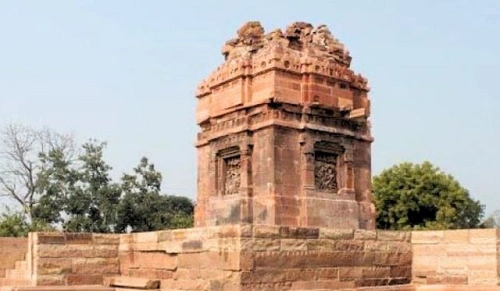
And next up, there is one of the oldest and first Vishnu temples of India, which is believed to have been built between 475 and 500 CE. Talking about that one specific thing about this temple, well, first of all, it is very significant as it was the first to adopt the layout of the Panchayatana, whereby the central shrine dominates, and four smaller shrines are placed in its proximity. In fact, the whole concept of the Panchayatana temple that has become so popular in temple architecture to date emanated from this small temple.
4. Bhitargaon Temple, Uttar Pradesh (5th Century CE)
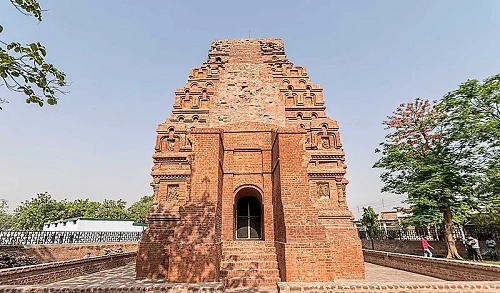
In Uttar Pradesh, there used to be so many old and ancient temples, but leaving out the Bhitargaon Temple would be pretty much unfair. As per the research done here, it was built somewhere around the 5th Century CE, which makes it among the oldest ones standing in Uttar Pradesh as of 2026. Bhitargaon Temple is ranked at the fourth spot and is said to be the oldest brick temple still existing in India. A temple of the Gupta period built out of baked bricks, it is notable for demonstrating one of the earliest arches in Indian temple architecture, which was a major technical advancement at that time.
5. Kapoteswara Temple, Chejerla (5th Century CE)
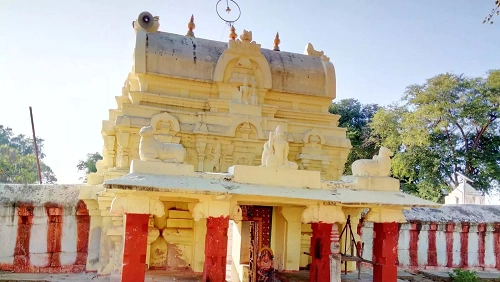
For the next one, we’d have to travel to the Chejerla, a village down there in Andhra Pradesh, and when you look at this Kapoteswara Temple, it would look like just a normal one and not an ancient temple at all. But the story behind this temple and the historical side of things are just something else. Talking about the main thing that sets this temple apart is its apsidal plan, which has a rounded rear. Curiously, this form resembles the ancient Buddhist chaityas; thus, the two traditions can be seen to influence each other in a subtle and gradual way.
6. Trivikrama Temple, Ter (5th Century CE)
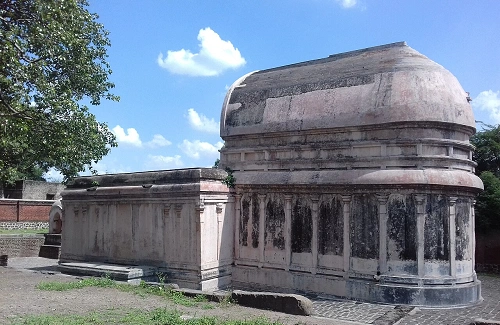
The Trivikrama Temple in Ter is sixth on our list, and it also goes back to the Vakataka period. Like several temples mentioned earlier in this list, it has an apsidal layout. But here’s the main thing, see this temple gives a very clear idea of the transition from cave shrines to structural temples. It was originally constructed using bricks and then altered later on. The sanctum is dedicated to Trivikrama, a manifestation of Lord Vishnu.
7. Shiva Temple, Bhumara (5th to 6th Century CE)
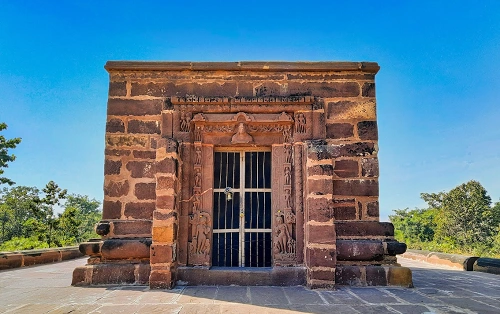
The Shiva Temple at Bhumara is ranked seventh. This temple was constructed at the end of the Gupta period from red sandstone. Presently, the temple is partially ruined, but its sanctum remains intact. On the doorframe, there are sculptures of the river goddesses Ganga and Yamuna, whose representations were subsequently made a regular feature of temple entrances throughout the Indian sub-continent. Yet another fascinating fact about it is that it has one of the very first images of Lord Ganesha.
8. Dah Parbatia Temple, Assam (Late 5th to 6th Century CE)
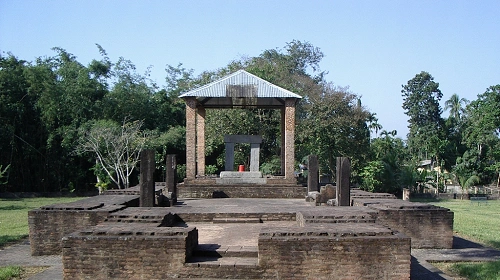
At number eight, we have the Northeast India site, the Dah Parbatia temple near Tezpur. Most of the structure has been lost, but the exquisitely decorated entrance still stands. And that entryway alone is enough to attest how intricate and masterful the temple artisanship had already become at that time. This temple is highly significant as it indicates that the building of temples in the form of structures had by the 6th century extended far outside central India.
9. Gop Temple, Gujarat (6th to 7th Century CE)
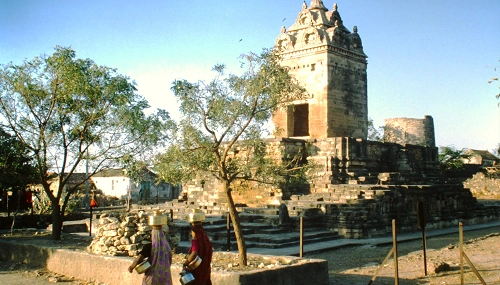
At number nine, just missing out on the final spot, is the Gop Temple in Gujarat. The Gop Temple is traditionally considered to be the first ever surviving temple of the state. This temple indicates an early Nagara architectural style, particularly in the design of its tower. It is made of huge blocks of stone and has thus lasted nearly a millennium.
10. Durga Temple, Aihole (Mid-6th to Mid-7th Century CE)
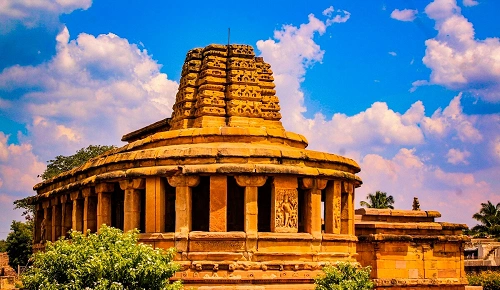
To finish off this list on a good note, we’d like to travel to Aihole, which is just another village in Karnataka, but there is this Durga Temple that makes it a special places, and that’s mainly because it is believed that this temple was built back in Mid-6th to Mid-7th Century CE which is credited to the era of the early Chalukyas. Here is quite a witty fact like this temple was not originally dedicated to Goddess Durga, contrary to what its name suggests.
Conclusion
If you’re someone who likes to talk about the history side of things and overall the ancient things intrigue you the most, then this list must have been a fun read overall, right? Well, all in all, if you always wanted to see how old Hindu, aka Sanatan Dharma, is, just read a little more about these temples and you’ll be baffled by the history itself.