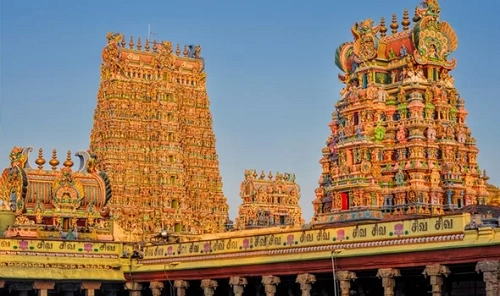
The sacred Meenakshi Amman Temple stands at the very heart of Madurai, one of India’s oldest continuously inhabited cities. More than just a temple, this vast complex feels like a living town—filled with towering gateways, echoing corridors, sacred tanks, and centuries of devotion.
Dedicated to Goddess Meenakshi and her consort Lord Sundareswarar, the temple spreads across nearly 15 acres and represents the peak of Dravidian temple architecture. Every wall, pillar, and gopuram is covered with brightly painted sculptures depicting gods, saints, mythical creatures, and royal figures.
For locals, the temple shapes daily life. For pilgrims, it is a place of deep spiritual intensity. For travelers, it is one of South India’s most unforgettable sights.
If you’re visiting in 2026, here’s a practical guide to darshan timings, rituals, history, and essential tips.
Daily Madurai Meenakshi Temple Timings
The temple follows a fixed daily rhythm, opening before dawn and closing late at night, with a short afternoon break.
Darshan Hours
- Morning Darshan: 5:00 AM – 12:30 PM
- Afternoon Break: 12:30 PM – 4:00 PM
- Evening Darshan: 4:00 PM – 10:00 PM
Pro Tip: For a calmer experience, try early morning between 5:00–7:00 AM or late evening after 8:30 PM.
Daily Pooja and Ritual Schedule
Six major poojas are performed every day. Among them, the night ritual is especially moving.
- Thiruvanandal Pooja: 5:00 AM – 6:00 AM (awakening the deities)
- Vilaa Pooja: 6:30 AM – 7:15 AM
- Kalasandhi Pooja: 8:00 AM
- Uchikkala Pooja (Midday): 10:30 AM – 11:15 AM
- Sayaraksha Pooja (Evening): 5:00 PM – 5:45 PM
- Ardhajama Pooja: 7:30 PM – 8:15 PM
- Palliyarai Pooja: 9:30 PM
During Palliyarai Pooja, Lord Sundareswarar is ceremonially taken to Goddess Meenakshi’s shrine for the night—a symbolic reenactment of divine union and one of the most beautiful moments in the temple.
History and Architecture of Meenakshi Amman Temple
Although worship here dates back over a millennium, most of the present structure was built in the 16th–17th centuries under the Nayak rulers, especially King Thirumalai Nayak.
Architectural Highlights
- Fourteen Gopurams: The temple has 14 monumental gateway towers. The South Tower rises about 170 feet and carries over 1,500 vividly colored sculptures.
- Aayiram Kaal Mandapam (Thousand Pillar Hall): Actually supported by 985 intricately carved pillars, this hall also houses a small museum. Visiting hours are roughly 9:00 AM–6:00 PM with a separate entry ticket.
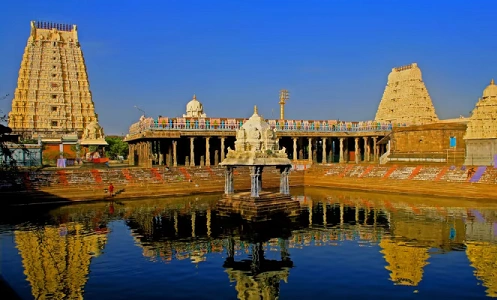
- Golden Lotus Tank (Potramarai Kulam): A sacred water body where devotees pause for prayer. Legend says impure writings were once dissolved here, sparing only worthy texts.
- Musical Pillars: Near the northern area, a cluster of pillars produces different notes when gently tapped.
Every corner reflects artistic mastery—stone meeting devotion at a massive scale.
Best Time to Visit Meenakshi Amman Temple
Weather: October to March is ideal, with temperatures hovering between 20°C and 30°C.
Major Festivals
- Chithirai Thiruvizha (April/May): A 12-day celebration of Meenakshi’s celestial wedding that draws lakhs of devotees.
- Float Festival (Jan/Feb): The deities are taken on decorated floats across Mariamman Teppakulam, creating a magical nighttime scene.
Expect long queues during festivals. Plan weekday visits if possible.
How to Reach Meenakshi Amman Temple
By Air – Madurai International Airport is about 12 km away.
By Train – Madurai Junction lies barely 2 km from the temple—just a short auto ride.
By Road – The Mattuthavani Bus Terminus is around 8 km away. Madurai is well connected to Chennai, Trichy, Coimbatore, and other South Indian cities.
Essential Tips for Visitors and Dress Code
1. Dress Code (Strict)
Traditional clothing is enforced:
- Men: Dhoti with shirt or formal pants with shirt. No shorts or sleeveless tops.
- Women: Saree, half-saree, or salwar kameez with dupatta. Jeans, leggings, skirts, and sleeveless wear are not allowed.
2. Electronics
Mobile phones and cameras are strictly banned inside. Deposit counters near all main entrances charge a small fee (₹10–₹20). Cloakrooms are available for bags and footwear.
3. Darshan Options
- General darshan: Free
- Special darshan: ₹50 (single deity) or ₹100 (both), useful during peak hours
Non-Hindus may walk the outer corridors and visit the Thousand Pillar Hall but cannot enter the inner sanctums.
FAQs
Q. How long does darshan usually take?
Ans: On weekdays, about 1.5–2 hours. Weekends and festivals can stretch to 4–6 hours.
Q. Are facilities available for seniors?
Ans: Yes. Wheelchairs and battery buggies are provided for a small fee.
Q. Is photography allowed?
Ans: Not inside the temple. You can photograph the gopurams from surrounding streets.