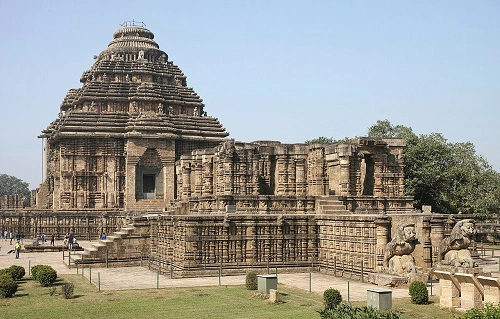
The magnificent Konark Sun Temple located in Konark is one of the most spectacular architectural monuments in India. Built in the 13th century, this temple is dedicated to Surya, the Sun God.
Recognized as a UNESCO World Heritage Site, the temple is famous for its incredible stone carvings and its grand design shaped like a massive chariot. The entire structure represents the celestial chariot of the Sun God, drawn by seven horses and supported by twenty-four intricately carved stone wheels.
The temple was built by Narasimhadeva I, a ruler of the Eastern Ganga dynasty, around 1250 CE. Although the main sanctum is now partially in ruins, the temple still stands as one of the greatest examples of ancient Indian engineering and artistic brilliance.
Today, Konark attracts thousands of visitors every day who come to admire its sculpture, history, and unique astronomical symbolism.
1. Daily Konark Temple Timings
Unlike most temples in India, Konark is not an active worship site. It is maintained as a protected monument by the Archaeological Survey of India.
Opening Hours
| Day | Opening Time | Closing Time |
| Monday – Sunday | 6:00 AM | 8:00 PM |
Visitors can explore the temple complex throughout the day.
Best Time for Visit
The best time to visit the temple is sunrise around 6:00 AM.
The temple was designed so that the first rays of the rising sun would illuminate the main sanctum. Early mornings also provide beautiful lighting for photography, especially around the famous stone wheels.
Evening hours are also pleasant, particularly for those planning to attend the light and sound show.
2. Konark Light and Sound Show Timings
One of the highlights of visiting Konark is the spectacular light and sound show called Arunodya.
The show narrates the fascinating story of the temple’s construction and the legacy of King Narasimhadeva I using modern projection technology.
Light and Sound Show Schedule
| Season | First Show | Second Show |
| March – November | 7:30 PM – 8:10 PM | 8:20 PM – 9:00 PM |
| December – February | 6:30 PM – 7:10 PM | 7:30 PM – 8:10 PM |
Languages Available
Visitors can choose among three languages:
- English
- Hindi
- Odia
Wireless headphones are provided so each visitor can listen in their preferred language.
Ticket Price
Light and Sound Show Ticket: ₹30 per person
3. Konark Temple Entry Fees
Tickets can be purchased either at the temple entrance or online through the Archaeological Survey of India portal.
Entry Fee Structure
| Category | Entry Fee |
| Indian Citizens | ₹40 |
| SAARC & BIMSTEC Visitors | ₹40 |
| Foreign Tourists | ₹600 |
| Children (Below 15 Years) | Free |
The ticket allows visitors to explore the entire temple complex.
4. Architectural Significance
Konark Sun Temple is widely considered one of the finest examples of Kalinga architecture.
The Giant Stone Chariot
The temple is designed as a massive chariot of the Sun God.
It includes:
- 24 massive stone wheels
- 7 sculpted horses pulling the chariot
- Highly detailed carvings depicting daily life, mythology, and celestial scenes.
The 24 Wheels
Each wheel measures almost 10 feet in diameter.
These wheels function as sundials that can measure time with surprising accuracy. The spokes of the wheel cast shadows that indicate the time of day.
The Seven Horses
The seven horses carved on the eastern side symbolize:
- Seven days of the week
- The continuous movement of time and the sun across the sky.
Intricate Sculptures
The temple walls are covered with thousands of stone carvings depicting:
- Mythological scenes
- Royal processions
- Musicians and dancers
- Daily life during the medieval period.
These carvings provide a detailed glimpse into the culture of ancient Odisha.
5. The Legend of the Magnetic Idol
A fascinating legend associated with Konark speaks of a powerful magnet placed at the top of the temple.
According to folklore, this massive magnet kept the idol of the Sun God suspended in mid-air. It was believed that this magnetic force even interfered with the navigation compasses of European ships sailing nearby, which led sailors to refer to the temple as the “Black Pagoda.”
Although historians debate the accuracy of this story, it remains one of the most intriguing myths connected to Konark.
6. Best Time to Visit Konark Temple
Ideal Season
The best months to visit Konark are October to February when the weather is pleasant.
Current Weather (March)
Since it is currently March, temperatures generally range between 25°C and 35°C.
Visitors should carry water, sunglasses, and wear light cotton clothing because much of the temple complex is open without shade.
Best Day and Time
Early mornings and late afternoons are ideal for exploring the temple comfortably.
7. How to Reach Konark Temple
Konark is well connected to major cities in Odisha by road.
By Air
Nearest airport: Biju Patnaik International Airport
Distance: about 65 km from Konark.
By Train
Nearest railway station: Puri Railway Station
Distance: about 35 km.
Regular taxis and buses are available from Puri to Konark.
By Road
Konark is connected by a scenic coastal road known as Marine Drive.
Distance from nearby cities:
- Puri – 35 km
- Bhubaneswar – 65 km
- Cuttack – 80 km
Regular buses and taxis operate between these cities.
8. Nearby Attractions
Chandrabhaga Beach
Located just 3 km from Konark, Chandrabhaga Beach is famous for its beautiful sunrise views and peaceful atmosphere.
Konark Dance Festival
Held annually in December, this festival showcases classical Indian dance forms performed against the backdrop of the illuminated temple.
Konark Archaeological Museum
Located near the temple complex, the museum houses many original sculptures recovered during excavation and restoration.
FAQs
Q1. Is Konark Sun Temple still an active temple?
Ans: No, it is maintained as a protected historical monument.
Q2. How long does it take to explore the temple complex?
Ans: Most visitors spend 1–2 hours exploring the site.
Q3. Is photography allowed inside Konark Temple?
Ans: Yes, photography is allowed in the temple complex.
Q4. What is the most famous feature of the temple?
Ans: The 24 stone wheels that function as ancient sundials.