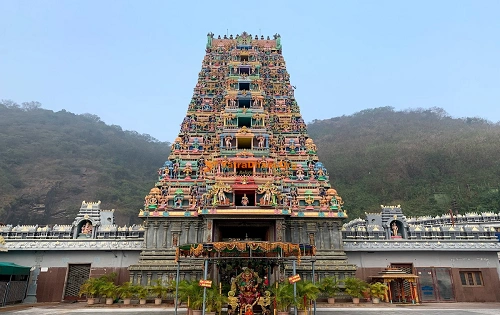
Sri Kanaka Durga Temple is one of the most powerful Shakti temples in South India. Overlooking the holy Krishna River, this ancient shrine is dedicated to Goddess Kanaka Durga, worshipped here as a Swayambhu (self-manifested) form of Divine Mother.
According to legend, Arjuna performed penance on this hill to receive the Pasupata Astra from Lord Shiva, and the Goddess manifested here to destroy the demon Keeludu. Unlike most Shiva–Shakti temples, Goddess Durga stands to the right of Lord Malleswara, symbolizing the dominance of Shakti on Indrakeeladri.
Today, lakhs of devotees visit daily seeking blessings for health, prosperity, marriage, and protection. During Dasara/Navaratri, the temple becomes one of Andhra Pradesh’s busiest pilgrimage centers, with waiting times stretching for hours. The hilltop also offers breathtaking views of Prakasam Barrage and Vijayawada city.
Below is a complete guide covering darshan timings, rituals, travel options, and essential rules.
Daily Kanaka Durga Temple Timings
The temple generally remains open from 4:00 AM to 10:00 PM, with a short evening ritual break.
| Darshan / Activity | Morning Timing | Evening Timing |
| Temple Opening & Suprabhatham | 4:00 AM – 5:00 AM | — |
| Dharma Darshanam (Free) | 5:00 AM – 5:45 PM | 6:15 PM – 10:00 PM |
| Mukhamandapa Darshanam (₹100) | 5:00 AM – 5:45 PM | 6:15 PM – 10:00 PM |
| Antaralaya Darshanam (₹500) | 5:00 AM – 3:30 PM | 6:00 PM – 10:00 PM |
| Temple Break (Rituals) | 5:45 PM – 6:15 PM | Darshan Closed |
| Anna Prasadam (Meals) | 5:00 AM – 10:00 PM | Continuous |
Note: On Thursdays, special rituals like Swarna Pushparchana (2:50 PM – 4:00 PM) may slightly affect general darshan flow.
History and Spiritual Significance of Kanaka Durga Temple
References to Indrakeeladri appear in ancient scriptures and the Mahabharata. The temple has been patronized by dynasties like the Satavahanas and Eastern Chalukyas, evolving into today’s prominent Shakti Peetham.
Architecturally, the temple is unique because Goddess Durga occupies the principal position, while Lord Malleswara is secondary — a rare arrangement symbolizing feminine cosmic power. The sanctum, hill pathways, and river-facing corridors create a deeply spiritual atmosphere.
Abhishekam and Morning Rituals Timings
- Suprabhatham: 4:00 AM – 5:00 AM
Early morning is the calmest period for darshan before crowds build up.
Best Time to Visit Kanaka Durga Temple
Best Season
October to March offers pleasant weather.
Festival Period
- Dasara/Navaratri (October) – biggest celebration; expect massive crowds
- Bhavani Deeksha Viramana (Dec–Jan) – lakhs of devotees in red robes
- Shakambhari Utsavam (July) – Goddess adorned with vegetables
Best Days
Wednesday mornings are usually the quietest. Tuesdays, Fridays, and Sundays are busiest.
How to Reach Kanaka Durga Temple
By Road
Vijayawada is well connected by buses and taxis. Free temple buses operate from the base of Indrakeeladri to the hilltop.
By Train
Nearest station: Vijayawada Junction, one of South India’s major rail hubs.
By Air
Nearest airport: Vijayawada International Airport, about 20 km away.
Reaching the Hilltop
- Ghat Road (temple buses / taxis)
- Steps for devotees who prefer to walk as a vow
Best Hotels Near By Kanaka Durga Temple
Popular stay options in Vijayawada:
- Hotel Ilapuram
- Novotel Vijayawada Varun
- Hotel Southern Grand
Tips for Visitors and Dress Code
Strict Dress Code (Inner Sanctum)
- Men: Dhoti (Mundu) with Kanduva or Kurta–Pyjama
- Women: Saree, Half-saree, or Chudidar with Dupatta
(Western wear like jeans and T-shirts is not permitted near sanctum.)
Other Important Rules
- Mobile phones are strictly prohibited inside darshan lines (deposit counters available).
- General darshan is free.
- Reach early during festivals.
- Use temple shuttle buses; private vehicles are restricted on hilltop.
FAQs
Q1. Is general darshan free?
Ans: Yes.
Q2. How long does darshan take?
Ans: 30–60 minutes on normal days; during Navaratri it may exceed 8–10 hours.
Q3. Is Anna Prasadam available daily?
Ans: Yes, from morning till night.
Q4. Can senior citizens use hill transport?
Ans: Yes, temple buses operate continuously.